










What "Low Maintenance" Actually Means
Most women who want low-maintenance hair are thinking about one thing: less time in the morning. But there are actually two variables that determine how much effort a hairstyle requires.
Daily styling time — how many minutes you spend on your hair every morning.
Salon frequency — how often you need a trim to keep the shape looking intentional.
These trade off against each other. A buzz cut needs zero daily styling but a trim every 2–3 weeks. Beach waves need the fewest salon visits (every 8–10 weeks) but 15 minutes when you do style. Before choosing a style, decide which variable matters more to you.
| Style | Daily time | Trim frequency | Best when you want to |
|---|---|---|---|
| Buzz Cut | 0 seconds | Every 2–3 weeks | Eliminate daily styling entirely |
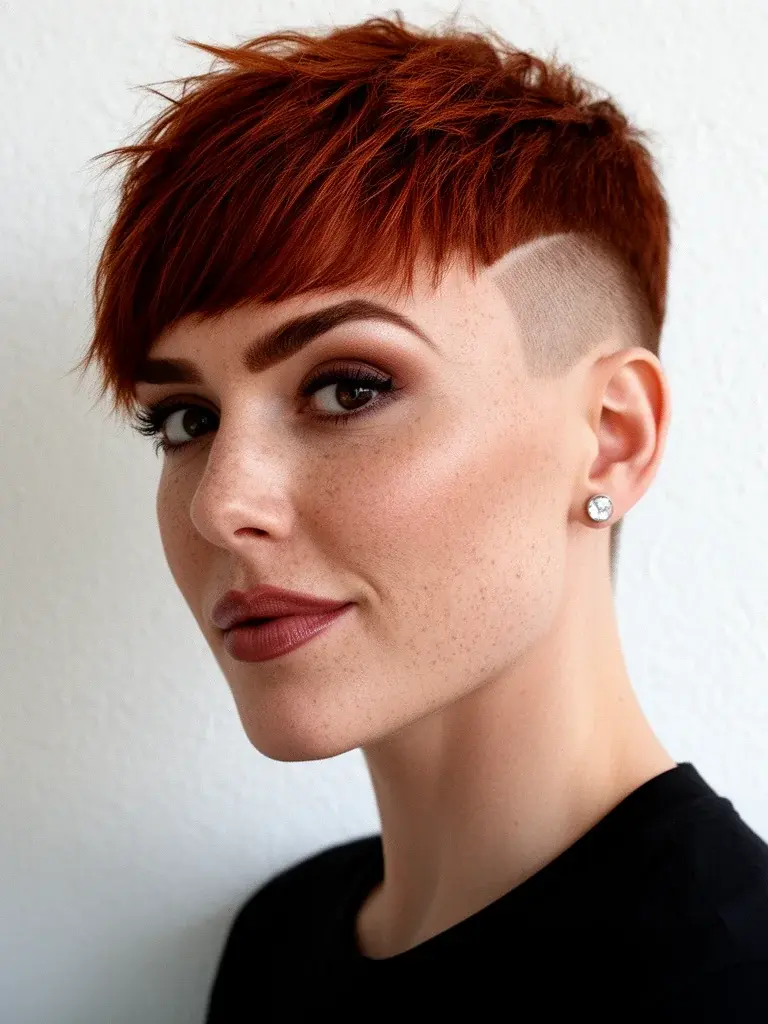
| Boy Cut | 45 seconds | Every 5–6 weeks | Balanced low effort |
| French Crop | 2 minutes | Every 4–6 weeks | Short hair with built-in framing |
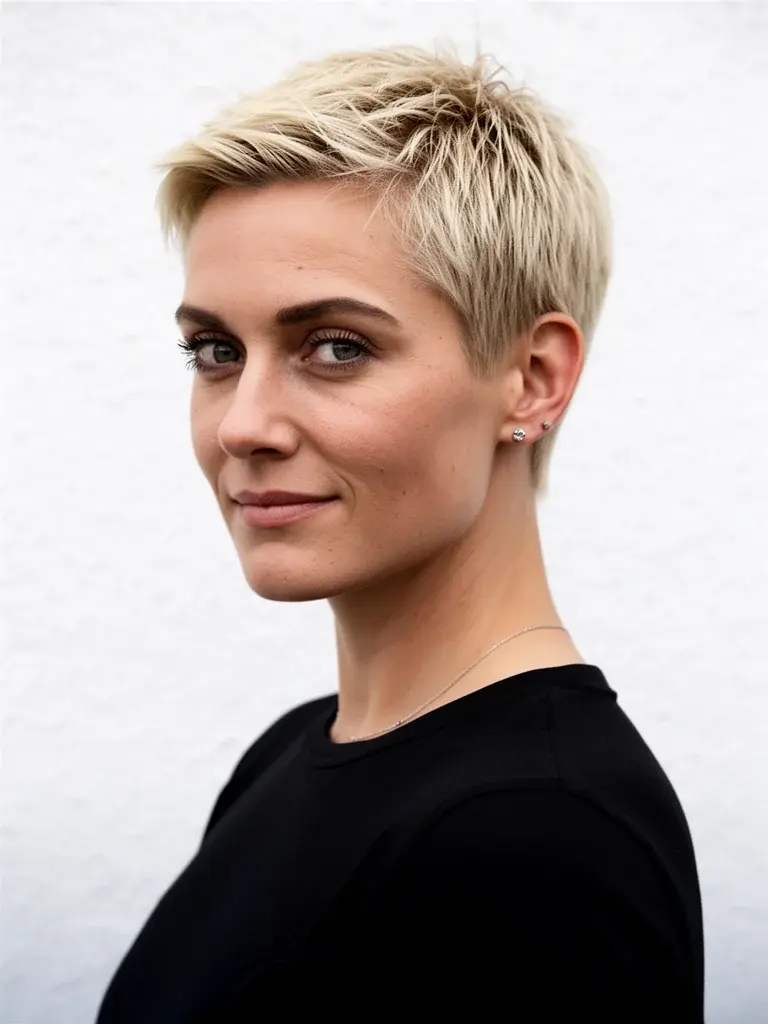
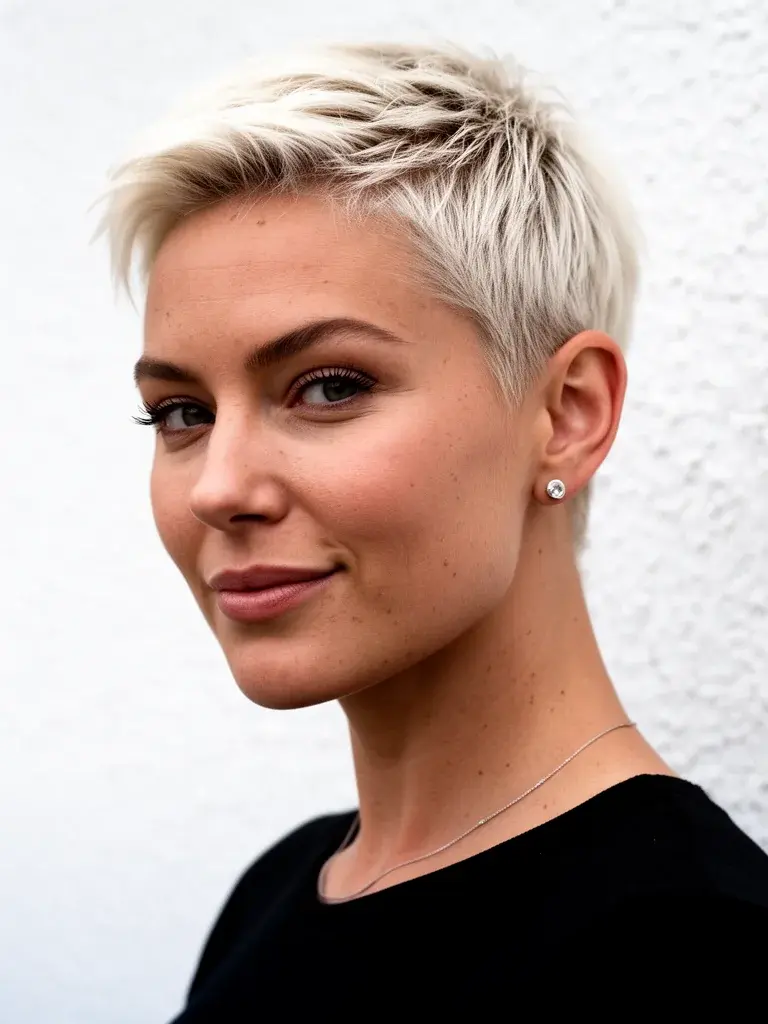
| Short Pixie | 60 seconds | Every 4–6 weeks | Sculptural minimalism |
| Long Pixie | 90 seconds | Every 6–8 weeks | Softer pixie, more styling options |
| Curtain Bangs | 2 minutes | Every 5–6 weeks | Face framing without commitment |
| Classic Bob | 5 minutes | Every 8–10 weeks | Polished and versatile |
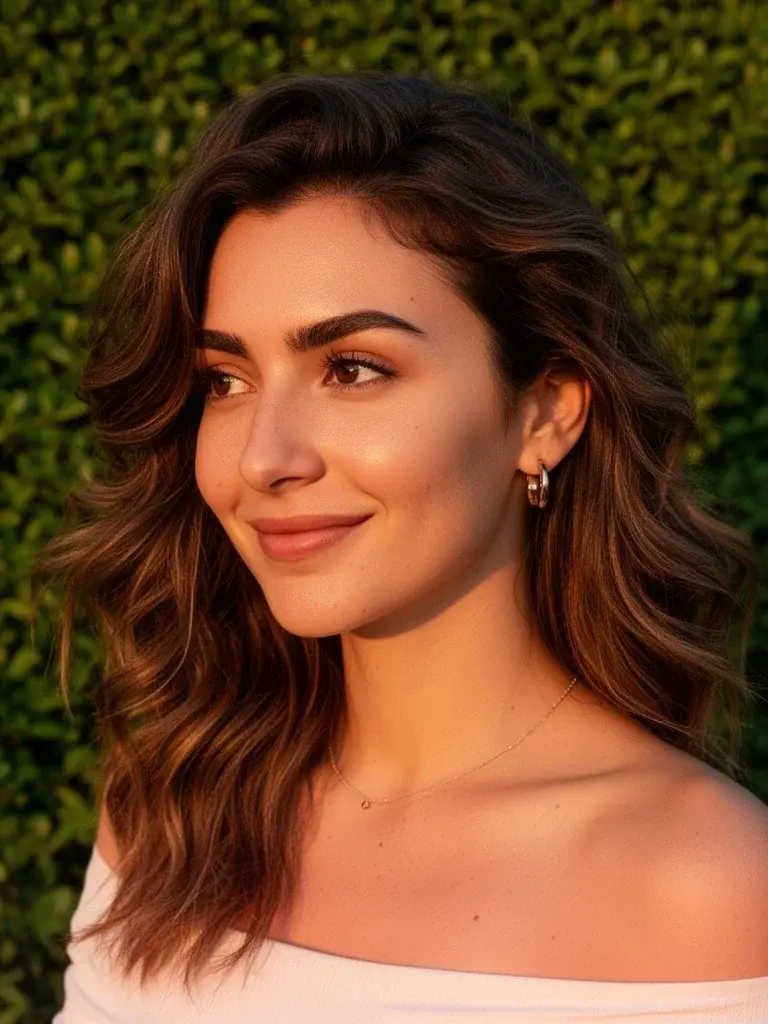
| Beach Waves | 15 minutes | Every 8–10 weeks | Fewest salon visits |
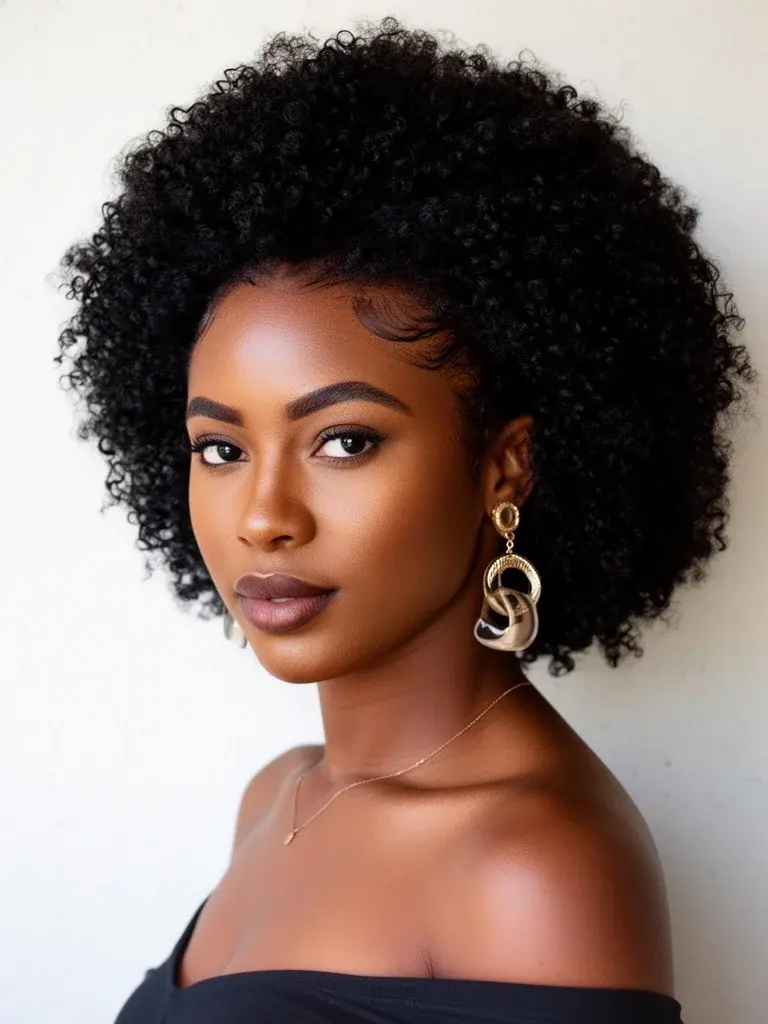
| Natural Afro | 5 minutes daily | Every 8–12 weeks | Work with your natural texture |
Which Type of Easy Do You Need?
"I want under 60 seconds every morning"
Short cuts. The buzz cut is absolute zero — wash, towel dry, done. The boy cut and short pixie add 30–60 seconds of finger-styling, but that's it. The french crop takes 2 minutes — push the fringe forward, walk out.
The tradeoff: these cuts need trims every 4–6 weeks to keep their shape. Put recurring calendar reminders in your phone, or they'll look unkempt by week 7.
"I want fewer salon visits"
Beach waves and classic bob win here — both stay looking good for 8–10 weeks between trims. The natural afro stretches to 12 weeks.
The tradeoff: these styles take more time when you do style them. Beach waves are 15 minutes with a wand — or overnight with the no-heat braid method.
"I want both"
The boy cut is the best balance point. 45 seconds daily, trim every 5–6 weeks. Curtain bangs added to any longer haircut also minimize effort — once trained (2 weeks), they fall into place on their own.
By Hair Type
Fine Hair
Short cuts are fine hair's biggest win. A boy cut or french crop removes the length that makes fine hair fall flat — suddenly your hair looks fuller without effort. If you want to keep length, beach waves add visual thickness that straight fine hair never achieves.
Thick Hair
Beach waves let gravity do the work — long layers with built-in movement, no fighting the volume. A classic bob channels thickness into structure. For short cuts, the french crop works well because the fringe weight is intentional.
Wavy Hair (Type 2)
You're already halfway there. A sea salt spray and scrunch on air-dried hair often creates beach waves with zero heat. Curtain bangs train themselves faster on wavy hair — the wave creates the outward sweep automatically. The boy cut gains natural texture without product.
Coily/Curly Hair (Type 3c–4c)
The natural afro requires the least fighting. Shaped by a specialist every 8–12 weeks, maintained with a 5-minute morning routine. This is your hair doing exactly what it was designed to do — the most sustainable choice long-term.
By Face Shape
Oval — Every style on this list works. If you want absolute zero daily effort, the buzz cut or boy cut are your two best picks. If you want to keep length, add curtain bangs to whatever you already have.
Round — Prioritize styles that add vertical emphasis: short pixie with height on top, beach waves that fall below the chin. Avoid very uniform short cuts or full, wide fringes that emphasize width.
Square — Soft styles that counteract the jawline: beach waves, curtain bangs with a gentle texture, boy cut with point-cut ends. Avoid blunt, geometric cuts that echo the jaw.
Heart — Curtain bangs are ideal — they balance a wider forehead without adding length. Beach waves with volume below the chin balance the narrower jaw.
Diamond — The boy cut highlights your cheekbones well. Beach waves and curtain bangs soften the widest point.
Oblong — Width over length. Beach waves with volume at the sides, curtain bangs to shorten the visual face length. Avoid tall styles or volume on top.
The Grow-Out Factor
One overlooked dimension of "low maintenance": what happens when you're between trims or decide to change?
Easiest grow-out: Curtain bangs blend seamlessly into layers as they grow — no headband phase. Beach waves don't have a grow-out at all (it's a styling technique, not a length commitment).
Most forgiving: Boy cut holds its shape longer than most short cuts because the uniform length means uneven growth is less noticeable. A week past your trim date and it just looks "relaxed," not shapeless.
Requires strategy: Short pixie grow-out is 12–18 months to reach bob length. The awkward phase at months 3–5 is real. Go in with a plan (see the grow-out guide on the pixie page) or commit fully.
Lowest risk overall: Beach waves. It works on shoulder length through waist length, requires no specific cut to function, and you can stop doing it anytime with zero consequence.
What to Tell Your Stylist
If you want zero daily styling:
"I want a buzz cut, boy cut, or french crop — I have [X] minutes maximum in the morning and I won't be using a blow dryer. Show me what works."
If you want fewer salon visits:
"I want long layers for beach waves — face-framing pieces, soft ends, nothing blunt. I want to go 8–10 weeks between trims without it looking neglected."
If you want both:
"I want something that's under 2 minutes to style every day and doesn't need trimming more than every 5–6 weeks. My face shape is [face shape] and my hair is [texture]. What do you recommend?"
That last question is the most important one you can ask. A stylist who's listened to your actual constraint (time budget, salon budget) will give you a better recommendation than one who's just cutting what you asked for by name.