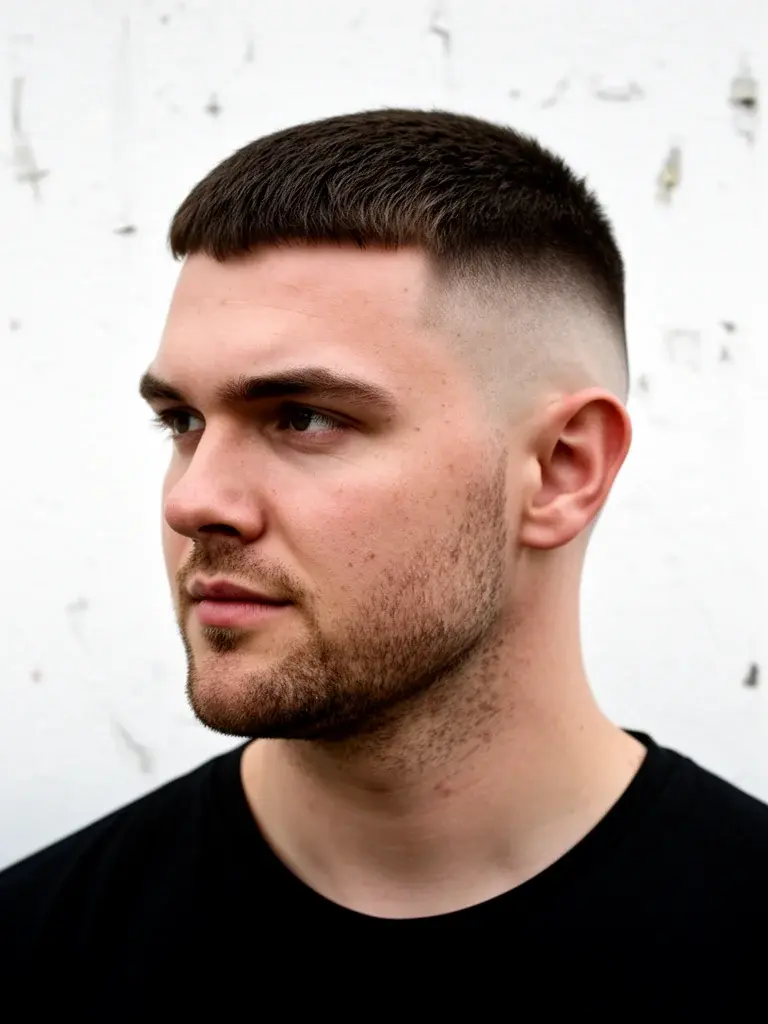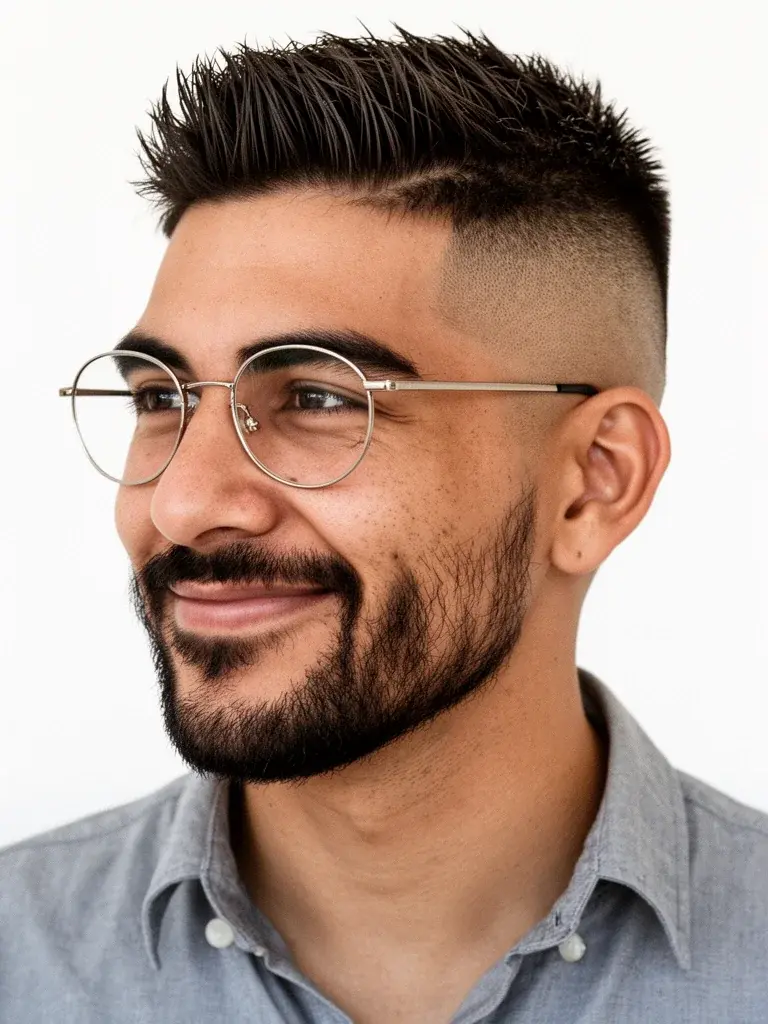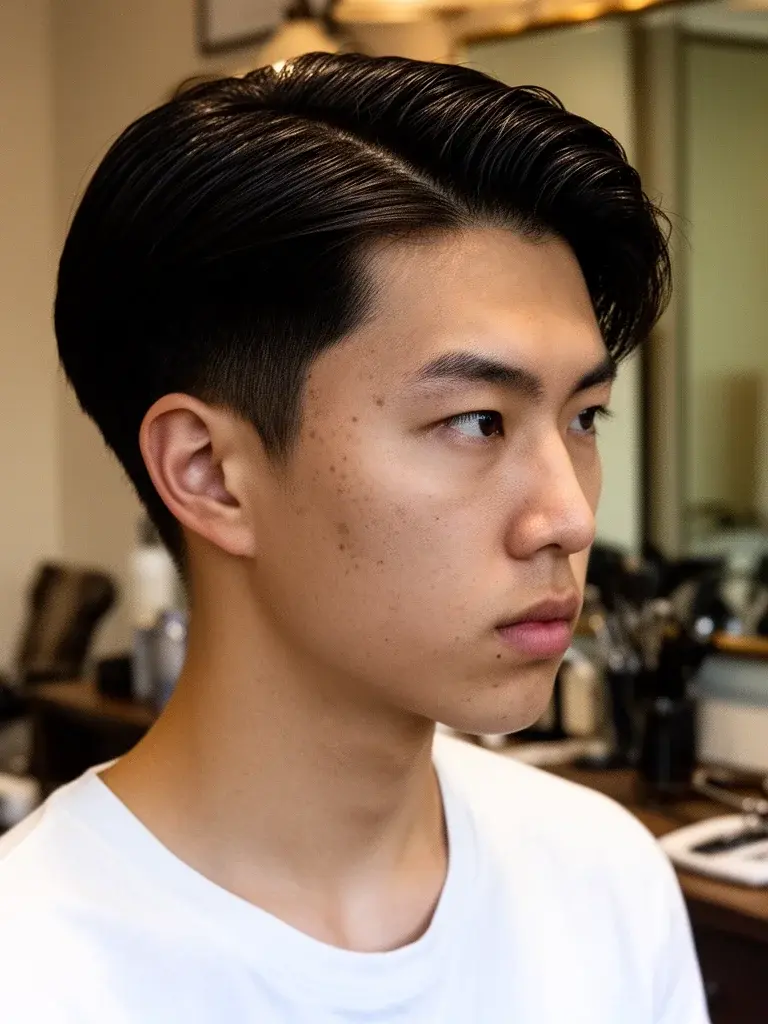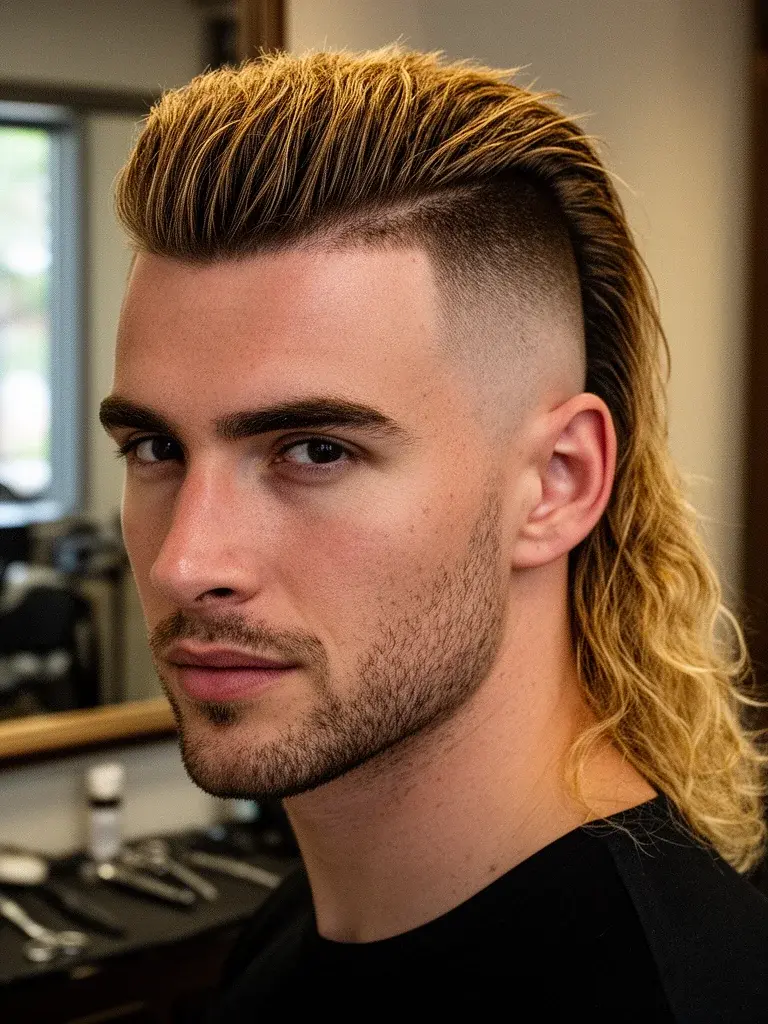
TL;DR
- Best for: Round, oval, or square faces who want effortless modern style
- Avoid if: Very curly hair, extremely fine hair, or hate using any product
- Ask your barber: "Low fade sides (#1→#3), 2.5–3 inches on top with point cutting, soft fringe"
- Maintenance: Trim every 4–5 weeks (grows out well)
Who Does It Suit?
Best for people who want a trendy, low-effort look with built-in style.
Ideal for:
- Round faces needing angles and structure
- Oval or square faces (any variation works)
- Professionals balancing style and polish
- Wavy or thick hair (natural texture does the work)
- Anyone who wants to look styled in under 2 minutes
Hair types:
- Straight: Good canvas, but needs product to create texture
- Wavy: Ideal—natural waves = built-in texture, minimal effort
- Thick: Perfect—texturizing removes bulk, prevents helmet look
Avoid If...
- Very curly hair → curly crop or natural curls fade works better
- Extremely fine hair → looks sparse, try a crew cut or buzz
- Receding hairline → fringe draws attention to it, consider slick back
- Ultra-conservative workplace → "messy" aesthetic may not fly
- Hate products entirely → this cut needs some product to shine
What is a Textured Crop?
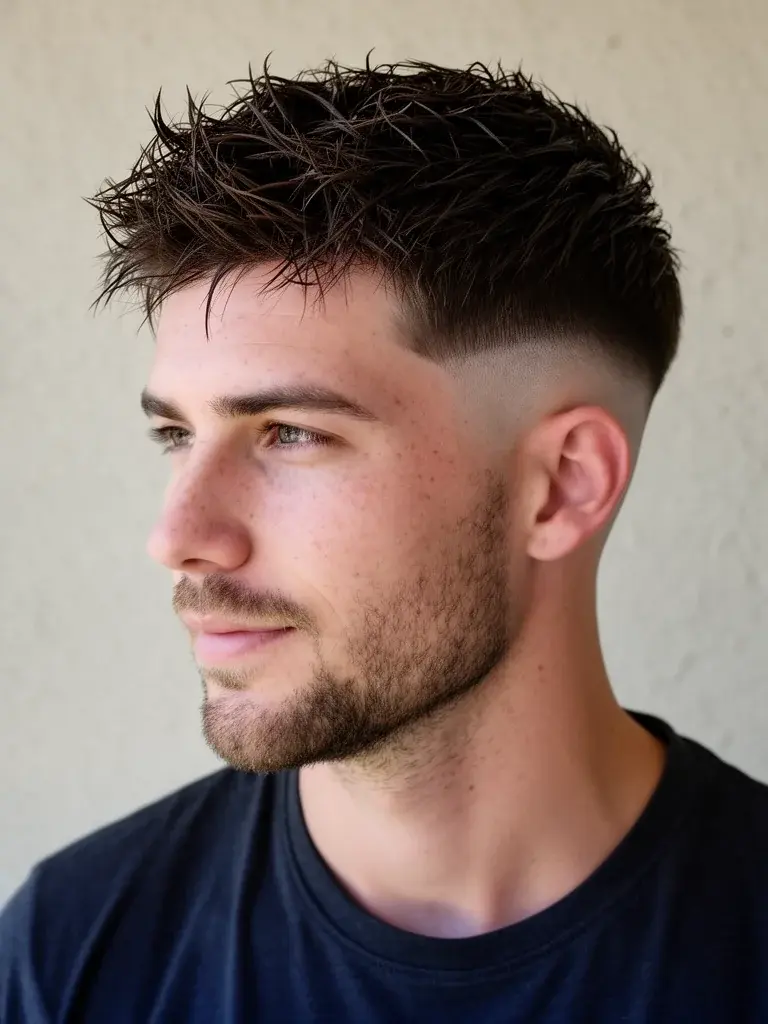
Choppy, disconnected layers on top (2–3 inches) with faded sides. The "texture" comes from point cutting or razor cutting—creating intentional separation between strands. It's the "I woke up like this" aesthetic, but deliberate.
The key difference from similar cuts: controlled chaos. While crew cuts aim for uniformity, textured crops celebrate irregularity.
Textured Crop vs French Crop vs Messy Fringe
| Textured Crop | French Crop | Messy Fringe | |
|---|---|---|---|
| Top length | 2–3 inches, choppy layers | 1–2 inches, blunt fringe | 3–4 inches, longer front |
| Face shape | Best for round (adds angles) | Best for high forehead | Best for oval/square |
| Maintenance | Every 4–5 weeks | Every 3–4 weeks | Every 4–6 weeks |
| Key feature | Separation & texture | Sharp, defined fringe | Volume & movement |
Bottom line: Textured crop = most modern and versatile. French crop = cleaner with forehead coverage. Messy fringe = more length and drama.
Measurements
- Top: 2–3 inches (point cut for texture)
- Sides: #1–#3 guard with fade
- Fade: Low to mid (avoid skin fade for softer look)
- Trim: Every 4–5 weeks
Face Shape Tweaks
Adjust height and fade to balance your face shape.
- Round: 3+ inches on top, mid-high fade, style up and forward for height
- Square: Gradual fade, avoid too much height, push fringe forward
- Oval: Any variation works, experiment freely
- Diamond: Avoid ultra-tight fades, add fullness to fringe area
- Oblong: Keep top 2 inches max, more width on sides, low fade
Hair Type Tweaks
- Straight: Use matte clay + sea salt spray; insist on point cutting
- Wavy: Let natural texture work; texturizing cream + air dry
- Thick: Essential to thin out top with thinning shears; less product needed
- Fine: Go shorter (1.5–2 inches); volumizing spray + matte powder
- Asian: Extra texturizing to remove weight; stronger-hold product
If You Have Straight Hair
Straight hair is the textured crop's biggest challenge—you need to create texture that wavy hair gets for free.
- Insist on point cutting: If your barber blunt cuts, you get a short haircut, not a textured crop. Point cutting creates the separation.
- Sea salt spray is essential: Apply to damp hair before any other product. It creates grit and natural-looking waves.
- Use matte clay, not pomade: Matte products show texture; shiny products make straight hair look flat.
- Blow dry with your fingers: Push hair in random directions while drying to create movement. Never use a brush.
- Accept you'll use more product: Where wavy-haired guys need a pea-sized amount, you'll need a nickel-sized amount. That's normal.
What to Tell Your Barber
"I want a textured crop: low fade on the sides starting at #1, blending to #3. About 2.5–3 inches on top with point cutting or razor for texture. Soft fringe, not blunt. I want pieces to separate naturally."
How to Style
Daily (60 seconds):
- Towel dry until 80% dry
- Apply pea-sized matte clay
- Work through with fingers, back to front
- Push front up and forward
- Pinch sections to define texture
Polished (2–3 minutes):
- Sea salt spray on damp hair
- Blow dry on low heat, pushing hair with fingers
- Apply matte clay or paste
- Twist small sections for definition
- Light texture spray to finish
Maintenance Timeline
- Week 1–2: Perfect shape. Texture defined, fade sharp, minimal product needed.
- Week 3–4: Still looks good. Texture actually improves with slight growth. May need slightly more product.
- Week 4–5: Sides getting fuller. Fade losing definition. Still presentable.
- Week 5–6: Time to book. Shape gone but doesn't look neglected—textured crop grows out gracefully.
Pro tip: This cut is forgiving. If you miss your appointment, it looks intentionally grown-out rather than sloppy.
Common Mistakes
-
Using too much product Fix: Start with half what you think you need; if hair looks wet or crunchy, you overdid it
-
Combing instead of fingers Fix: Never use a comb; combs create uniformity when you want separation
-
Getting sides too tight Fix: Avoid skin fade; softer European-style fade looks more natural
-
Skipping the texturizing request Fix: Explicitly ask for point cutting or razor; it's what defines this style
-
Fighting natural growth patterns Fix: Work with your cowlicks, not against them; tell your barber your natural fall direction