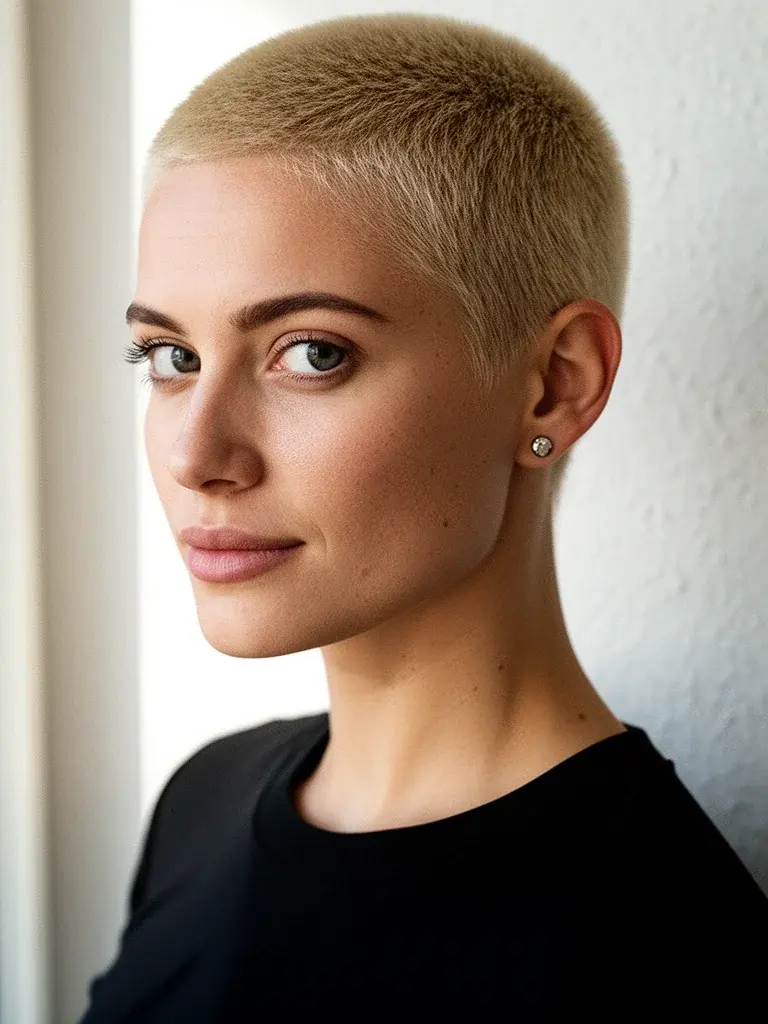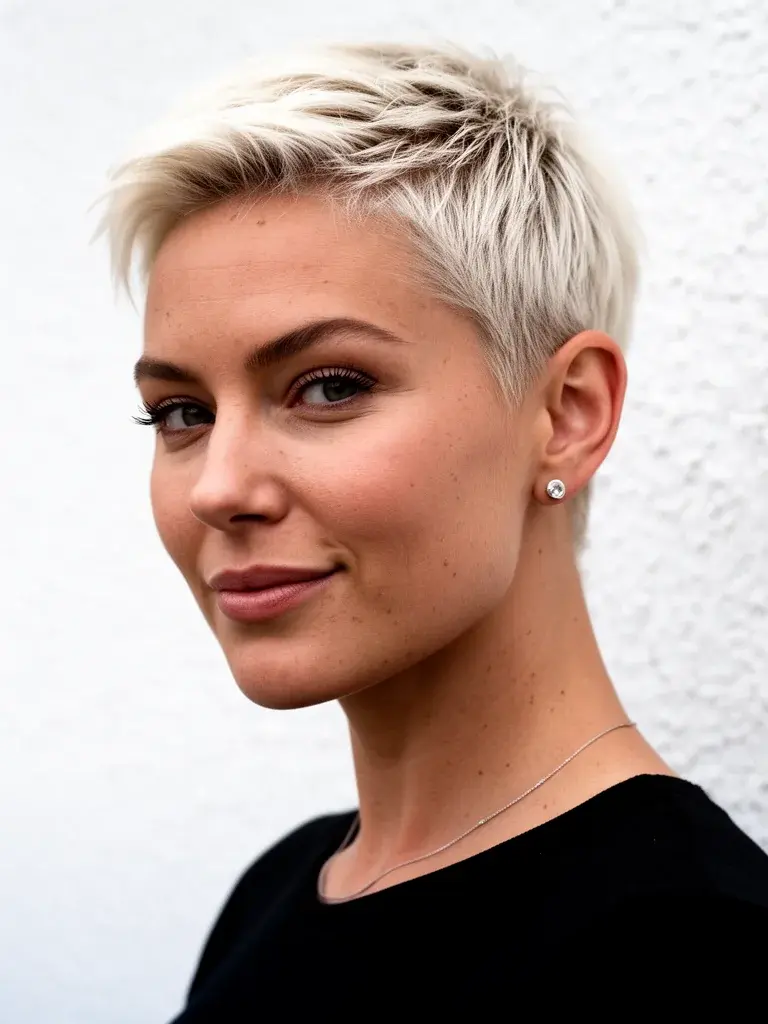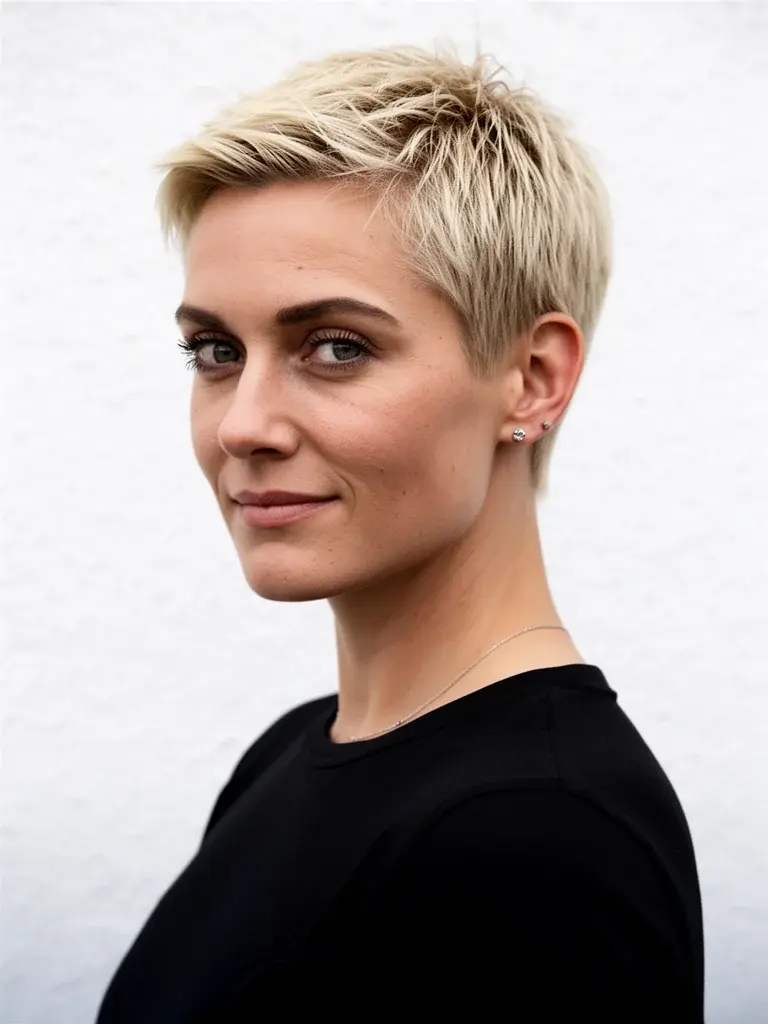
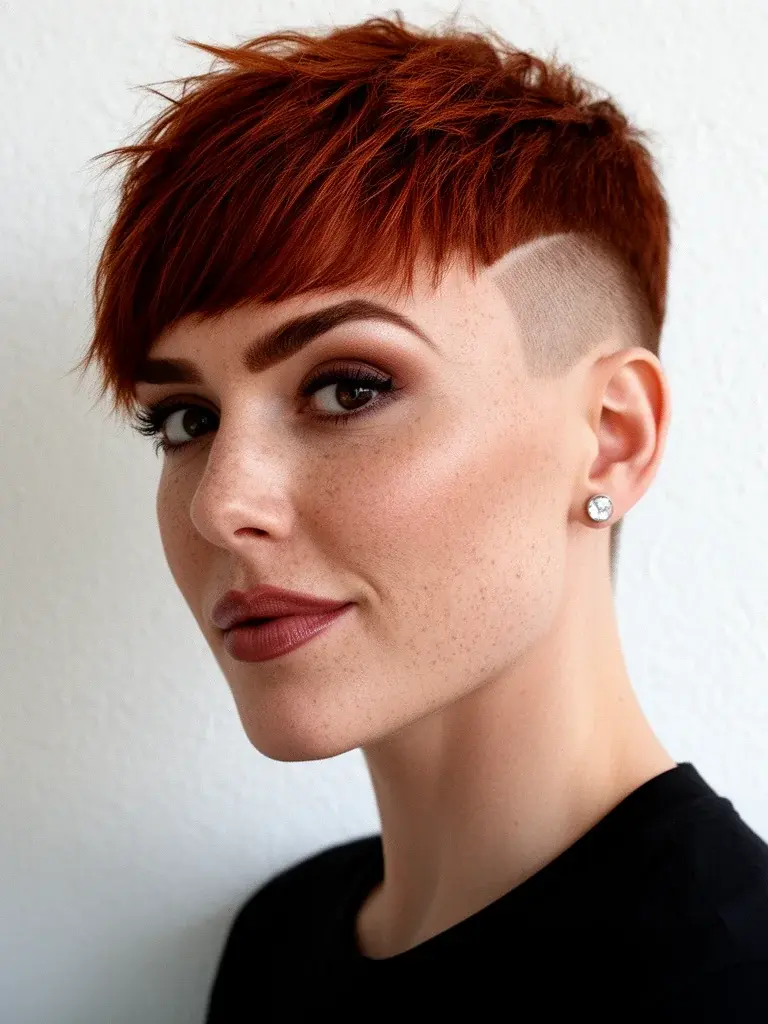
TL;DR
- Best for: Oval, square, or heart-shaped faces who want short hair with built-in face framing
- Avoid if: You have tight curly hair or want a cut with no fringe at all
- Ask your stylist: "Short textured crop with a soft fringe that hits just above my eyebrows, scissor-cut sides tapered to about half an inch"
- Maintenance: Trim every 4–6 weeks
Who Does It Suit?
The French crop works because the fringe does half the work. It frames, it softens, it gives the eye something to land on.
Ideal for:
- Oval, square, and heart-shaped faces — the fringe balances proportions across all three
- Women with prominent foreheads or high hairlines who want coverage without length
- Professionals who need a cut that reads as intentional and put-together
- Straight or wavy hair that naturally falls forward — it cooperates with the fringe
- Anyone who wants the impact of a short cut without the exposed feeling of a buzz
Hair types:
- Straight: Ideal. The fringe lays flat and clean. Minimal styling needed — texture paste for grip, nothing else.
- Wavy: Works well. Waves add natural movement to the fringe and top. Leave the fringe slightly longer so it falls rather than puffs.
- Thick: Excellent candidate. Thickness gives the fringe body and prevents it from looking stringy. Ask your stylist to point-cut or thin the fringe to remove bulk without losing coverage.
Avoid If...
- Tight curly hair (3B and above) → curls spring upward instead of falling forward, defeating the fringe. Try a Short Pixie that works with your curl pattern instead of against it
- You dislike any hair touching your forehead → the fringe is the whole point. A Buzz Cut gives you short hair with nothing on your face
- Very fine hair with low density → the fringe can look thin and stringy. A Boy Cut with a side-swept top avoids this problem
- You want a lot of styling versatility → the French crop does one thing well. A Short Pixie offers more directions and options
- You have a very round face and want to elongate → the horizontal fringe emphasizes width. A Short Pixie with height on top adds the vertical line you need
- You hate salon visits → the fringe needs trimming every 4–5 weeks or it falls into your eyes. A Buzz Cut is easier to maintain at home
What is a French Crop?
A French crop is a short haircut with tapered or faded sides and a textured top that's pushed forward into a fringe. The fringe is the signature — it sits at or just above the eyebrow line, either blunt-cut straight across or point-cut into a softer, textured edge. The top is typically 1.5 to 3 inches long, just enough to create direction and movement.
Unlike a pixie, which has layered sections of varying lengths that can be styled multiple ways, the French crop commits to one direction: forward. Everything moves toward the forehead. The sides are short — either scissor-tapered to about half an inch or clipper-cut with a low taper. The result is a structured, geometric silhouette that reads as deliberately minimal. It's the short haircut that says "I chose this" without needing to explain.
French Crop vs Short Pixie vs Boy Cut
| French Crop | Short Pixie | Boy Cut | |
|---|---|---|---|
| Length | 1.5–3 inches on top, tapered sides | 1–3 inches on top, varied layers | 1–2 inches, uniform all over |
| Fringe | Defining feature — falls across forehead | Optional, usually side-swept | None or very minimal |
| Face shape | Best for oval, square, heart | Best for all shapes | Best for oval, square |
| Maintenance | Every 4–6 weeks | Every 4–6 weeks | Every 4–5 weeks |
| Styling direction | Forward only | Multiple directions | Minimal direction |
| Best feature | Hides forehead, frames face | Most versatile short cut | Most relaxed short cut |
Bottom line: French crop = structured with built-in framing. Short pixie = the most versatile short cut. Boy cut = effortless and undone.
If you want a pixie that leads with a defined above-the-eyebrow fringe — the same forward-focused framing the French crop is known for — see Pixie Short Bangs, which combines the short blunt fringe with a full pixie structure.
Cut Specifications
- Layers: Minimal — the top is roughly uniform length, with point cutting or razor texturing at the fringe edge for softness
- Bangs/Fringe: The centerpiece. Sits at eyebrow level, either blunt-cut or textured. Length ranges from just above the brows to mid-forehead depending on preference. Typically 2–3 inches before it's pushed forward
- Weight line: Sits at the fringe — this is where the bulk of the hair mass concentrates. The rest of the head is tapered away from this line
- Graduation: Sides taper from about half an inch at the ear to the full top length over 1–2 inches of transition. Scissor-cut graduation is softer than clipper fades for women's crops
- Neckline: Tapered naturally — avoid hard lines. A soft, rounded neckline keeps the overall look feminine
- Trim cycle: Every 4–6 weeks — the fringe reaches the eyes around week 5 and needs cutting regardless of how the rest looks
Color Pairing
- Honey highlights on the fringe: Add 3–5 face-framing highlights through the fringe using a balayage or foil technique. The lighter pieces catch light right where people look first. Works on medium to dark brown base colors. Keeps the sides and back understated.
- Ash blonde all-over: A cool-toned single-process blonde turns a French crop into something editorial. The uniform color emphasizes the cut's geometry. Maintenance is moderate — root touch-ups every 5–6 weeks, toner refresh every other visit.
- Dark base with subtle lowlights: For naturally dark hair, add lowlights in a shade or two deeper (espresso through black hair, chocolate through dark brown). Creates dimension without obvious color. Zero maintenance between trims — the lowlights blend naturally as they grow.
Face Shape Tweaks
The fringe is your main adjustment tool. Everything else stays the same.
- Oval: Standard fringe length at the brow line. You can go blunt or textured — both work. This is the face shape where the French crop needs the least modification.
- Square: Soften the fringe edge with point cutting or razor texturing. A blunt, straight fringe on a square jawline can look too angular. Side-sweeping the fringe slightly also helps.
- Heart: Keep the fringe slightly longer (touching the brows rather than above them) to reduce the visual width of the forehead. A wispy, textured fringe works better than a thick, blunt one.
- Round: The hardest match. If you go for it, keep the fringe off-center — a side-swept French crop adds the asymmetry that breaks up roundness. Ask for a bit more height on top.
- Oblong: Keep the fringe long and thick — it shortens the visual length of the face. Avoid any height on top. Sides can be slightly fuller to add width.
- Diamond: Works naturally. The fringe softens a wider cheekbone area and the tapered sides don't add bulk where you don't need it.
Hair Type Tweaks
- Straight: The cleanest result. The fringe falls exactly where you put it. Use a matte texture paste for grip — without product, straight hair can look flat on top.
- Wavy: Leave the fringe an extra half inch longer than you would on straight hair. Waves shorten the visual length. The natural movement in wavy hair makes the top look textured without any effort.
- Thick: Ask your stylist to thin the fringe using point cutting or thinning shears. Thick hair creates a heavy fringe that sits too low and looks like a curtain rather than a crop. Thinned fringe moves naturally and sits higher.
- Fine: Keep the fringe blunt-cut, not textured — point cutting on fine hair removes too much and creates gaps. A blunt edge creates the illusion of thickness. Apply dry texture spray at the root for lift.
If You Have Cowlicks
Cowlicks and French crops have a complicated relationship. The fringe depends on hair falling forward, and cowlicks push hair wherever they please.
- Map your cowlick first: Before committing, wet your hair and push it forward. Watch where the cowlick redirects it. If the cowlick pushes hair to one side, you can work with that — a side-swept fringe follows the natural direction. If it pushes hair straight up, the French crop will fight you every morning.
- Ask for extra length in the cowlick zone: Longer hair is heavier. An extra half inch in the area where your cowlick lives gives gravity a chance to override the growth pattern. Your stylist can blend this seamlessly.
- Use a blow dryer on the fringe only: This is the one exception to the "no-heat" appeal of the French crop. Spend 30 seconds blow drying the fringe against the cowlick direction while the hair is damp. Once dry, it stays put all day.
- Product is your ally here: A medium-hold cream or paste applied to damp fringe hair gives it weight and direction. Work it in before air drying. Avoid hairspray — it creates a stiff, frozen look that doesn't suit the crop's casual vibe.
- Accept the part and design around it: Some cowlicks create a natural side part in the fringe. Instead of fighting this, tell your stylist to cut the fringe as two sections that part naturally. The result looks intentional — a split fringe rather than a misbehaving one.
What to Tell Your Stylist
"I want a French crop — textured on top, about 2 inches, pushed forward into a soft fringe that sits just above my eyebrows. Scissor-taper the sides down to half an inch, blended gradually. Soft, rounded neckline. If my hair has any cowlicks in the fringe area, leave that section a bit longer so gravity can help."
Reference photo tips:
- Bring photos of women with your hair type — a French crop on straight hair looks completely different from one on wavy hair. Matching texture matters more than matching face shape
- Show the fringe from the front AND the side profile — fringe thickness and angle vary hugely between stylists' interpretations of "French crop"
- Point out specifically whether you want a blunt or textured fringe edge. If you don't specify, your stylist will default to their personal preference
- If you have a cowlick, show your stylist while your hair is wet. Let them see the growth pattern before they start cutting — this avoids mid-cut surprises
How to Style
Daily (2 minutes):
- Towel dry until damp, not dripping
- Work a pea-sized amount of matte texture paste between your palms
- Run through the top, pushing forward toward the fringe
- Use your fingertips to arrange the fringe — to one side, straight across, or slightly messy
- Leave it. Don't touch it again
Polished (5 minutes):
- Towel dry until slightly damp
- Blow dry the fringe into place — aim the nozzle downward along the hair's direction
- Apply a small amount of lightweight styling cream for shape
- Define the fringe edge with your fingertips — separate the ends slightly for a textured, piecey look
- Optional: tiny amount of shine spray for editorial finish — one pump, 12 inches from head
No-Heat Alternative:
- After washing, blot with a microfiber towel — don't rub
- Apply texture cream to damp hair, focusing on the top and fringe
- Push everything forward with your palms
- Let air dry completely — takes 10–15 minutes for a crop this short
- Once dry, shake your head side to side once. The fringe will settle into a natural position
Maintenance Schedule
- Week 1–2: Fresh crop looks its best. Fringe sits perfectly at the brow, sides are clean, shape is defined. Enjoy the low-effort mornings.
- Week 3–4: Fringe starts reaching the eyebrows. Still works — slightly longer fringe can look good if you don't mind it touching your brows. Sides are growing but the taper holds.
- Week 5–6: Fringe is in your eyes. Sides have lost their taper shape. This is trim time — book now or you'll start looking shaggy rather than cropped.
- Week 7–8+: If you're growing it out intentionally, ask your stylist to trim sides and neckline only, leaving the top and fringe to gain length. This prevents the "I forgot to get a haircut" look during grow-out.
If you color your hair:
- Fringe highlights: Touch up every 8–10 weeks. The grow-out is subtle because the highlighted pieces are thin
- All-over blonde: Root touch-up every 5–6 weeks. Short hair means less total color but more frequent visits
- Lowlights: No maintenance needed — they blend naturally as they grow
Pro tip: Learn to trim your own fringe between salon visits. Invest in a pair of sharp hair-cutting scissors ($15–25). Cut the fringe dry, in natural light, one small snip at a time. Cut less than you think you need — you can always take more off tomorrow.
Common Mistakes
-
Cutting the fringe too short on the first visit Fix: Tell your stylist to start with the fringe touching your eyebrows. You can go shorter next time. A too-short fringe on a French crop doesn't look like a crop — it looks like a botched pixie.
-
Using too much product Fix: A pea-sized amount for the entire head. The French crop is a short cut — product distributes quickly. Too much and the fringe looks wet or greasy, which kills the textured, matte look the crop needs.
-
Fighting a cowlick instead of working with it Fix: If your cowlick pushes the fringe left, let it go left. A side-swept crop fringe looks intentional. Fighting the cowlick means blow drying, product, and frustration every morning — that defeats the purpose of an easy cut.
-
Getting a clipper fade instead of a scissor taper on the sides Fix: Specify scissor-cut sides. A clipper fade on a women's French crop reads as masculine — it's the hard contrast between shaved sides and textured top. Scissor tapering creates a softer, blended transition that keeps the cut looking refined.
-
Ignoring the neckline shape Fix: Ask for a soft, rounded neckline. A squared or blocked neckline at the back clashes with the soft fringe at the front. The whole silhouette should feel cohesive — structured but not harsh.