TL;DR
- Best for: Any face shape; especially fine hair that wants volume without product, and first-time pixie cuts
- Avoid if: You need a ponytail daily or refuse to visit the salon every 6–8 weeks
- Ask your stylist: "Long pixie — 5 inches on top, tapered sides, graduated nape. Texture on top but not disconnected from the sides."
- Maintenance: Trim every 6–8 weeks
Who Does It Suit?
Ideal for:
- First-time pixie wearers — the extra length makes the transition less abrupt and the grow-out more manageable
- Fine hair — less weight lets fine strands lift naturally; layers create texture that reads thicker
- Any face shape — the top length is forgiving enough to adjust proportions for round, square, and oblong faces
- Active lifestyles — short enough to stay out of the way; long enough to feel like "hair" after a workout
- Women who want styling options with a short cut — the top can be swept forward, to the side, pinned back, or left tousled
Hair types:
- Straight: Clean and sleek, or piece-y with texture paste — the extra length on top shows movement that a shorter pixie can't replicate
- Wavy: Natural wave creates effortless movement on the top section; a long pixie channels waves rather than fighting them
- Curly: Curls give a long pixie dramatic volume on top; expect the true length to be shorter than cut once dry due to shrinkage
- Fine: The best match among all pixie lengths — fine hair at 5–6 inches has more structure than at 2–3 inches, and looks thicker with minimal product
Avoid If...
- You need to pull your hair back daily → a long pixie still can't form a ponytail; try a Classic Bob which gives the illusion of short while staying functional
- You can't visit the salon every 6–8 weeks → a long pixie that grows without trims gets heavy and loses its shape; try a Lob which grows out gracefully with fewer trims
- You have very thick hair and want a manageable short cut → thick hair at 5–6 inches on a long pixie can become heavy and hard to style without interior thinning; a Shaggy Bob distributes the weight better
- You want maximum graphic impact → the long pixie is softer and more relaxed than a sharp short pixie; for a more architectural look, try a Short Pixie
- You rely on braids or clips to manage your hair → the top section of a long pixie is long enough for small clips and bobby pins but not for braiding or a proper bun
What is a Long Pixie?
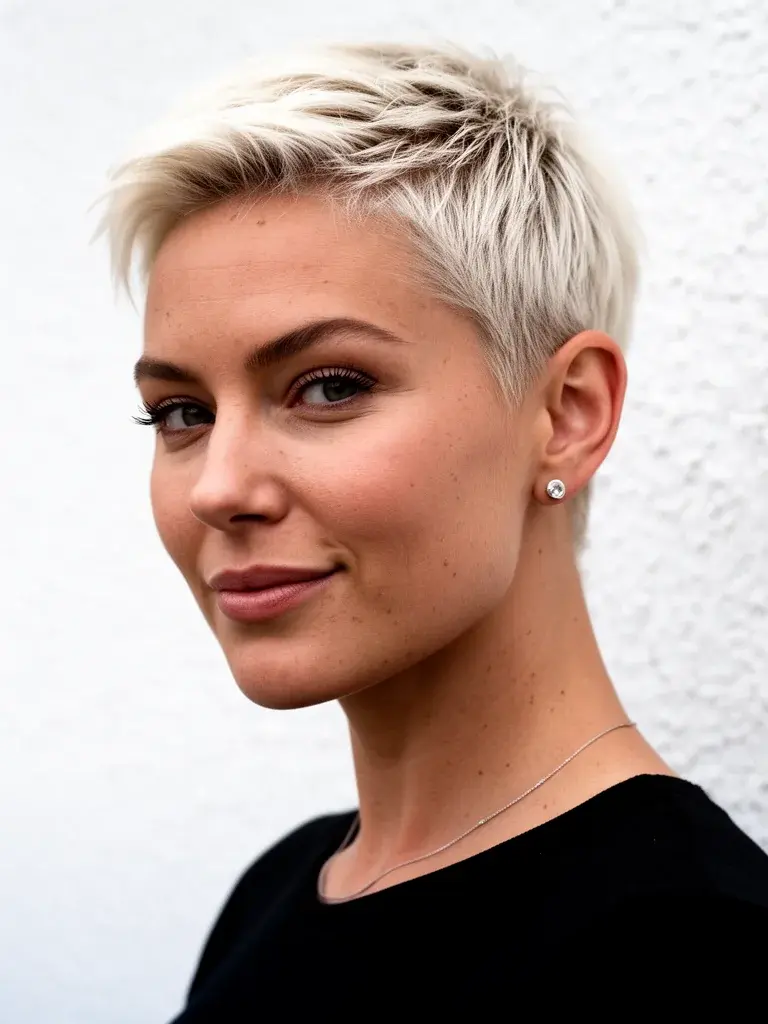
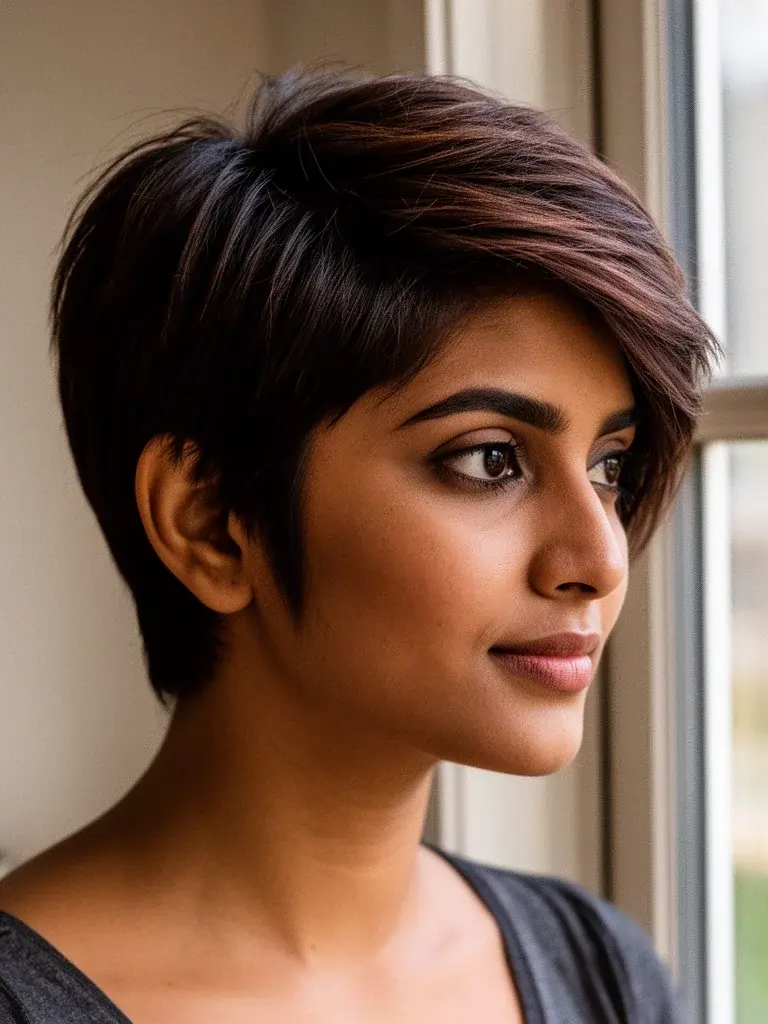
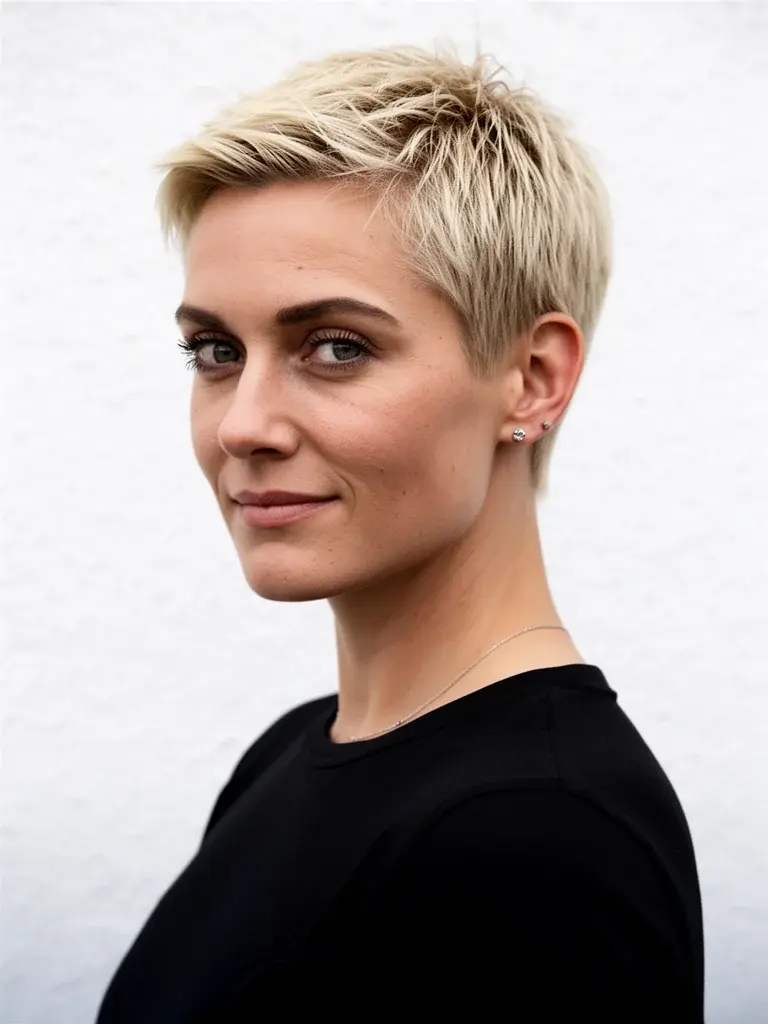
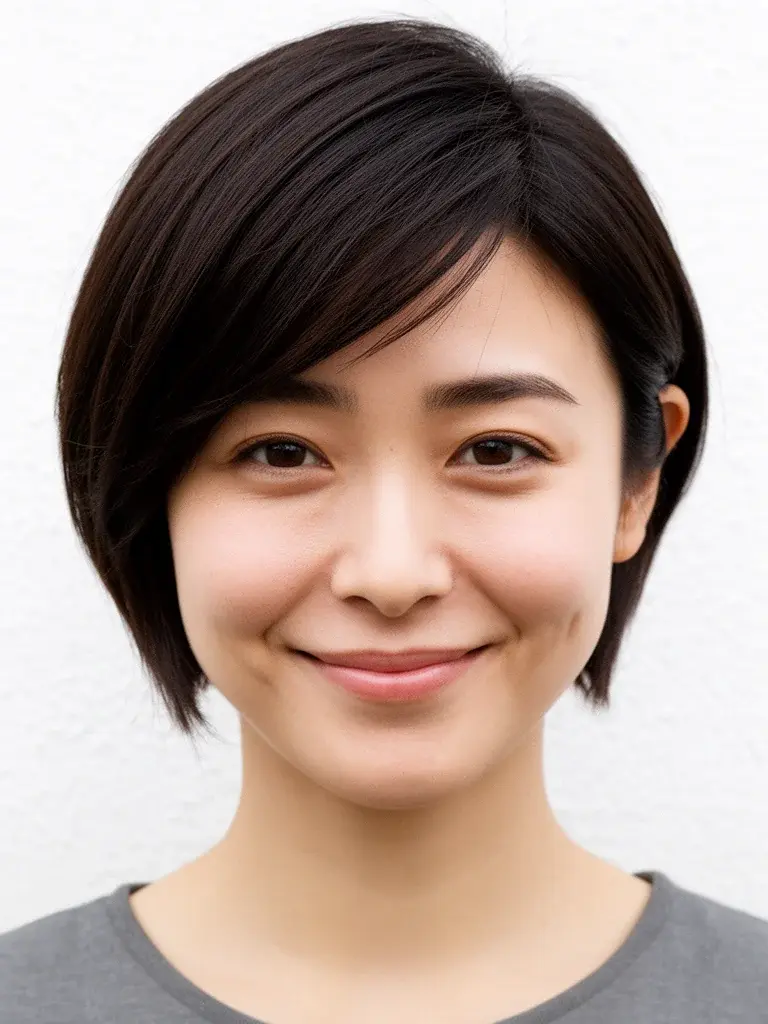
A long pixie is a cropped cut where the sides and back are tapered close to the head — typically 0.5–1.5 inches — while the top section retains 4–6 inches of length. This is the key distinction from a classic short pixie: the extra top length allows the hair to sweep, drape, and be styled in multiple directions rather than sitting in a single fixed position.
The silhouette is similar to a short pixie — cropped sides and back, exposed nape, ears either shown or slightly covered — but the longer top creates a softer overall shape. A long pixie can look anywhere from relaxed and undone (tousled texture paste) to polished and intentional (blow-dried with a round brush). The additional length also means the cut grows out more gracefully: the transition from long pixie to "short cut in between" is less awkward than from a classic short pixie.
Long Pixie vs Short Pixie vs Boy Cut
| Long Pixie | Short Pixie | Boy Cut | |
|---|---|---|---|
| Top length | 4–6 inches | 2–3 inches | 1–2 inches, uniform |
| Sides | Graduated, 0.5–1.5 inches | Tapered, 0.5–1 inch | Short, same as top |
| Styling options | Sweep, pin, tousle, part | Tousle, forward, to-side | Minimal — shape is the style |
| Face shapes | All shapes | Oval, Heart, Diamond | Oval, strong features |
| Maintenance | Every 6–8 weeks | Every 4–6 weeks | Every 3–5 weeks |
| Grow-out | Gradual, manageable | Awkward stage at 3–5 months | Fast and manageable |
Bottom line: Long pixie = versatility and softness. Short pixie = architectural precision. Boy cut = the most stripped-down option with the least styling required.
Cut Specifications
- Layers: Soft layers through the top section for movement and lift; not blunt-cut on the surface
- Bangs/Fringe: Optional — a curtain fringe or long side-swept fringe can incorporate naturally into the top length; micro-bangs look disconnected on a long pixie
- Weight line: At or slightly above the occipital bone; the back is the shortest point, graduating up and into the longer top
- Graduation: Gradual graduation from nape upward — less dramatic than a classic pixie; the longer top requires a smooth blend, not a disconnected undercut
- Trim cycle: Every 6–8 weeks; the nape and sideburns grow faster than the top
Color Pairing
- Warm golden blonde: Long pixie length carries highlights beautifully — ask for balayage or face-framing highlights through the top section only. The result is sun-kissed without looking over-processed, and short hair means less damage than bleaching long lengths.
- Brunette with dimensional lowlights: Adding a few darker pieces through a light brown long pixie creates depth and makes the top section look thicker. Works especially well for fine hair that needs visual density.
- Bold single-process color: Short hair is the ideal canvas for bold color (dusty rose, muted burgundy, slate blue) because you're committing to less product, less processing, and the grow-out is a trim away. A long pixie has enough length to show the color fully without looking costume-like.
Face Shape Tweaks
- Oval: Every long pixie proportion works — experiment with side parts, center parts, or pushing the fringe back.
- Round: Style the top upward rather than flat — height creates vertical emphasis. A deep side part adds asymmetry that counteracts roundness. Avoid flat-top styling that emphasizes face width.
- Heart: Keep fullness at the jaw level. If you have a curtain fringe, let the pieces fall forward to add weight below the temples. Avoid volume only at the crown, which emphasizes forehead width.
- Square: Soft, tousled texture on top contrasts the strong jawline. Avoid hard geometric side parts that mirror angular features — a slightly off-center part with loose texture is better.
- Diamond: The longer top accommodates soft fringe or forward-swept styling that balances a narrower forehead and chin against wide cheekbones.
- Oblong: A long pixie with a side fringe adds horizontal weight to a longer face. Avoid styles that pile all volume at the crown — this elongates an already long face.
Hair Type Tweaks
- Straight: The longer top shows movement when styled — use a small round brush or flat iron to add a bend at the ends if your straight hair looks too flat. A pea-sized amount of paste adds definition without weight.
- Wavy: A long pixie is an ideal match for wavy hair. The waves create natural volume and movement on top without product. Apply a curl cream or light mousse to damp hair, then air-dry for an effortless result.
- Curly: Expect the top section to be shorter than it appears when wet — curls shrink significantly. Discuss the cut in terms of dry length with your stylist. Curl-defining cream on damp hair, then diffuse or air-dry for maximum definition.
- Fine: The long pixie's reduced overall weight lets fine strands lift and move more freely than in longer styles. Interior layers are key — ask your stylist to point-cut through the top section to create texture without visual thinning.
The Grow-Out Plan
The long pixie grows out with far less drama than the classic short version. Because the top is already 4–6 inches, the transition stages are shorter and more manageable:
- Months 1–2: The long pixie still looks like a long pixie, just softer. No action needed.
- Months 3–4: The top is approaching 6–8 inches — bob territory is visible. The sides may be getting heavy. Book a trim to maintain the taper on the sides while letting the top grow.
- Months 5–7: You're in the overlap zone between a long pixie and a pixie-to-bob transition. Keep trimming the sides; the top is almost long enough for a short bob.
- Months 8–10: You're at bob length. The grow-out is effectively over. The long pixie's advantage is that this transition looks intentional at almost every stage.
What to Tell Your Stylist
"Long pixie — I want 4–5 inches on top, soft layers for movement, graduated sides about 1–1.5 inches, clean nape. Not too short on the sides — I want it to blend, not be disconnected. Texture on top, not blunt ends."
Reference photo tips:
- Find photos of long pixies on your hair texture specifically — a long pixie on straight hair is a completely different silhouette than on wavy or curly hair.
- Show photos of the side and back — the graduation from the nape up is where the craft shows. A too-short nape on a long pixie makes it look more like a classic pixie than a long one.
- Tell your stylist if you want a fringe option or not — some long pixies incorporate a sweeping side fringe naturally; others keep the top all one piece. Both are valid; be clear on your preference.
How to Style
Daily (90 seconds):
- Shake hair out after sleeping or shower
- Apply a pea-sized amount of matte texture paste or light hold cream to the palm
- Work through the top section in your preferred direction — forward, swept to side, or tousled up
- Done — the length does the styling work
Polished (4 minutes):
- Apply heat protectant to damp hair
- Blow-dry with a small round brush, lifting the roots and directing the top in your intended direction
- Once dry, use a tiny amount of pomade or wax to define the ends and add separation
- Light-hold hairspray to lock it in place
No-Heat Alternative:
- Towel-dry until barely damp
- Apply a lightweight mousse or volumizing foam to the roots of the top section
- Use your fingers to direct the top in your preferred direction
- Let air-dry fully — 10–15 minutes for this length
- Once dry, break up any clumps with your fingers and add a touch of dry texture spray for grip
Maintenance Schedule
- Week 1–2: Peak sharpness. The taper is clean, the top falls exactly as intended. This is the window to take reference photos for your next appointment.
- Week 3–4: Still looking good. The top has more weight now, which many people prefer — slightly more relaxed and easier to style.
- Week 5–6: The sides and nape are starting to soften. The shape is still wearable but losing its precision. Most long pixie wearers book around week 6.
- Week 7–8+: The sides are too long and the proportions are off — the top and sides are converging. Book your appointment. A long pixie that grows past 8 weeks without a trim starts to look like a short cut that needs attention, not an intentional style.
If you color your hair:
- Highlights or balayage through the top: refresh every 8–10 weeks; the short growth means highlights remain visible but roots become obvious on light colors faster
- Bold/fashion colors: touch up every 3–5 weeks; short hair means less total product cost even though the frequency is higher
- Natural single-process: schedule color and trim together every 6–8 weeks to save appointments
Pro tip: Long pixie owners benefit from a lightweight volumizing spray at the roots on days 2 and 3 after washing. Unlike a classic short pixie (which needs paste for texture), a long pixie just needs root lift — the length takes care of the rest.
Common Mistakes
-
Going too short on the sides for the first long pixie Fix: Start with a more conservative taper (1–1.5 inches on the sides) rather than the ultra-close graduation of a short pixie. A long pixie with slightly longer sides has a softer, more balanced look. You can always take more off at the next appointment.
-
Treating the long pixie like a short pixie in terms of product Fix: The extra length means you need less paste — a dime-sized amount is often too much and makes the hair look heavy. Use less product than you think you need, then add a tiny bit more if needed. Lightweight texture spray works better than heavy pomades on this length.
-
Not trimming the nape often enough Fix: The nape and hairline grow faster than the top. Between full appointments, ask your salon for a 10-minute "shape-up" — just the neckline and behind the ears — to keep the cut looking intentional. Many salons offer this for a minimal fee.
-
Neglecting to tell your stylist you want a long pixie vs a short pixie Fix: These are meaningfully different cuts. Use those exact words: "long pixie, 4–5 inches on top." Bring a reference photo. Some stylists default to shorter unless you specify.
-
Expecting the same styling results on day one as day five Fix: A long pixie often looks better 3–4 days after a wash, once the hair has some natural texture and isn't super-fresh. Don't judge the cut on the day you leave the salon — give it a week before forming an opinion.