TL;DR
- Best for: Oval, heart, and diamond faces who want maximum impact with minimum daily effort
- Avoid if: You rely on ponytails, hate frequent salon visits, or have very round face without willingness to adjust the cut
- Ask your stylist: "I want a short pixie — tapered sides and back, 2–3 inches on top with texture, blended not disconnected"
- Maintenance: Trim every 4–6 weeks
Who Does It Suit?
Ideal for:
- Oval, heart, and diamond faces — bone structure does the heavy lifting
- Women who want to spend under 60 seconds on hair every morning
- Active lifestyles — gym, swimming, travel, anything where long hair gets in the way
- Thick hair that overwhelms longer styles and always feels heavy
- Anyone who wants their face, not their hair, to be the first thing people notice
Hair types:
- Straight: Clean lines, sharp shape, minimal styling needed — the most classic pixie silhouette
- Wavy: Adds natural texture and movement on top without product; the pixie channels waves into shape instead of chaos
- Thick: Works beautifully once the weight is removed — thick hair gives a pixie body and fullness that fine hair can't replicate
Avoid If...
- You need to tie your hair back daily → a pixie can't be pulled back; try a Classic Bob that still reaches a small clip or pin
- Your face is very round and you want to keep softness → the exposed ears and jaw can emphasize roundness; try Curtain Bangs for face-framing length
- You can't visit the salon every 4–6 weeks → a pixie without trims turns into a shapeless mullet by week 8; try a Boy Cut which grows out more gracefully
- You have very fine, flat hair and want volume → a short pixie on fine hair can look thin and scalpy; a French Crop with a fringe gives the illusion of more density
- You're not ready for the attention → a pixie gets noticed; if you prefer blending in, a longer cut is lower-profile
What is a Short Pixie?
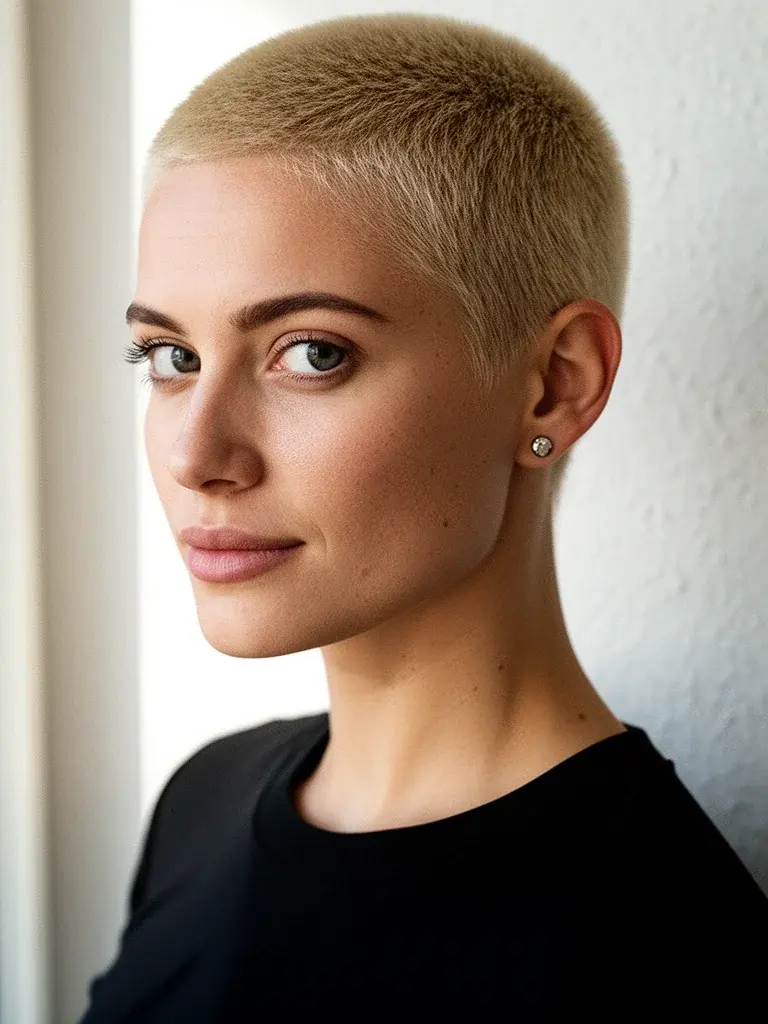
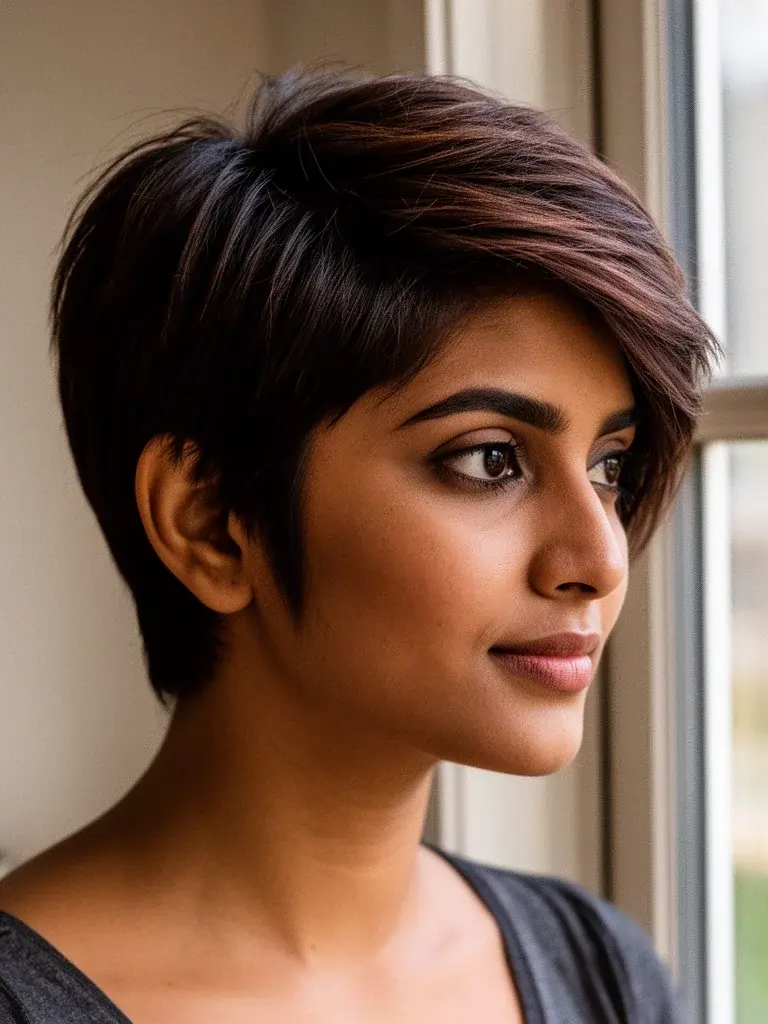
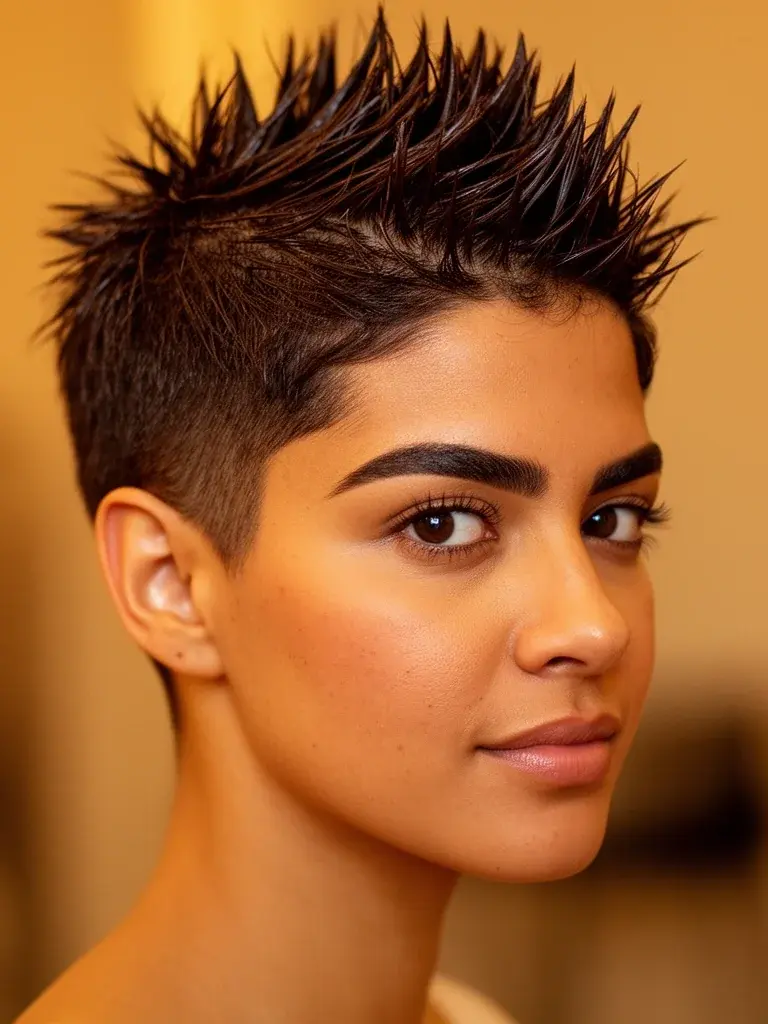
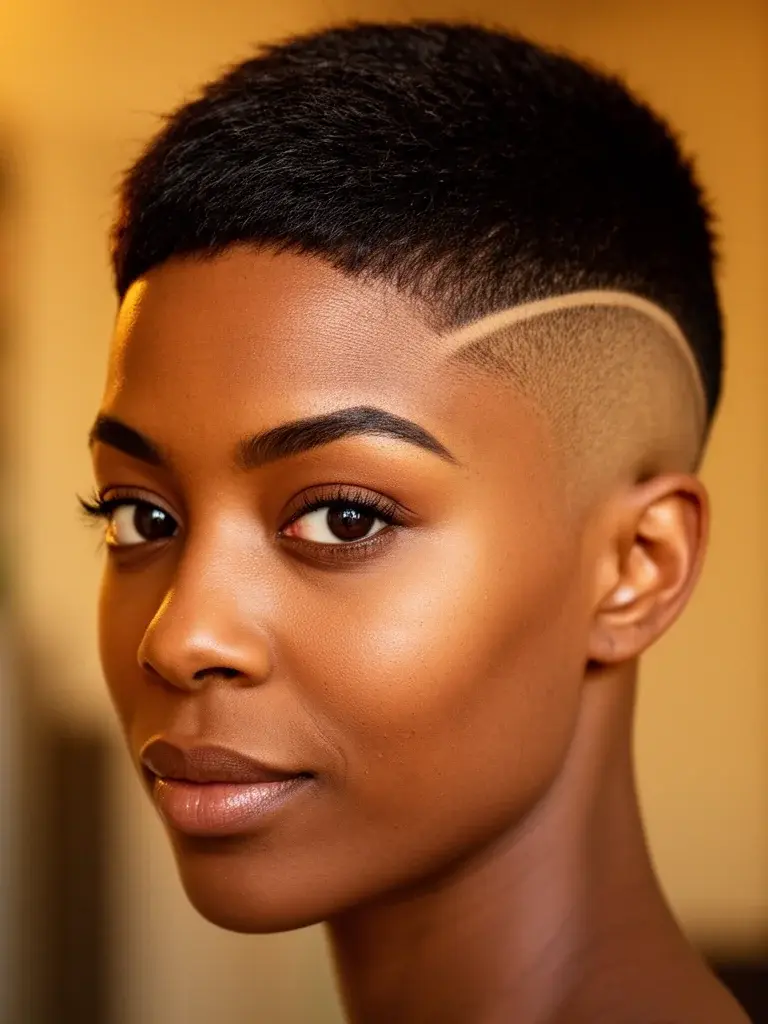
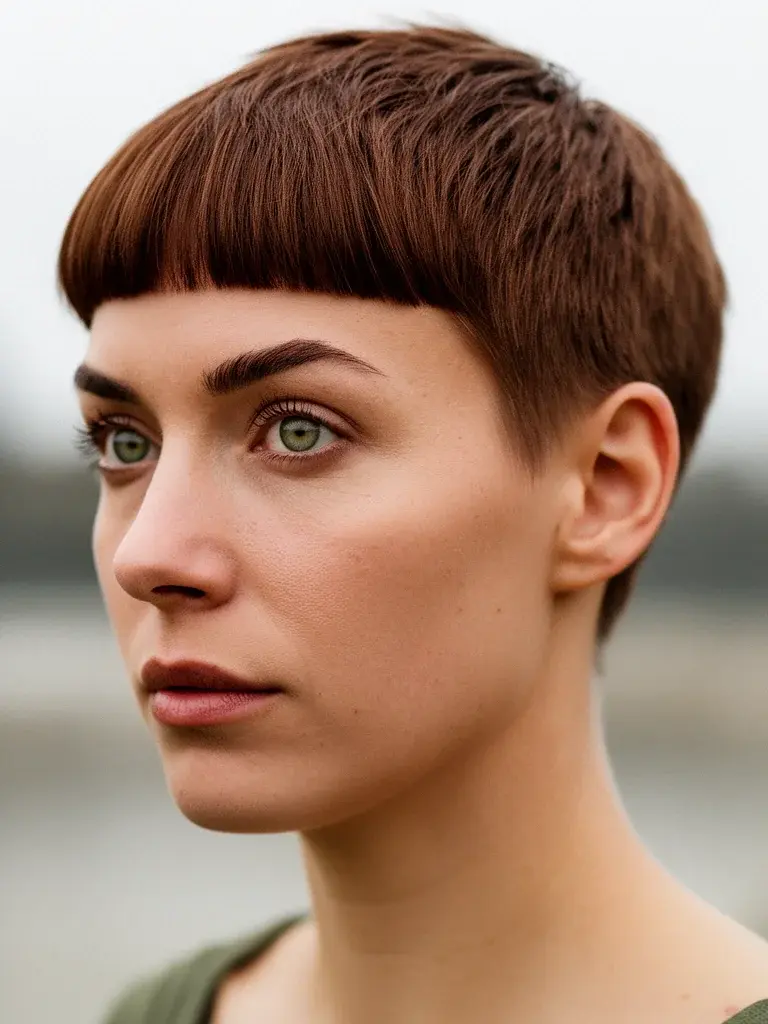
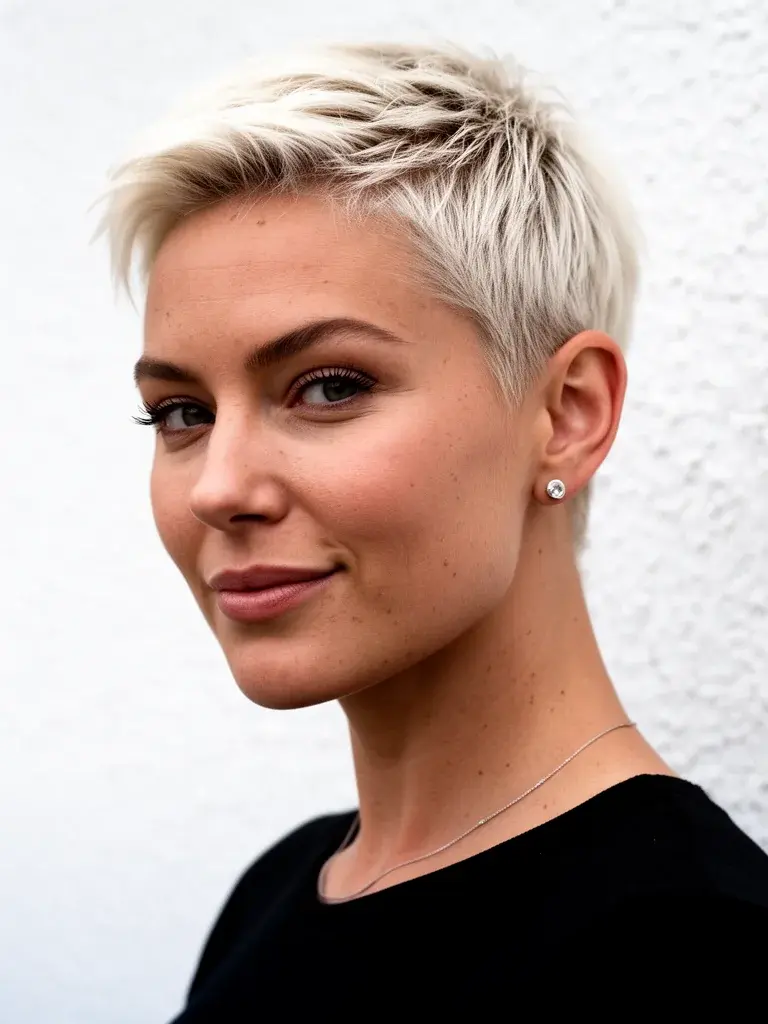
A short pixie is a cropped cut where the sides and back are tapered close to the head (typically half an inch to one inch) and the top retains 2–3 inches of length for texture and direction. The ears are fully exposed. The nape is clean. The overall effect is sculptural — the cut follows the shape of your skull and highlights the bones of your face.
Unlike a buzz cut, which removes almost all length, the pixie keeps enough hair on top to style in different directions — forward, to the side, or tousled up. That 2–3 inches of top length is what separates a pixie from a military cut. It's the difference between "I cut my hair off" and "I chose this shape intentionally."
Short Pixie vs Long Pixie vs Boy Cut
| Short Pixie | Long Pixie | Boy Cut | |
|---|---|---|---|
| Top length | 2–3 inches | 4–6 inches | 1–2 inches, uniform |
| Sides | Tapered, 0.5–1 inch | Graduated, 1–2 inches | Same as top, all-over short |
| Face shape | Best for oval, heart, diamond | Best for any shape (length is forgiving) | Best for oval, strong features |
| Maintenance | Every 4–6 weeks | Every 6–8 weeks | Every 3–5 weeks |
| Styling time | Under 60 seconds | 2–5 minutes (more length = more options) | Under 30 seconds |
Bottom line: Short pixie = statement cut with structure. Long pixie = more versatility and softer transition. Boy cut = the most stripped-down, uniform option for minimal styling.
Cut Specifications
- Layers: Textured layers on top (point-cut or razor-cut for movement); no blunt lines on the surface
- Bangs/Fringe: Usually incorporated into the top length, swept to one side or forward; can be micro-bangs or long side-swept depending on forehead and preference
- Weight line: Sits at the occipital bone (the bump at the back of your skull); everything below is tapered tight
- Graduation: Strong graduation from the nape upward — the back is the shortest point, blending into the longer top seamlessly
- Trim cycle: Every 4–6 weeks
Color Pairing
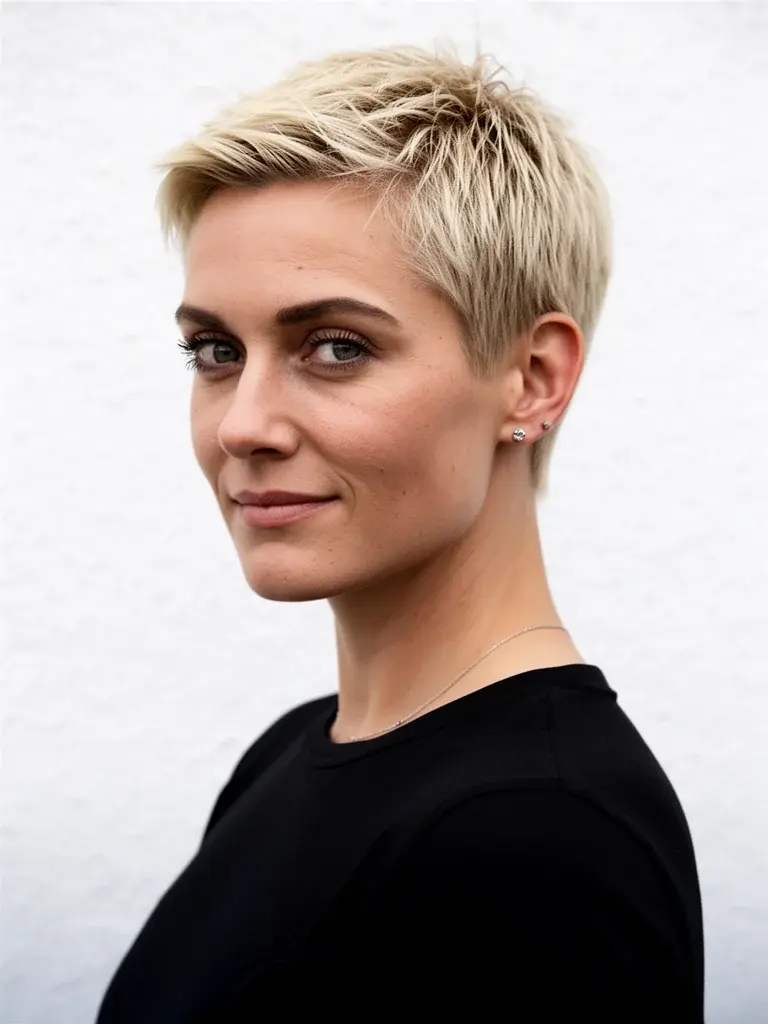
- Platinum or silver pixie: The most iconic pixie color combination. Platinum on a short cut is low-commitment (less bleach damage since the hair is short and gets trimmed frequently). It turns the pixie into a statement piece. Best on cool skin tones, but warm skin can pull off icy silver with the right undertone.
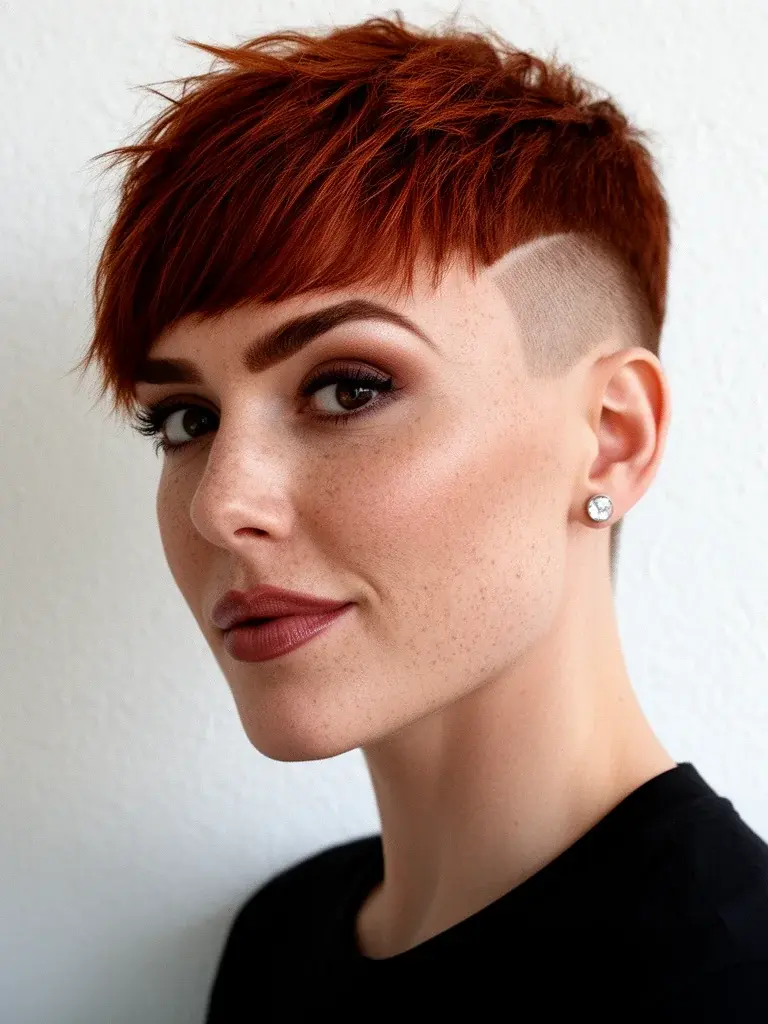
- Warm copper or auburn: Red tones on a pixie catch light from every angle and add visual warmth to the exposed face and neck. A single-process copper is low-maintenance on short hair — just refresh the gloss every 4–6 weeks.
- Natural with micro-highlights: If you want dimension without drama, ask for baby highlights (thin foils) through the top section only. On 2–3 inches of hair, even subtle lift creates visible contrast. Keeps the cut looking multi-dimensional without looking "done."
Face Shape Tweaks
- Oval: You have the most freedom. Any pixie length and proportion works — experiment with asymmetry, side parts, or swept-forward fringe.
- Heart: Keep more volume on top and at the crown to balance a wider forehead. A side-swept fringe that covers part of the forehead works better than a center part that exposes it fully.
- Diamond: A pixie highlights your cheekbones beautifully. Add a bit of length or texture at the temples to soften width at the cheekbone line. Avoid pulling everything back tight.
- Round: The trickiest match, but doable. Maximize height on top (3 inches, styled upward or to the side) and keep the sides very short. The vertical emphasis counters the circular face shape. A deep side part helps.
- Square: Add soft, piece-y texture on top to contrast the strong jawline. Avoid blunt, geometric shapes that mirror the jaw — your pixie should be the soft counterpoint to your angular features.
Hair Type Tweaks
- Straight: Will show the cut's architecture most clearly. If your hair is very flat, ask for point-cutting on top to create texture — otherwise a straight pixie can look like a helmet.
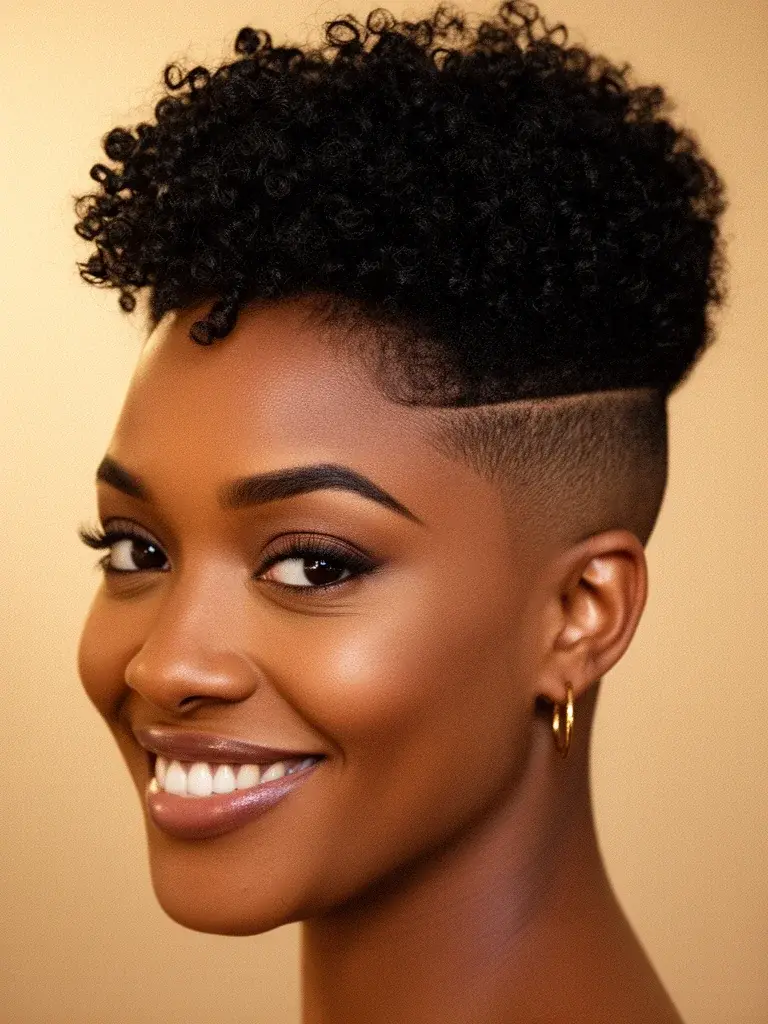
- Wavy: Natural wave is an asset on a pixie — it adds movement without product. Leave the top slightly longer (3 inches) so the wave has room to form.
- Thick: Ideal for a pixie because thickness gives the top section body and fullness. Your stylist should thin the interior aggressively, especially at the sides and nape, so the shape stays clean between trims.
- Fine: Possible but tricky — a very short pixie on fine hair can expose the scalp. Keep the top longer (closer to 3 inches) and avoid going too tight on the sides. A long pixie might serve you better.
The Grow-Out Plan
The biggest fear with a pixie isn't getting it — it's growing it out. The awkward stage is real, but it's manageable with a plan. Here's a month-by-month strategy.
- Months 1–2 (the easy part): The pixie still looks like a pixie, just softer. No trims needed unless the nape gets unruly. Enjoy the cut.
- Months 3–4 (the awkward nape): The back and sides outgrow the shape first. Book a trim to clean up the nape and behind the ears — but don't touch the top or fringe. You're growing those out. This is when headbands, clips, and small barrettes become your allies.
- Months 5–7 (the mini mullet zone): The top is now 4–5 inches, the sides 2–3 inches. It's tempting to cut it all even, but resist. Ask your stylist to "reshape without removing length" — they'll clean up the silhouette while preserving your progress. This is the hardest stretch; push through.
- Months 8–10 (turning the corner): You're entering Boy Cut territory, then short bob territory. The back has caught up. Layers start making sense. Your stylist can now shape it into an intentional short style rather than "growing out a pixie."
- Months 12–18 (the finish line): You've reached bob length. The grow-out is over. If at any point during this process you love the in-between length — keep it. Some of the best haircuts are discovered during a pixie grow-out.
What to Tell Your Stylist
"I want a short pixie — tapered sides and back blending into 2–3 inches on top. I want texture on top, not blunt. Keep the weight line at my occipital bone. I part on the [left/right/no preference]."
Reference photo tips:
- Bring photos of pixies on hair textures similar to yours. A pixie on straight hair is a completely different shape than one on wavy hair — make sure your reference matches your reality.
- Show your stylist the side and back views too, not just the front. The back of a pixie is where the craft shows — a good nape taper versus a choppy one makes or breaks the cut.
- If this is your first pixie, tell your stylist your biggest concern. "I'm worried it'll look masculine" or "I'm worried about my ears" — they can adjust proportions to address specific anxieties. Good stylists customize; they don't just replicate photos.
How to Style
Daily (45 seconds):
- Towel-dry or shake dry after washing
- Rub a pea-sized amount of matte texture paste between your palms
- Work through the top in the direction you want it to fall — forward, to the side, or messed up
- Done
Polished (3 minutes):
- Apply heat protectant to damp hair
- Blow-dry on medium heat, directing the top in your preferred direction with your fingers or a small round brush
- Once dry, apply a tiny amount of pomade or wax to define pieces and add separation
- Set the shape with a light-hold hairspray if your hair tends to fall flat
No-Heat Alternative:
- Towel-dry until barely damp
- Apply mousse or a volumizing spray to the roots
- Finger-style the top into place
- Let it air-dry completely (10–15 minutes for a pixie — one of the perks of short hair)
- Once dry, rub a small amount of dry texture spray or paste through the top for hold and separation
Maintenance Schedule
- Week 1–2: The pixie is at peak sharpness. The taper is clean, the shape is sculptural, the top falls exactly where it should. This is the "I love my haircut" phase.
- Week 3–4: Still looking great. The top has a bit more weight, which some people actually prefer — slightly more relaxed and less severe. The nape and sideburns are starting to grow but still acceptable.
- Week 5–6: The shape is softening. The sides are losing their taper. The back is starting to curl or flip at the nape. This is when most people book their next appointment.
- Week 7–8+: The pixie no longer looks like a pixie — it looks like a short cut that needs a trim. The proportions are off (top and sides are converging in length). Don't wait past 6 weeks if you want to keep the structure.
If you color your hair:
- Platinum or fashion colors: touch up roots every 3–4 weeks; the short length means less processing damage, but regrowth is visible fast on a pixie
- Single-process natural shades: every 4–6 weeks aligns with your trim schedule — book color and cut together
- Highlights or lowlights: every 8–10 weeks; the short length means highlights grow out faster, but the texture of a pixie makes roots less obvious than on sleek long hair
Pro tip: Invest in a good dry shampoo. Pixie hair shows oil at the roots faster than longer styles (there's less hair to distribute oil through), and day-two pixie texture is actually better than day-one. A quick hit of dry shampoo at the roots extends your wash cycle and adds grip for styling.
Common Mistakes
-
Asking for a pixie at a salon that doesn't specialize in short cuts Fix: Look at your stylist's portfolio. If every photo is long hair and balayage, find someone who regularly cuts pixies. Short-hair cutting is a different skill set than long-hair work.
-
Going too short on the first visit Fix: Start with a longer pixie (3 inches on top, 1 inch on the sides) and go shorter on the next visit once you know how the proportions sit on your face. You can always cut more off; you can't glue it back on.
-
Neglecting the nape between appointments Fix: The back of the neck grows fastest and gets unruly first. If your pixie is losing shape at week 4 but you can't get in until week 6, use a small trimmer or razor to clean up the neckline at home. Watch a YouTube tutorial first.
-
Using products designed for long hair Fix: Skip the serums, heavy oils, and smoothing creams. A pixie needs lightweight hold — matte paste, texture clay, or dry texture spray. Anything heavier will flatten the cut and make it look greasy.
-
Panicking during the grow-out and cutting it all off again Fix: If you decide to grow it out, commit to at least 6 months before making a decision. The awkward stage is temporary. Get shaping trims every 4–6 weeks during grow-out — they keep it looking intentional while adding length. Re-read The Grow-Out Plan above.