


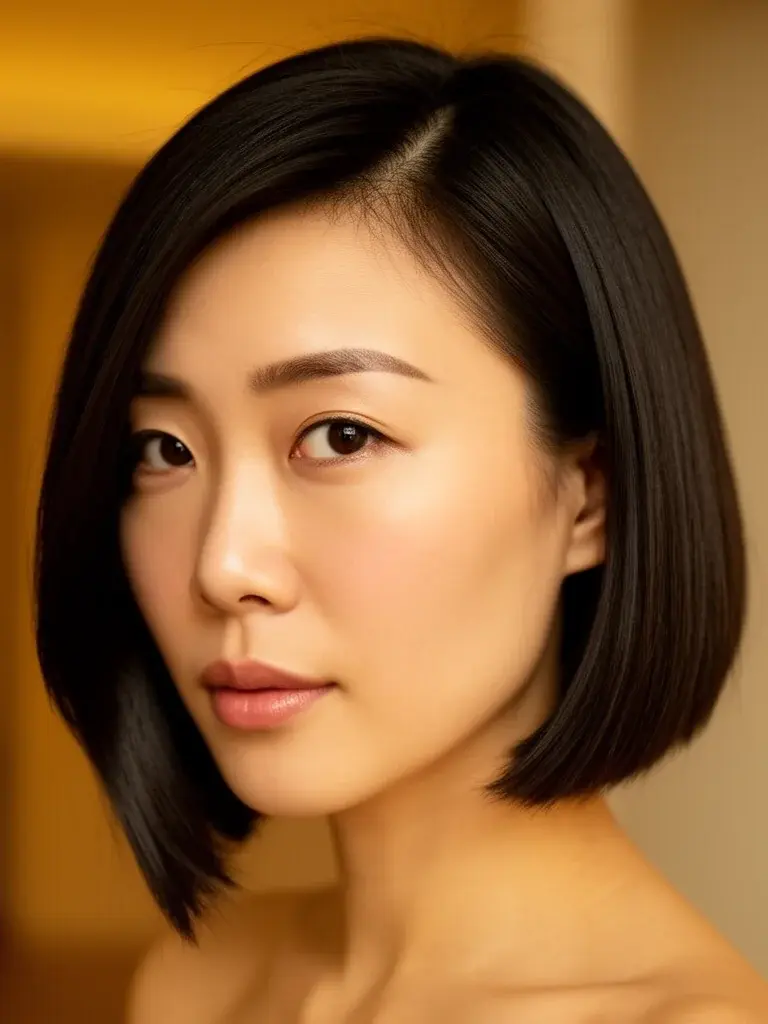
The Bob Decision Framework
Choosing a bob comes down to three questions. Answer them in order and you'll know exactly which one to ask for.
1. Do you want graduation in the back?
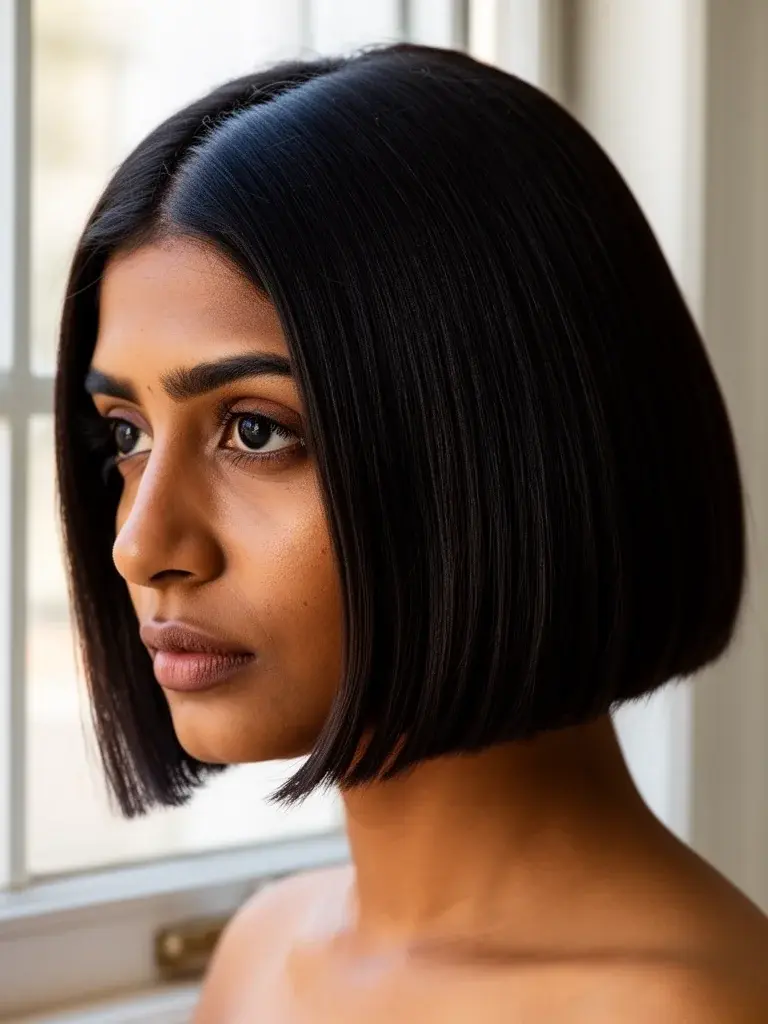
No graduation → Classic Bob or Blunt Bob: flat, even silhouette, equal length all around.
Yes, stacked volume → Inverted Bob: shorter back, layers fold over each other for structural lift.
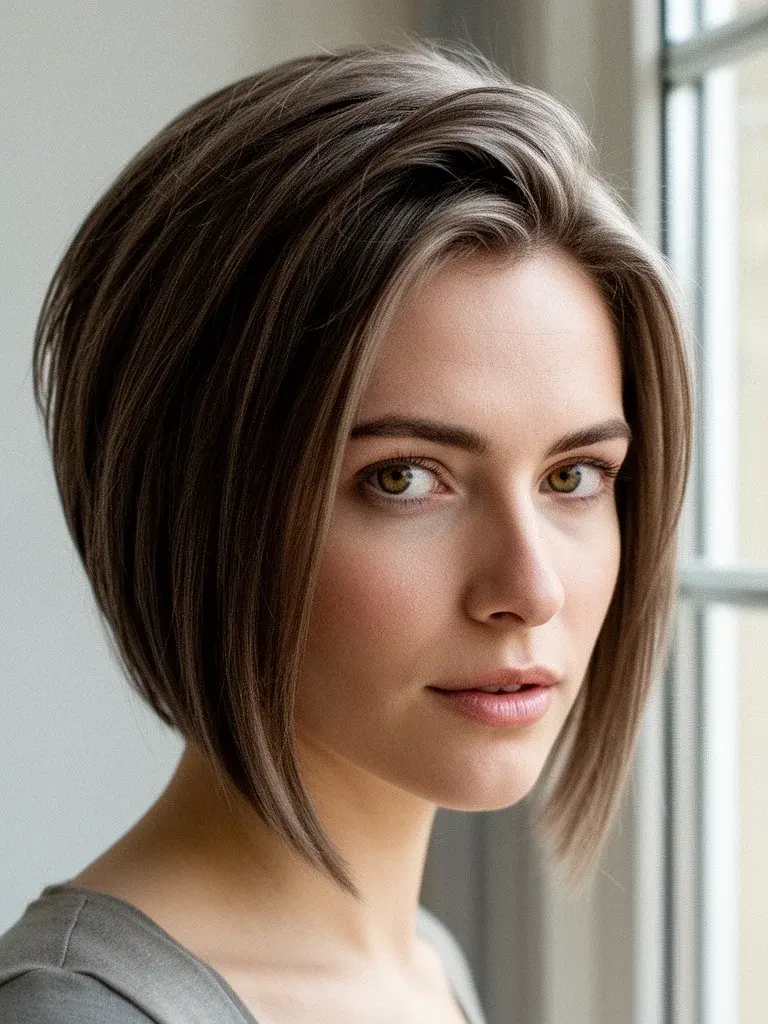
Yes, clean angle → A-Line Bob: shorter back blending into longer front with a smooth diagonal — no stacking.
2. Do you want the ends blunt or soft?
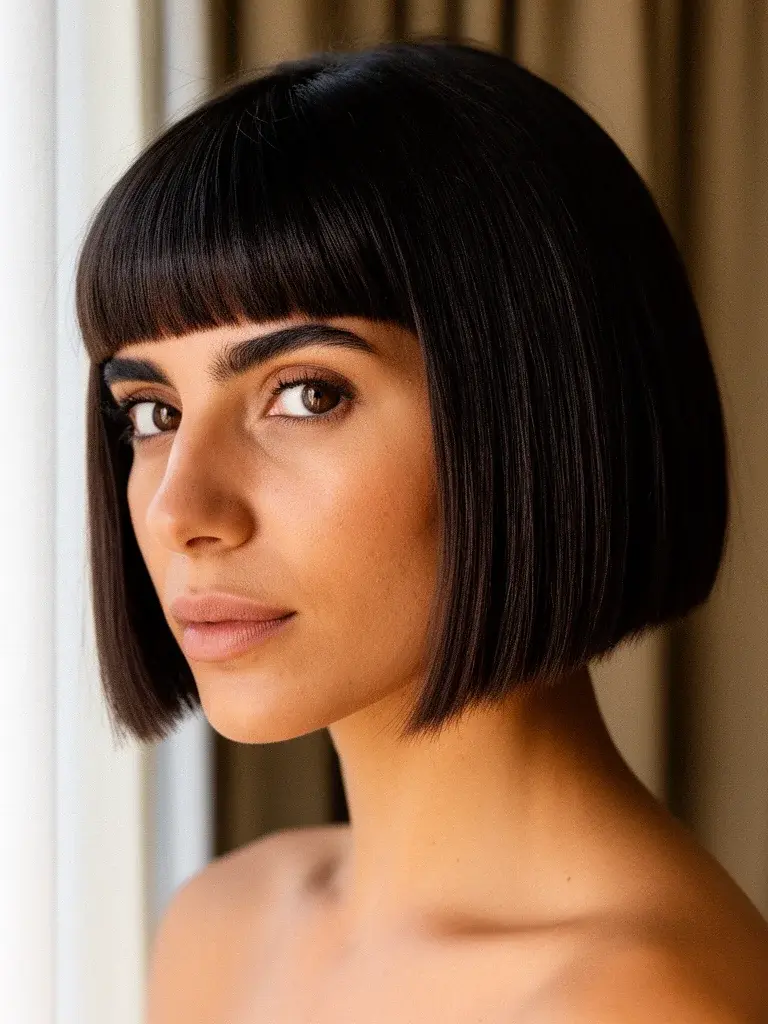
Blunt (every strand cut to a hard horizontal line) → Blunt Bob: the most graphic, intentional look. Best for fine hair.
Soft or standard → Classic Bob, A-line Bob, or Inverted Bob: slight point cutting or graduation softens the perimeter.
3. How much maintenance can you realistically commit to?
| Bob Type | Trim Schedule | What Gets Trimmed |
|---|---|---|
| Classic Bob | Every 6–8 weeks | Full perimeter |
| Blunt Bob | Every 6–8 weeks | Weight line (shows growth fast) |
| Inverted Bob | Every 4–6 weeks | Neckline first, then overall |
| A-Line Bob | Back: 6–8 weeks, front: 8–10 weeks | Back shorter section first |
The inverted bob is the highest-maintenance option. If 4–6 week appointments aren't realistic, choose a different bob.
Face Shape to Bob Type
Every bob works on every face with the right adjustments, but these are the strongest starting matches:
Round faces — Inverted bob or A-line bob. The longer front pieces create vertical lines at the jaw; the inverted bob's back height adds perceived length. Avoid above-chin bobs that hit at cheek level.
Square faces — Classic bob or inverted bob with slightly softened ends. The bob length at jaw level works with the square jaw; avoid a blunt cut that echoes the jaw's horizontal line at the same level.
Oblong faces — Classic bob or blunt bob at chin level. The horizontal weight line breaks the vertical emphasis. Avoid very long bobs (below chin) on oblong faces.
Heart faces — Any bob at chin or below. Length at the jaw adds visual weight to the narrowest part of the face, balancing a wider forehead.
Diamond faces — A-line or blunt bob. The longer front pieces add width at the narrow lower face.
Oval faces — All bobs. Every variation works without adjustment.
Fine Hair and Thick Hair: Different Bobs
Fine hair — The blunt bob is fine hair's best haircut. The single cut line creates visual density — all strands landing at the same point looks thicker than strands graduating to different lengths. Avoid the layered bob, which makes fine hair appear thinner.
Thick hair — Every bob type works, but interior thinning is almost always needed. Without it, thick hair in a flat bob creates a heavy triangle; in an inverted bob it becomes a solid block. Ask for interior thinning explicitly at every bob appointment if you have thick hair.
Which Bob to Try First
If you've never had a bob: Classic Bob. It's the safest transition, most forgiving to grow out, and the best canvas for figuring out what you actually want in length and structure. After one cycle of a classic bob, you'll know whether you want more (go blunt or inverted) or less (go lob).
If you want more visual impact: Blunt Bob. The clean graphic line is bolder than a standard bob without requiring a different length or structure. One technique change; significant visual difference.
If you want volume without daily effort: Inverted Bob. The stacked graduation creates structural lift that no product can replicate. The tradeoff is the 4–6 week neckline schedule — be honest with yourself about whether that works before committing.
If you want geometric direction: A-Line Bob. The diagonal angle creates visual interest without the neckline maintenance of an inverted bob. The most balanced choice between impact and maintenance.
If you want texture and lived-in personality: Shaggy Bob. The choppy layers air-dry with movement and look better grown-in than any other bob. Ideal for wavy and curly hair that doesn't want to be blowdried daily.
If you want something that makes a design statement: Asymmetrical Bob. The left-to-right length difference creates a silhouette that's clearly intentional. Oval and square faces are the strongest matches.
Textured & Asymmetric Bobs
The bob is no longer just a precision cut. Two variations have pushed the category into more expressive territory:
Shaggy Bob — choppy layers, textured ends, and a deliberate absence of the clean weight line that defines a classic bob. Built for wavy and curly hair that air-dries with personality. The 2025–2026 answer to the question "I want a bob but I don't want to blowdry every day." Maintenance: every 8–10 weeks — the most forgiving bob to grow.
Asymmetrical Bob — one side cut noticeably longer than the other, creating a visible diagonal across the face. The most architecturally bold bob variation. Oval, square, and oblong faces are the strongest matches; the angular line either works with strong features or creates dynamic tension with them. Maintenance: every 6–8 weeks, with possible short-side shape-ups at week 4 for dramatic asymmetry.
| Bob | Best texture | Best face shape | Maintenance |
|---|---|---|---|
| Shaggy Bob | Wavy, curly, thick | Oval, round, heart, square | 8–10 weeks |
| Asymmetrical Bob | Straight, wavy | Oval, square, oblong | 6–8 weeks |
The common thread: both reject the symmetry and precision of traditional bobs in favor of visible character. If your current bob feels too stiff or too safe, either of these variations is the answer.
What to Tell Your Stylist
Classic Bob:
"Classic bob — chin length, uniform all the way around, slight graduation at the back to hug the head shape."
Blunt Bob:
"Blunt bob — no graduation, no layers. All ends to the same horizontal line at [jaw / just below chin]. No point cutting."
Inverted Bob:
"Inverted bob — stacked graduation starting from the nape, front pieces to [chin / collarbone]. [Gradual / dramatic] inversion angle. Clean neckline."
A-Line Bob:
"A-line bob — back shorter at [nape / mid-neck], front pieces at [chin / below chin]. [Subtle / standard / dramatic] angle. No stacking."
One thing that applies to all of them: bring a reference photo. Bob variations can sound similar in description and look very different in execution. A photo removes ambiguity — the shape, the finish, the angle are visible rather than approximated.