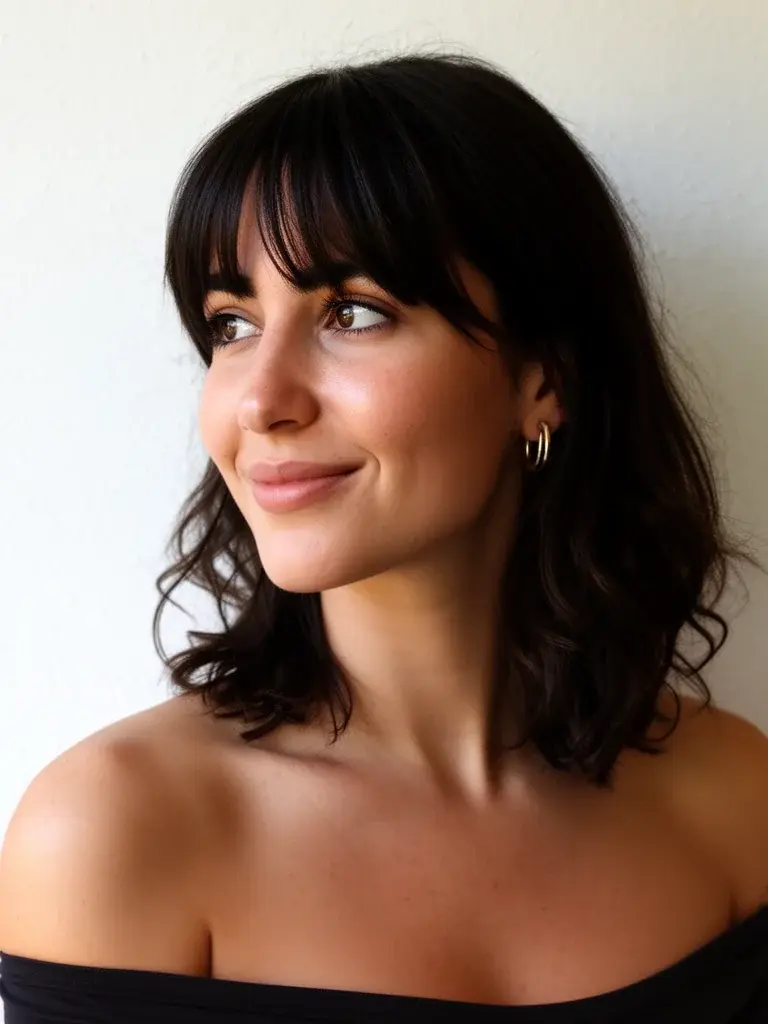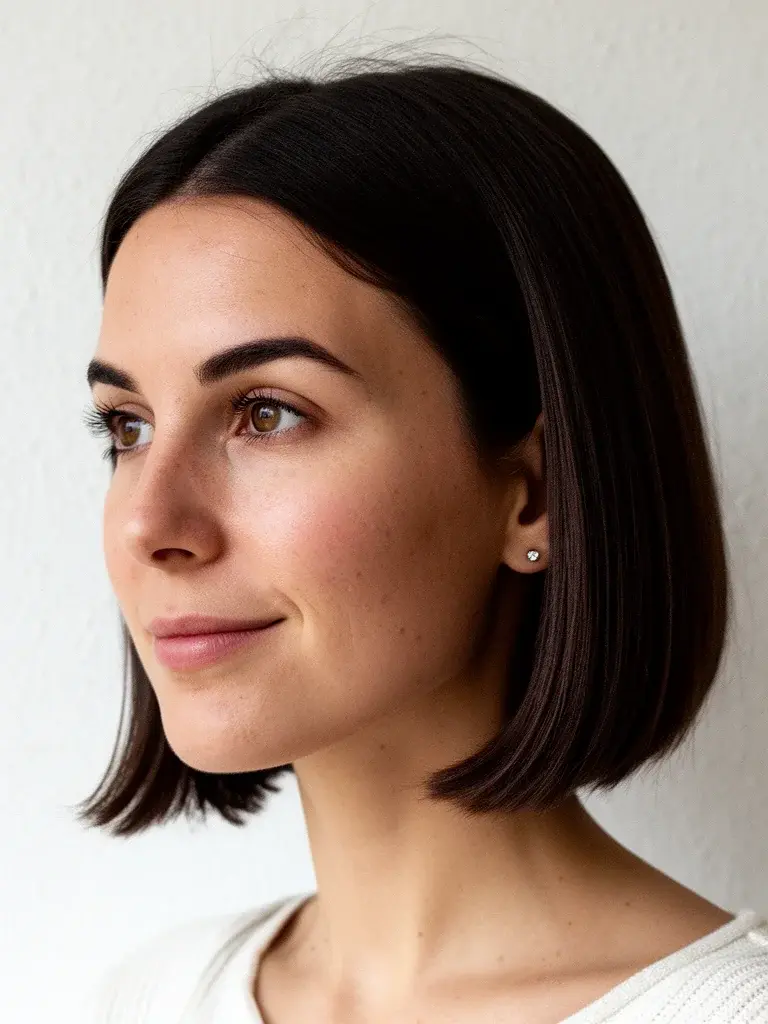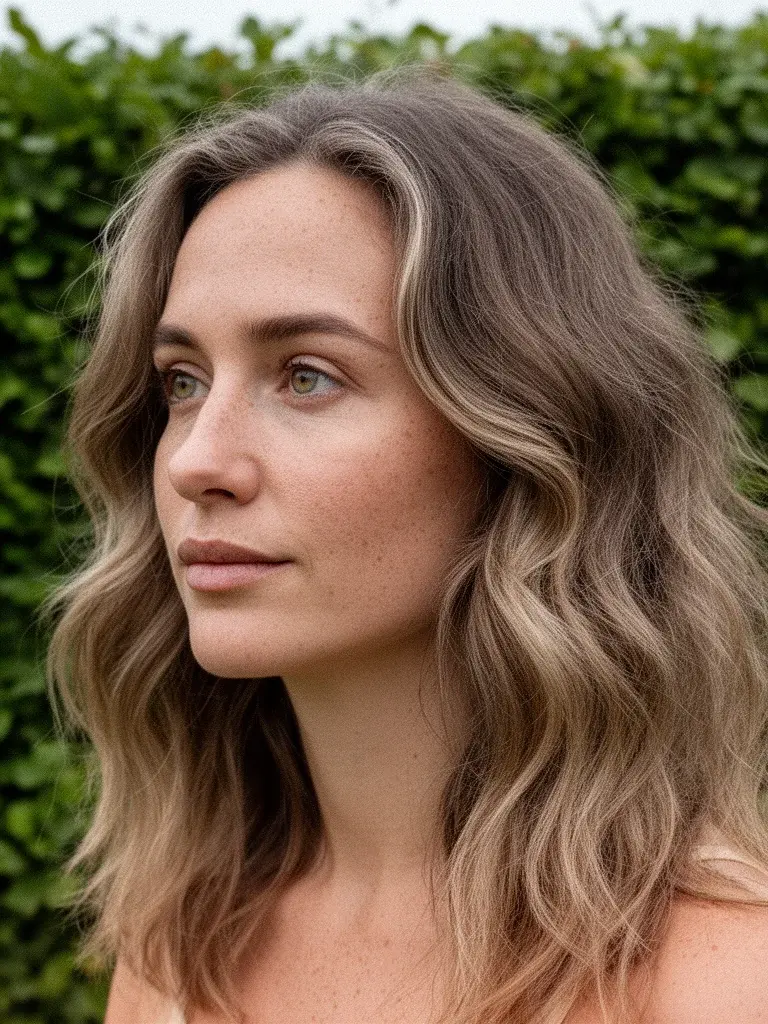
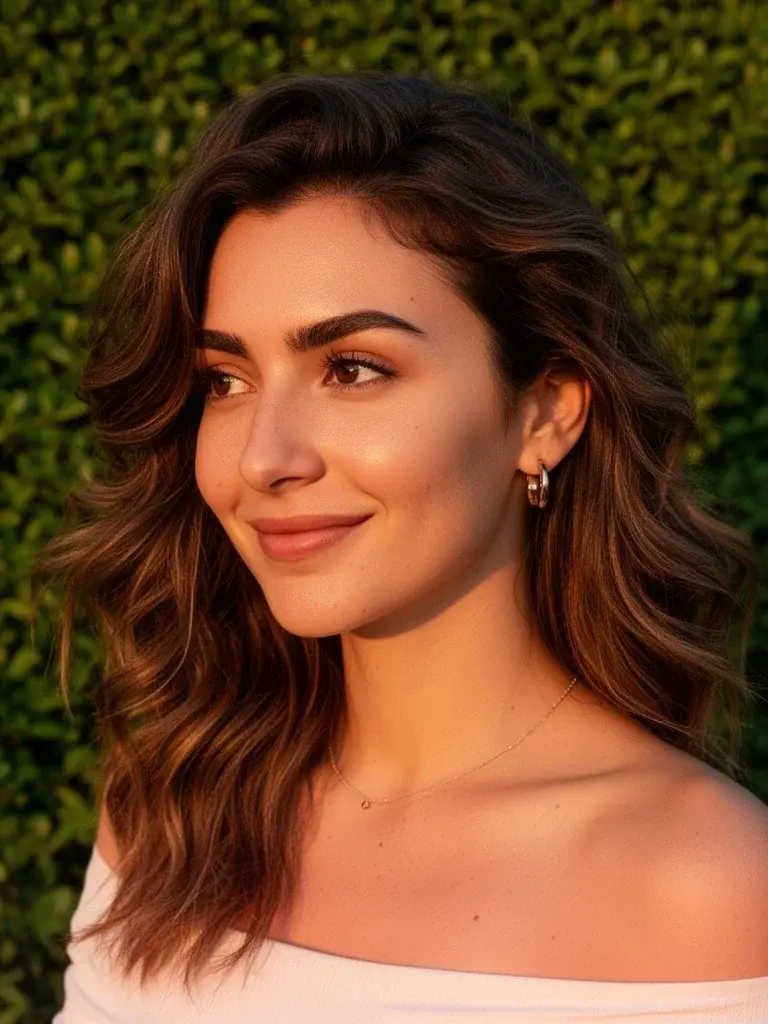
TL;DR
- Best for: Every face shape — waves are universally flattering and soften any feature
- Avoid if: You want a style that survives rain, humidity, or a workout (waves drop fast in moisture)
- Ask your stylist: "Long layers for movement, no blunt ends — I want it to wave naturally when I curl it"
- Maintenance: Trim every 8–10 weeks to keep ends healthy and wave-friendly
Who Does It Suit?
Ideal for:
- Every face shape — the soft, irregular waves frame the face without adding geometric structure
- Women who want to look "put together" with minimal skill required
- Office-to-evening versatility — beach waves dress up and down without changing your hair
- Medium to long hair (chin-length minimum, but works best at shoulder length and beyond)
- Anyone who hates perfect, uniform curls and prefers a "did I style this or did the wind?" look
Hair types:
- Straight: Needs the most work to create waves, but holds them surprisingly well with proper prep. This is where a curling wand earns its keep.
- Wavy: You're starting with half the job done. A little sea salt spray and scrunching on air-dried hair often gets you there with zero heat.
- Fine: Beach waves are your best friend. The bends create visual thickness and volume that flat-ironed straight hair never will.
- Thick: Waves form easily but can look heavy. Leave the bottom 2 inches uncurled for a more relaxed, less "pageant" finish.
Avoid If...
- You live in a humid climate and need all-day hold → waves drop in humidity within hours. Try a Classic Bob that looks good straight or wavy
- Your hair is very short (above chin) → not enough length for a wave to form. A Short Pixie or textured crop is a better fit
- You have very tight curls and don't want to heat-straighten first → work with your natural texture instead. An Afro shaped by a specialist will look better and cause zero damage
- You need your style to survive a workout → waves fall apart with sweat. Post-gym hair needs something structural
- Your hair is severely heat-damaged → adding more heat won't help. Cut the damage off, use the braid method for now, and rebuild your hair's health before picking up a wand again
What Are Beach Waves?
Beach waves are loose, irregular bends in the hair that mimic what happens when salt water and wind work on your strands naturally. The key word is "irregular" — unlike traditional curls, beach waves alternate direction, vary in tightness, and include some straight pieces. The result looks undone and effortless, which is why it's been the most-requested salon style for over a decade.
Structurally, beach waves work because of how they interact with layers. Hair cut with long, face-framing layers falls into waves more naturally than blunt-cut hair. The layers create different lengths that bend at different points, producing that "I didn't try" cascade. Without layers, waves tend to look uniform and curl-like — more bridal, less beach.
Beach Waves vs Hollywood Waves vs Deep Waves
| Beach Waves | Hollywood Waves | Deep Waves | |
|---|---|---|---|
| Pattern | Loose, irregular, alternating direction | Uniform S-curve, all same direction | Tight, consistent waves from root to end |
| Finish | Matte, textured, slightly messy | Glossy, smooth, polished | Shiny, defined, voluminous |
| Best for | Casual to smart-casual, every day | Formal events, red carpet, weddings | Bold, editorial, statement looks |
| Hold time | 1–2 days | 1 day (hairspray-dependent) | 2–3 days |
| Effort | 10–20 minutes | 30–45 minutes (requires pin curling technique) | 20–30 minutes (triple-barrel iron or braids) |
Bottom line: Beach waves are the everyday, low-effort option. Hollywood waves are for events where you want glamour. Deep waves are for volume addicts who want drama.
Cut Specifications
Beach waves are a styling technique, not a cut — but the right cut makes them fall naturally and hold longer.
- Layers: Long layers starting at chin level, with the shortest pieces framing the face. Internal layers every 2–3 inches to remove weight and create movement. Avoid single-length cuts — they resist waving.
- Bangs/Fringe: Curtain bangs pair perfectly — they blend into the waves and frame the face without looking like a separate element. Blunt bangs can work but create a more editorial contrast. No bangs is the most classic beach wave look.
- Weight line: Remove it. Blunt ends create a weight line that fights against natural wave movement. Ask for "soft, piece-y ends" — point cutting or razor cutting the last inch creates movement at the tips.
- Graduation: None. Beach waves don't need graduation or stacking. The style lives in the mid-lengths, not the ends.
- Trim cycle: Every 8–10 weeks. Healthy ends hold waves better than split, dry ends that fan out and lose shape.
Color Pairing
- Sun-kissed balayage: The definitive beach wave color. Hand-painted highlights that are darker at the root and lighter toward the ends. The color variation makes each wave visible — light catches the raised parts, shadow sits in the bends. Works on every base color from dark brown to light blonde.
- Honey blonde highlights: Warm, golden pieces through the mid-lengths and ends. On brunettes, this creates a "just got back from vacation" glow. On natural blondes, it adds dimension that prevents waves from looking flat and monochrome.
- Warm brown with caramel ribbons: For women who don't want to go blonde. Caramel highlights woven through chocolate or chestnut brown give waves depth without dramatic lightening. Lower maintenance than blonde — touch up every 12–14 weeks.
- Single-process gloss: If you don't want highlights at all, a clear or tinted gloss adds the shine that makes beach waves look healthy and intentional rather than just "messy." Apply after every 2–3 shampoos for ongoing reflective quality.
Face Shape Tweaks
- Oval: You can part anywhere and wave from any point. Center part with waves starting below the cheekbone is the most classic beach look.
- Round: Side part, waves starting below the chin. The vertical line of the part and the length of the waves below the jaw create the illusion of a longer face. Avoid volume at cheek level.
- Square: Soft waves around the jawline break up the angular line. Part off-center. Face-framing pieces should wave toward the face to soften the jaw corners.
- Heart: Waves with volume at chin and below balance a wider forehead and narrower chin. Keep the top smoother and let the wave action happen at ear level and below.
- Oblong: Volume at the sides. Part in the center, let waves build outward rather than falling straight down. Chin-length face-framing layers that wave outward add the width that oblong faces need.
- Diamond: Waves at the forehead and jaw to balance prominent cheekbones. Side-swept bangs that blend into waves soften the widest part of the face.
Hair Type Tweaks
- Straight: Your waves will be the loosest and drop fastest. Use a texturizing spray before curling (not after) to create grip. Curl in smaller sections (1-inch max) and let curls cool completely in your palm before releasing. This is the difference between waves that last 6 hours and waves that last all day.
- Wavy (type 2a–2b): You may not need heat at all. Scrunch sea salt spray into towel-dried hair, twist into 2–3 loose buns, let air dry. When you release, you'll have beach waves with zero heat damage. A diffuser speeds this up to 15 minutes.
- Fine: Prep is everything. Dry shampoo at the roots before curling adds grip and volume. Use a lighter-hold sea salt spray (avoid heavy creams that weigh waves down). Smaller wand (1-inch) creates tighter bends that relax into looser waves as the day goes on.
- Thick: Your waves will hold well but can look heavy or "big." Leave the bottom 2 inches straight, curl from ear level down, and shake out aggressively. Use a 1.25-inch wand and larger sections (2-inch). A light oil on the ends keeps the look smooth, not frizzy.
If You Have Straight Hair
Getting beach waves to hold on naturally straight, resistant hair is the #1 frustration women face with this style. Here's what actually works.
- Prep before heat, not after: Texturizing spray or mousse on damp hair, blown dry in. This creates internal texture that the wand locks in. Spraying product on already-curled hair is like painting a wall after the paint's dry — too late.
- Cool before you release: After wrapping each section around the wand (hold for 8–10 seconds on fine hair, 10–12 on thick), slide the curl off and hold it in your palm for 5 seconds. Or pin it against your head with a clip. The curl sets as it cools — releasing hot curls lets them drop immediately.
- Alternate direction, alternate section size: Wrap one section toward your face, the next away. Vary section thickness between 1 and 1.5 inches. This randomness is what makes it look like beach waves instead of old-fashioned curls.
- Don't brush out immediately: Wait 10 minutes after curling your entire head. Then flip your head upside down, shake it out, and run your fingers (not a brush) through from underneath. A brush separates the waves too much and creates frizz.
- Set with the right product: Sea salt spray for matte, textured hold. Light-hold hairspray from 12 inches away for a softer finish. Heavy hairspray at close range turns beach waves into prom hair — you'll feel the crunch and lose the movement.
What to Tell Your Stylist
"I want long layers for beach waves — starting at chin level, face-framing pieces, point-cut ends so nothing looks blunt. I style with a 1.25-inch wand or braids and need the cut to support loose, undone waves. No graduation or stacking."
Reference photo tips:
- Bring photos of beach waves on your hair type. Beach waves on thick hair look completely different from beach waves on fine hair — make sure your reference matches your reality.
- Show the photo from the front and back. Most Instagram beach wave photos are from behind — your stylist needs to know what you want framing your face.
- Point out the wave pattern: "I want loose bends like this, not tight curls" or "I want the waves to start at ear level, not at the root." Be specific about where the wave action begins.
- Ask your stylist to dry-cut the face-framing layers while you watch. Those pieces define how the waves fall around your face — they matter more than the back.
How to Style
This is the core of beach waves. Three methods, different tools, same result.
Daily — Curling Wand Method (15 minutes):
- Start with dry hair. Apply texturizing spray throughout mid-lengths and ends.
- Section hair into top and bottom halves. Clip the top.
- Take 1–1.5 inch sections from the bottom half. Wrap each around a 1.25-inch wand (no clamp), holding for 8–12 seconds. Alternate direction with each section — one toward face, next away.
- Leave the last 1–2 inches of each section unwrapped. This creates the "undone" straight-end look.
- Release the top section. Repeat. For face-framing pieces, always wave away from the face.
- Wait 10 minutes. Flip head upside down, shake vigorously.
- Spray sea salt spray from 10 inches away. Scrunch with hands. Done.
Polished — Second-Day Refresh (5 minutes):
- Spray dry shampoo at the roots for grip and volume.
- Re-curl only the face-framing pieces and any sections that went flat overnight (usually 3–4 sections total, 3 minutes).
- Mist sea salt spray on the mid-lengths. Scrunch.
- Flip upside down, shake, flip back. The second-day texture is often better than day one — the slight grittiness gives waves more hold.
No-Heat — Braid Method (5 minutes active, overnight set):
- Wash hair in the evening. Towel dry until damp (not dripping).
- Apply a leave-in conditioner and a small amount of mousse from mid-lengths to ends.
- Part hair in the center. Create two loose braids — one on each side. Start braiding at ear level, not the crown (braiding from the top creates crimps, not waves).
- Secure with soft hair ties. Sleep on a satin pillowcase.
- In the morning, undo braids. Do not brush. Shake out, then separate sections with fingers.
- Finish with sea salt spray and scrunch. The result is softer, more relaxed waves than the wand method — closer to how hair actually looks after a day at the beach.
No-Heat — Sea Salt Spray Method (3 minutes active, 1–2 hours air dry):
- On towel-dried hair, spray sea salt spray generously through mid-lengths and ends.
- Scrunch hair upward in sections — squeeze from the ends toward the roots in a pulsing motion.
- Twist the front sections away from your face and clip loosely in place.
- Air dry completely (1–2 hours) or use a diffuser on low heat (15 minutes).
- Remove clips, shake out, and separate with fingers. This method works best on hair that already has some natural wave (type 2a+). On very straight hair, it creates texture but not defined waves.
Maintenance Schedule
- Week 1–3: Fresh cut, ends are healthy, waves form easily and hold well. This is your low-effort window — the right cut does 80% of the work.
- Week 4–6: Ends start to dry out slightly. You might need an extra 2–3 minutes of curling to get the same result. Use a leave-in conditioner on wash days to keep ends pliable.
- Week 7–8: Layers are growing out and starting to feel heavy. Waves may drop faster because the weight distribution has shifted. If your waves aren't holding like they did at week 1, it's the haircut, not your technique.
- Week 9–10: Time to book a trim. Split ends fan out instead of waving, and the shape of the cut is losing its layered movement. Even a half-inch trim resets everything.
If you color your hair:
- Balayage and highlights make waves more visible by adding light-dark contrast. Touch up every 12–16 weeks.
- Color-treated hair is actually more porous, which means it holds waves better — silver lining.
- Use a color-safe sea salt spray (some formulas strip color). Check the label for sulfate-free.
Pro tip: Your best beach waves will come on second-day hair. The natural oils and slight texture give waves more grip than freshly washed hair. If you must wash, blow-dry with mousse first — squeaky-clean, slick hair resists waving.
Common Mistakes
-
Curling from the root Fix: Start curling from ear level down. Beach waves live in the mid-lengths and ends. Root curls look like spirals from 2004, not beach waves.
-
Using the same section size throughout Fix: Vary between 1-inch and 1.5-inch sections randomly. Uniform sections create uniform curls — the opposite of "effortless."
-
Brushing waves out with a paddle brush Fix: Use your fingers only, or a wide-tooth comb at most. A brush separates waves into frizzy wisps. The "shake and finger" method keeps the bends intact.
-
Overloading products Fix: One texturizing spray before + one sea salt spray after. That's it. Adding cream, oil, mousse, and hairspray creates a layered mess that weighs waves down and feels crunchy. Less product, more movement.
-
Giving up because "my hair won't hold waves" Fix: It's almost always a prep problem, not a hair problem. Texturizing spray on damp hair, blown dry, then curled, then cooled — this sequence is what makes waves hold on straight hair. Skip any step and they'll drop within an hour.