TL;DR
- Best for: Oval, diamond, and heart faces; thick straight hair; women who want maximum impact from minimum hair
- Avoid if: You work in a very conservative environment where textured, unconventional styling isn't acceptable; you have fine, limp hair that won't hold product
- Ask your stylist: "Short pixie — close taper on the sides and back, about 2 inches on top. I want to style it spiky so make sure there's enough length on top to define individual sections."
- Maintenance: Trim every 4–6 weeks; daily styling required
Who Does It Suit?
Ideal for:
- Oval faces — the structure and height of a spiky pixie work proportionally with oval face geometry
- Diamond and heart faces — spike height balances wider foreheads and mid-face width; the bold style distracts from specific facial asymmetries
- Women who consider their hair a style statement, not a background element
- Thick, straight hair — the texture that's hardest to manage in longer styles becomes an asset at pixie length with wax
- Women who want zero ambiguity in their haircut — the spiky pixie is clearly intentional and communicates confidence
Hair types:
- Straight: The ideal base for spike definition — straight hair takes wax cleanly and holds directional points without frizz disrupting the lines
- Thick: Thick hair's body and weight actually help hold spike definition; the product can define individual sections without them collapsing under their own weight
Avoid If...
- Your workplace has very conservative appearance standards → a spiky pixie is a high-visibility style; try a Short Pixie styled flat if you need something more workplace-neutral
- You have fine, limp hair that doesn't hold product → definition collapses quickly on fine hair; try a Layered Pixie for texture that doesn't require product to maintain
- You have wavy or curly hair → the wave pattern disrupts the clean spike lines; curly hair can create interesting texture but not the defined, directional spikes this look is known for
- You don't want to use product daily → the spiky look is entirely product-dependent; without wax or clay, this is just a standard short pixie
What is a Spiky Pixie?
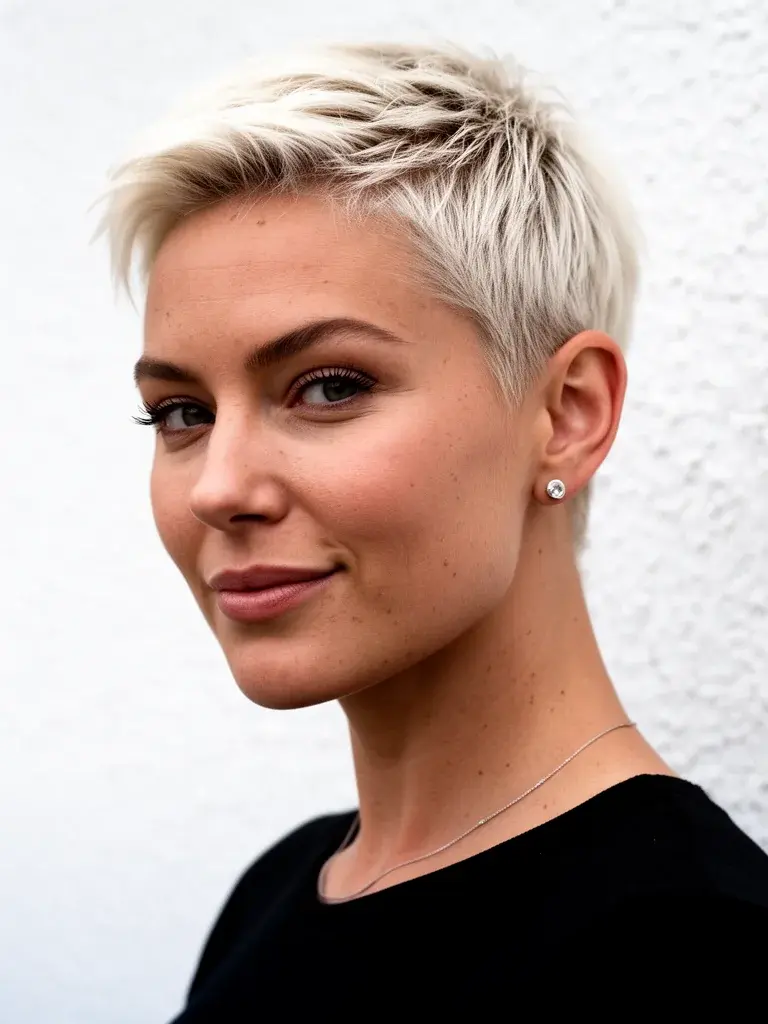
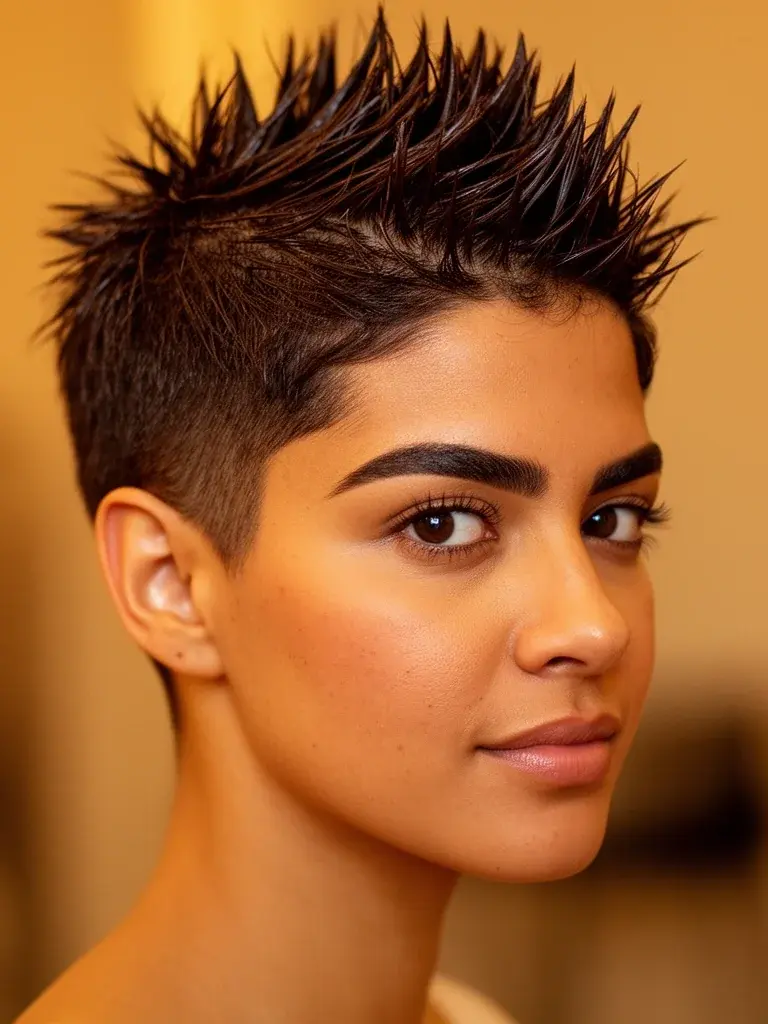
A spiky pixie is a short pixie cut — tapered sides, 1.5–2.5 inches on top — styled using firm-hold product to create defined, textured points or spikes through the top section. The cut itself is functionally identical to a classic short pixie; the styling technique is what produces the distinctive look.
The stylist or the wearer uses a small amount of wax, clay, or fiber paste worked between the fingertips and applied section by section through the top, then uses fingertip pressure to lift and define individual sections into directional points. The result is a geometric, structured look where the hair becomes three-dimensional and highly visible — the opposite of a soft, swept-back pixie.
The spiky pixie's appeal is its clarity of intention. There's no ambiguity about whether this haircut is accidental or deliberate — the texture announces itself. It's associated with confidence, individuality, and a willingness to be noticed, and has a long history as a preferred cut among women who want their haircut to convey a specific point of view.
Spiky Pixie vs Short Pixie vs Buzz Cut
| Spiky Pixie | Short Pixie | Buzz Cut | |
|---|---|---|---|
| Top length | 1.5–2.5 inches | 2–3 inches | Under 0.5 inch, uniform |
| Styling | Required (wax/clay) | Optional (paste or bare) | None needed |
| Daily time | 90 seconds | 60 seconds | Under 30 seconds |
| Impact | High — visible texture | Medium — shape speaks | Maximum — shape is radical |
| Maintenance | Every 4–6 weeks | Every 4–6 weeks | Every 2–4 weeks |
| Product dependence | High | Low | None |
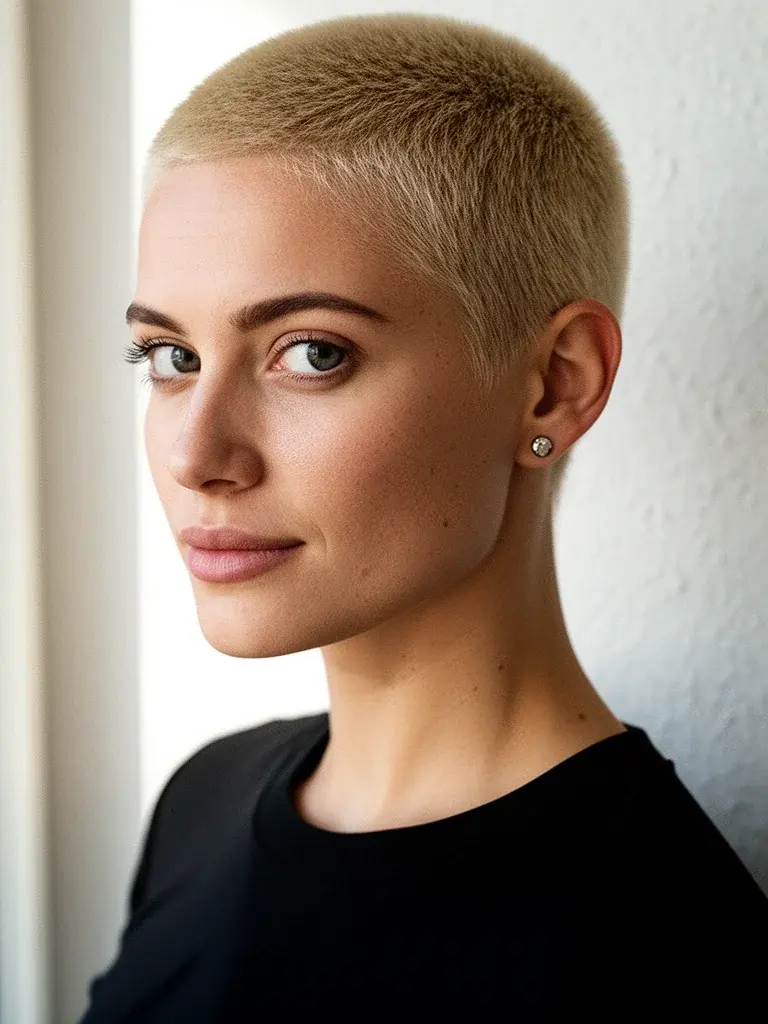
Bottom line: Spiky pixie = maximum personality, requires daily styling investment. Short pixie = structure without commitment to product. Buzz cut = the most radical and lowest-maintenance option.
Cut Specifications
- Layers: Minimal interior layers — the spike technique works better on a more uniform top length where product can define clean individual sections
- Bangs/Fringe: Typically incorporated into the spiked top; a separate fringe doesn't sit naturally with spike styling
- Weight line: At the occipital bone; tight taper on the sides to create maximum contrast with the textured top
- Graduation: Strong graduation — close sides, fuller top — the contrast between tapered sides and textured top is essential to the spiky pixie aesthetic
- Trim cycle: Every 4–6 weeks; the spike technique requires the top to stay at 1.5–2.5 inches to maintain proper texture definition
Color Pairing
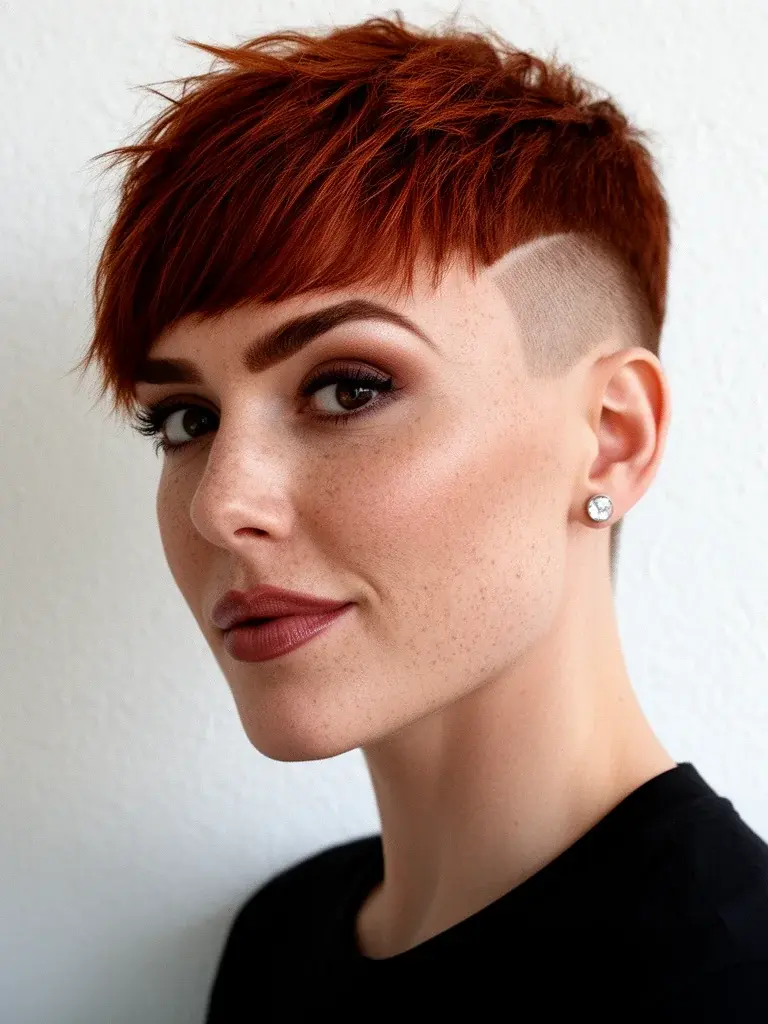
- Bold single-process fashion color: A spiky pixie and a bold color are natural partners — both make statements through confidence and intentionality. The spiked texture interacts with color in three dimensions, showing undertones and depth differently in each light. Any color that's too bold for longer styles looks completely at home on a spiky pixie.
- Platinum or silver with dark roots: High contrast root shadow on platinum hair adds dimension to the spike texture. Each spike shows both the lighter ends and darker base, creating a visual depth that flat platinum can't achieve.
- Natural dark with no color: Black or very dark brown spiky pixies are classic for a reason — the dark tones make the spike shape most visible and architectural. The shape becomes the entire statement without color competing.
Face Shape Tweaks
- Oval: Complete freedom with direction and height. Experiment with spikes directed straight up, to one side, or in various directions for different moods.
- Diamond: Spike height adds length to the face which balances wide cheekbones; avoid making spikes very wide at the sides which would add to cheekbone width.
- Heart: Keep more height and slightly less volume at the temples; direct spikes upward and forward rather than wide, which would emphasize forehead breadth.
Hair Type Tweaks
- Straight: The cleanest spike definition. Apply wax through dry hair for maximum hold, or through slightly damp hair for a slightly softer version. Work section by section rather than all at once.
- Thick: Excellent base for spike definition but requires a firm-hold wax or clay rather than lighter products. Section the hair into 3–4 groups and work each separately for even product distribution and clean individual spike definition.
The Wax Technique
The product and application technique make or break a spiky pixie:
- Product hierarchy: Matte clay (most definition, dry finish) → Pomade (high definition, some shine) → Fiber paste (strong definition, slight texture) → Dry texture spray (loose definition, matte). Avoid gel (flakes dry) and mousse (not enough hold for spikes).
- Amount: Start smaller than you think you need — a pea-sized amount for fine hair, two pea-sized for thick. Build up rather than over-applying.
- Application: Rub product between your palms until it's warm and tacky. Work through the top section with your palms first to distribute evenly, then use your fingertips to define individual sections into points by pinching and lifting.
- Direction: Spikes can go up, forward, to the side, or multi-directional. Pick one approach per day rather than mixing — consistency creates intention, randomness creates mess.
- Re-application: Lightly dampen fingertips with water, then add a tiny additional amount of product to reshape spikes that have fallen during the day without washing out.
What to Tell Your Stylist
"Short pixie — I want to style it spiky, so I need about 2 inches on top to define individual sections. Tight taper on the sides and back. I don't need a lot of interior layers — I want the top to hold product without being too thick. Close sides, fuller top, clean nape."
Reference photo tips:
- Bring photos of spiky pixies in your hair color and texture — a spiky pixie on platinum straight hair looks completely different from one on dark thick hair; the technique and product amounts differ.
- Show photos of your preferred spike direction (up, forward, multi-directional) — this affects how your stylist leaves the top length.
- Mention the product you plan to use. Some stylists adjust the cut technique based on whether you'll be using heavy wax vs lighter products.
How to Style
Daily (90 seconds):
- Rub a pea-sized amount of matte wax between your palms until warm
- Work through the top section with your palms to distribute evenly
- Use your fingertips to define and lift individual sections into points
- Check from multiple angles and adjust any spikes that went the wrong direction
- Optional: light-hold hairspray over the top to extend hold
Polished (3 minutes):
- Start with slightly damp hair (towel-dry then wait 5 minutes)
- Apply a small amount of pomade — slightly more than your usual wax amount
- Use a fine-tooth comb to direct the overall top section first
- Then use fingertips to break the combed sections into defined individual spikes
- Finish with a firm-hold spray
No-Heat Alternative:
- Apply dry texture spray to dry hair, concentrating on the roots
- Tousle and shake from the roots to build volume
- Apply a tiny amount of fiber paste through the top section
- Define spikes with fingertips — the dry texture spray gives grip that makes the paste work with less product
Maintenance Schedule
- Week 1–2: Top section is at the right length (2 inches) for clean spike definition. Product application is most satisfying at this stage.
- Week 3–4: Top is getting slightly longer and the spikes may require more product or more precise application to stay defined. Still looking deliberate and intentional.
- Week 5–6: Top is approaching 2.5–3 inches. The spikes are getting harder to define without product buildup. The sides may be growing into the tapered section and losing their contrast. Time to book.
- Week 7+: The length imbalance between overgrown top and sides means the spiky pixie starts looking like an unintentional short cut rather than a considered style.
If you color your hair:
- Bold/fashion color: wash every 2–3 days anyway for product removal; color-fade is faster with frequent washing; use a color-depositing shampoo to extend vibrancy
- Platinum: toner touch-up every 4–6 weeks to prevent brassy regrowth; the short length means toning is quick and inexpensive
- Dark single-process: align with your 4–6 week trim schedule
Pro tip: Apply wax to dry hair, not towel-damp hair. Damp hair dilutes product and reduces hold — you'll end up adding more and creating buildup. Wait until the hair is fully dry from washing before wax application for maximum spike definition with minimum product.
Common Mistakes
-
Using gel instead of wax or clay Fix: Gel creates defined spikes initially but flakes as it dries throughout the day, leaving white residue on a dark top. Wax and clay don't flake. If you've been using gel, switch to a matte clay and you'll notice the difference immediately.
-
Applying too much product Fix: Excess wax makes the hair look greasy rather than textured, and causes buildup that makes the next-day styling harder. Start with less than you think you need. If the spikes aren't holding, add a tiny amount more — don't start with a large amount.
-
Not washing out product completely between uses Fix: Wax buildup prevents product from working well the next day. Use a clarifying shampoo once a week to fully remove product residue. Regular shampoo doesn't dissolve wax completely over time.
-
Expecting the same result in humid conditions Fix: Humidity softens spike definition on any hair type. Apply a light-hold polymer-based spray before wax application in humid weather — it creates a barrier that protects the product's hold.
-
Getting the cut too short on top to achieve the spike effect Fix: True spikes require at least 1.5 inches of top length to define. If your pixie is shorter than that, the product can't find enough hair to form a point — it just creates texture. Tell your stylist "I want to style it spiky" before they start, so they know to leave adequate length on top.