TL;DR
- Best for: Oval, square, and diamond faces; thick straight or wavy hair; women ready for maximum visual commitment
- Avoid if: You need a versatile, workplace-adaptable hairstyle daily; you've never had short hair and are uncertain; you have very fine hair
- Ask your stylist: "Pixie with a side undercut — shave the [left/right] side to clipper guard #[1/2/3]. Keep the top at [X inches]. I want a clean taper where the shaved side meets the top."
- Maintenance: Shaved section every 2–3 weeks; full trim every 4–6 weeks
Who Does It Suit?
Ideal for:
- Oval faces — the most latitude with how dramatic the undercut can be; oval can handle both conservative and dramatic versions
- Square and diamond faces — the high-contrast asymmetry of the undercut works with angular features rather than trying to soften them
- Women who are 100% committed to the look and understand the grow-out process
- Thick hair — the shaved side removes a significant amount of bulk that thick hair often has; the contrast between shaved and full top is most dramatic on thick hair
- Anyone who wants a haircut that's unambiguous about their aesthetic identity
Hair types:
- Straight: Cleanest contrast between shaved side and longer top; the boundary where shaved meets the longer section is most defined on straight hair
- Wavy: The longer top section retains wave movement that contrasts interestingly with the clean shaved side; creates a softer version of the same look
- Thick: The undercut actively manages the bulk that makes short-hair cuts difficult on thick hair; the shaved side provides relief that allows the top to sit cleanly
Avoid If...
- You work in a setting where unconventional hairstyles may affect your professional standing → a pixie side undercut is very visible and often read as counter-culture; a Short Pixie is equally short but conventionally acceptable
- You've never had short hair and you're testing the waters → start with a Long Pixie or Short Pixie first; add the undercut at a subsequent appointment when you know you're committed to short hair
- Your hair is very fine → the shaved side on fine hair can look overly sparse and scalpy; the contrast between a shaved section and fine hair on top is less dramatic than on thick hair
- You're not prepared for bi-weekly maintenance → the shaved section requires upkeep every 2–3 weeks; if that frequency is unrealistic, the regrowth will look unkempt within 3 weeks
What is a Pixie Side Undercut?
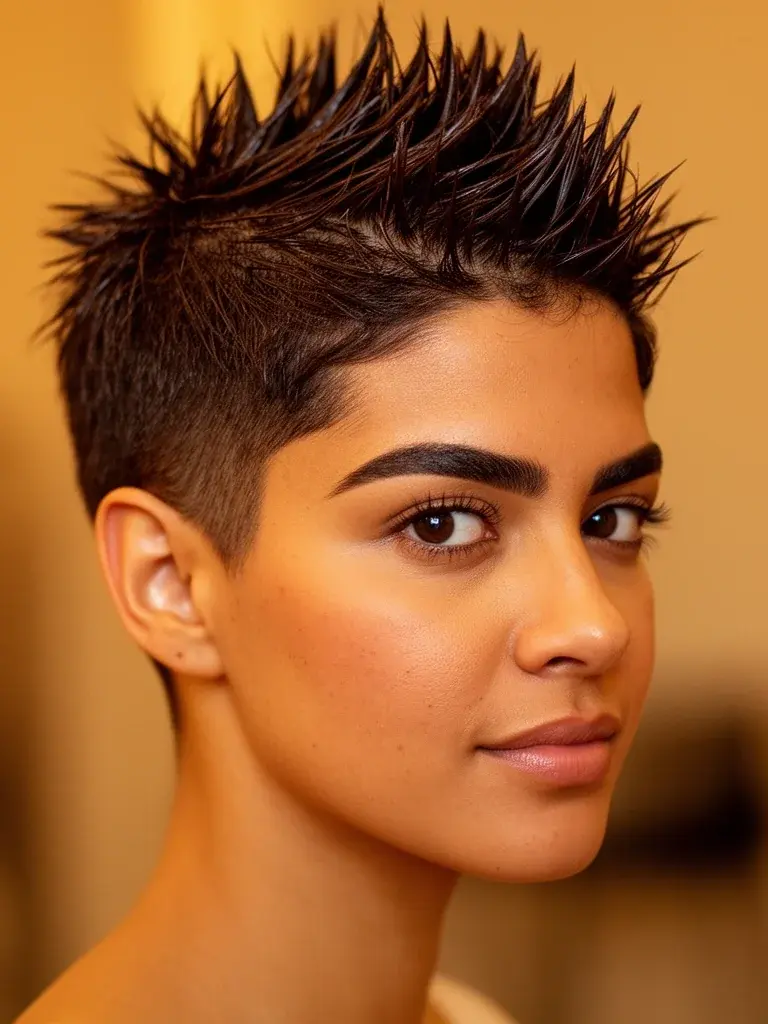
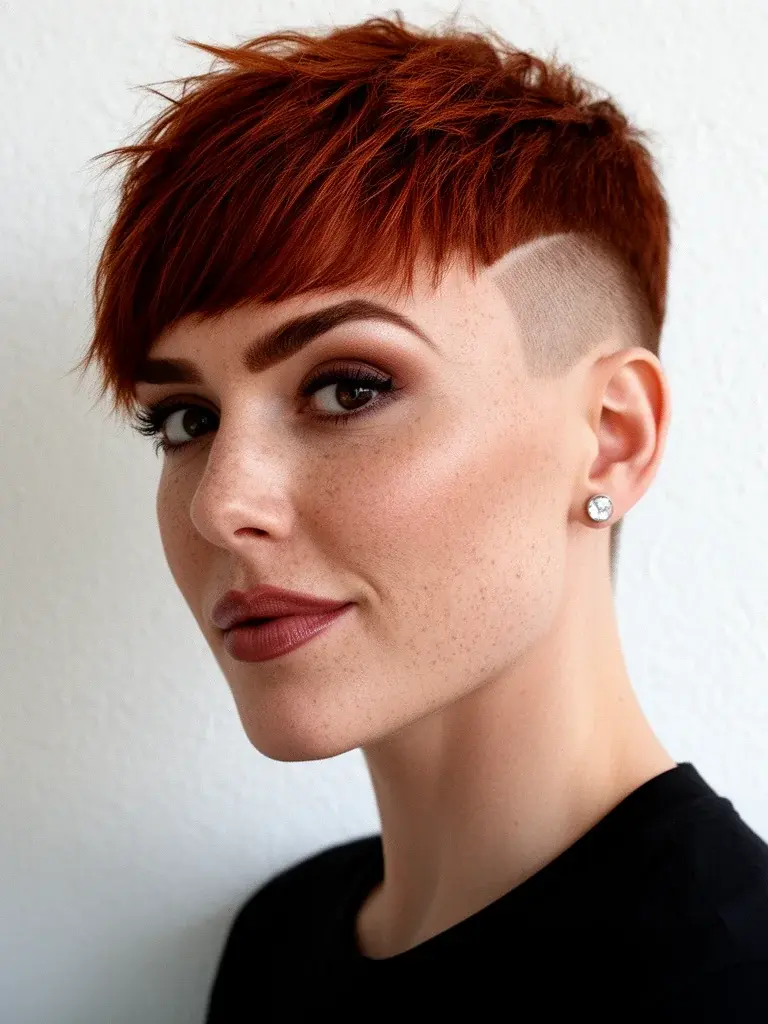
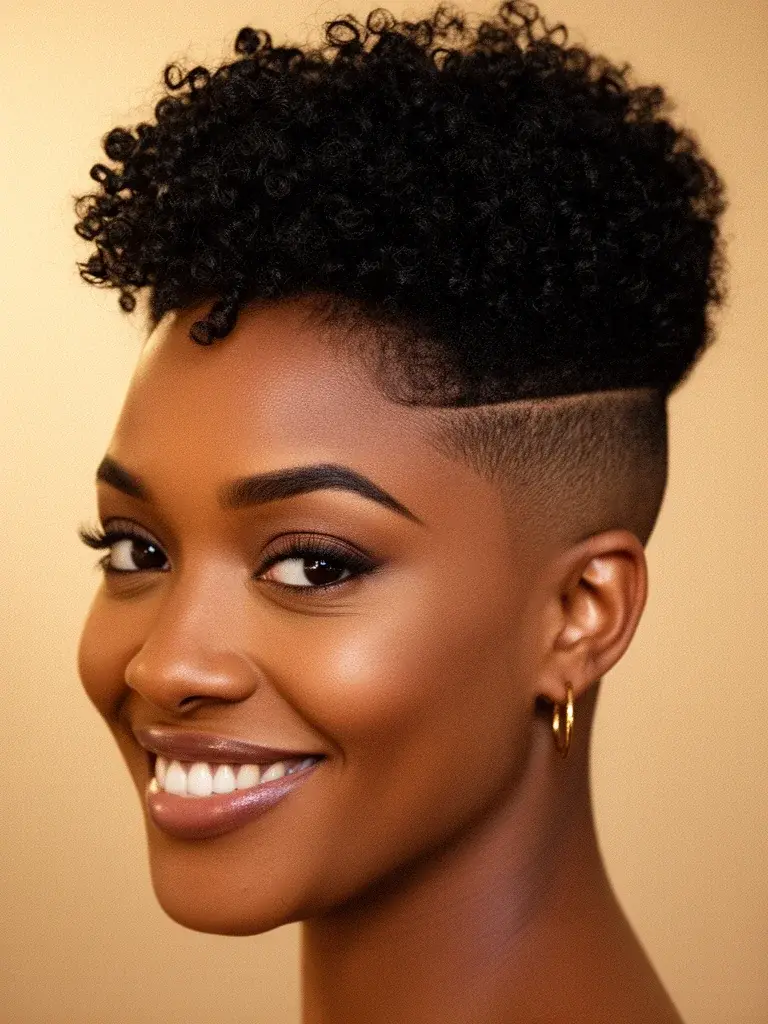
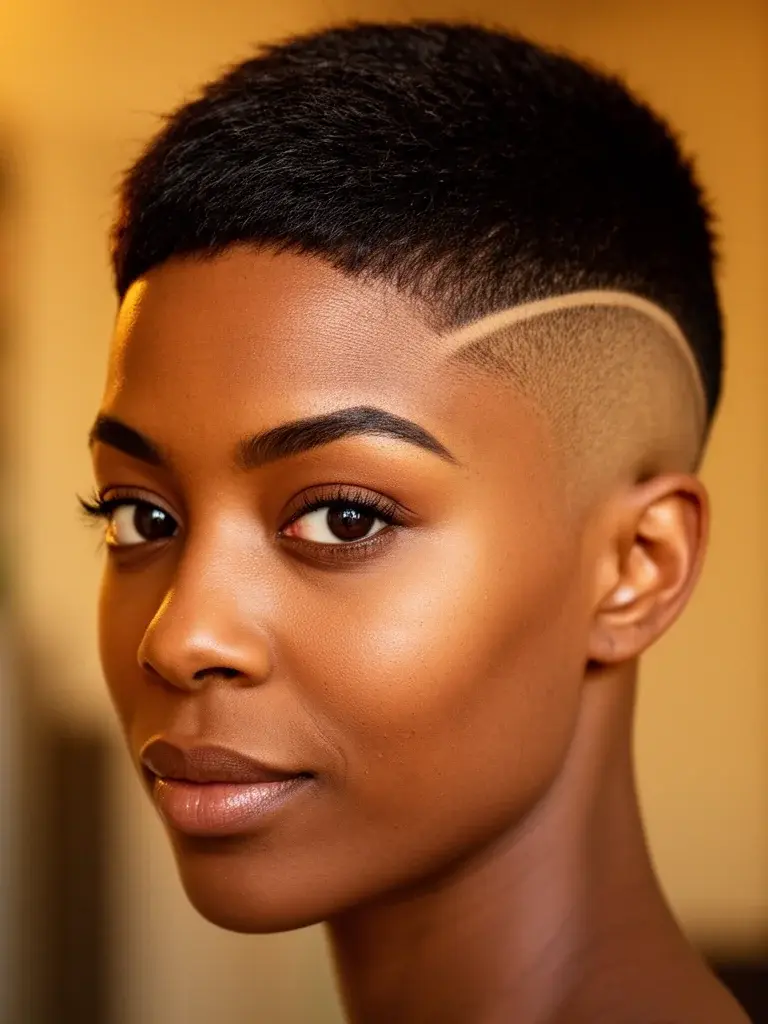
A pixie side undercut is a short haircut that combines the structure of a pixie cut — tapered sides, longer top — with the dramatic element of having one side shaved or clipped very close using clippers rather than scissors. The result is a high-contrast silhouette where one side of the head is nearly bare and the other side tapers normally into the longer top section.
The technique is a combination of scissor work (for the top and the non-undercut side) and clipper work (for the undercut side). The precision of the blending point — where the shaved section meets the longer hair — is where the craft of this cut shows. A well-executed transition between the shaved section and the longer top creates a clean line that looks intentional; a poorly executed transition looks choppy.
The side undercut's cultural context matters: this cut has roots in punk, queer, and alternative subcultures and continues to carry those associations. Wearing one is a choice with meaning — it communicates something about identity and willingness to be unconventional. This isn't a warning; it's useful information for someone deciding whether this cut aligns with how they want to present themselves.
Pixie Side Undercut vs Short Pixie vs Spiky Pixie
| Pixie Side Undercut | Short Pixie | Spiky Pixie | |
|---|---|---|---|
| Side technique | Clipper-shaved (one side) | Scissor-tapered (both sides) | Scissor-tapered (both sides) |
| Visual contrast | Extreme | Moderate | Low (product-based) |
| Grow-out commitment | 3–6 months (shaved side) | 4–6 weeks | 4–6 weeks |
| Workplace adaptability | Low to Medium | High | Medium |
| Maintenance frequency | Every 2–3 weeks (shaved side) | Every 4–6 weeks | Every 4–6 weeks |
| First-time short cut | Not recommended | Good starting point | Good starting point |
Bottom line: Pixie side undercut = maximum visual statement, highest commitment. Short pixie = clean and wearable. Spiky pixie = personality through styling, not structure.
Cut Specifications
- Layers: Minimal layers on the top section to keep the contrast with the shaved side clean; too many layers on top can undermine the geometric precision of the cut
- Bangs/Fringe: Optional; a short fringe on the non-undercut side creates a directional asymmetry that echoes the undercut; no fringe gives the cut its most graphic quality
- Weight line: Defined by the clipper line on the shaved side; where the clippers stop and the scissor work begins determines the cut's character
- Graduation: The blend point between the shaved side and the longer top is the most technically demanding part of this cut; a fade (gradual transition) vs a hard line (abrupt transition) changes the entire aesthetic
- Trim cycle: Every 2–3 weeks for the shaved section; every 4–6 weeks for a full cut
Color Pairing
- High-contrast color on the top, natural on the shaved side: The regrowth on the shaved section is fast and visible — color on the shaved section fades and grows out quickly and requires frequent maintenance. Keeping the shaved side at natural color while using bold or highlighted color on the longer top is the most practical approach.
- Bold single-process on the top section: Fashion colors on the longer top amplify the undercut's statement. The shaved side acts as a neutral base that makes the color on top more visible and more dramatic by contrast.
- Bleached top with natural shaved side: The contrast between the bleached/platinum longer section and the natural-color shaved section creates a built-in two-tone effect without any color applied to the short section.
Face Shape Tweaks
- Oval: Shave either side; go as dramatic with the clipper grade as you want. Oval face geometry is the only one that doesn't need to consider which side to undercut for balance.
- Square: Undercut on the side that makes the jaw look less wide — typically the side with the less prominent jaw point. The shaved side draws the eye up and away from the jaw; choose placement carefully.
- Diamond: Keep the longer side at temple level or slightly below — this adds width at the narrower areas. The shaved side at the temple can make diamond faces look more angular at cheekbones.
Hair Type Tweaks
- Straight: The cleanest execution — the blend point between clippers and scissors is sharpest on straight hair, and the top section sits flat against the contrast of the shaved side.
- Wavy: Natural wave movement on the longer top creates an organic contrast with the geometric precision of the shaved side — a visually interesting combination.
- Thick: The shaved side on thick hair reveals significant volume reduction — the contrast between very close-clipped thick hair and a full thick top is dramatic and satisfying for wearers who feel their hair has always felt like too much.
Managing the Grow-Out
Deciding to let the undercut grow back is a commitment measured in months. Here's what to expect:
- Weeks 1–2: Stubble regrowth on the shaved section — feels rough to the touch, visible shadow. Most wearers find this comfortable but notable.
- Weeks 3–4: Short fuzz that's visible but not long enough to style or integrate with the longer top. The contrast is still present but the shaved quality is gone. The most visually awkward stage.
- Months 2–3: The shaved side has reached approximately 1 inch — short but no longer clearly "undercut." This is when styling the two sides toward each other begins to be possible.
- Months 4–6: The shaved side has reached 2–3 inches and can be incorporated into a modified short pixie or layered into the cut. The visual difference between the two sides is mostly gone.
- Alternative: embrace the grow-out — many undercut wearers find the grow-out stages have their own appeal; some people discover a short-on-one-side asymmetrical style they hadn't planned during the grow-out process.
What to Tell Your Stylist
"Pixie with a side undercut — I want the [left/right] side shaved to clipper guard #[1/2]. I want a [fade/hard line] where the shaved section meets the top. Top at [X inches]. Keep the other side tapered normally."
Reference photo tips:
- Show your stylist both the front view and the side profile from both sides — the shaved side profile and the longer side profile look completely different.
- Specify whether you want the undercut visible from the front when styled normally, or if you want the longer hair to drape over it. This affects how deep the shaved section goes.
- Bring photos of both the fresh-cut look and the 3-week grown-out look if you can find them — understanding what it looks like at various maintenance stages helps you commit more confidently.
How to Style
Daily (90 seconds):
- Apply a small amount of texture paste or pomade to the top section
- Style the top in your chosen direction — either away from the shaved side to expose it, or toward the shaved side to cover it
- Apply no product to the shaved section itself — the texture there doesn't benefit from product
Polished (4 minutes):
- Blow-dry the top section with a small brush or your fingers in the intended direction
- Use a flat iron or small round brush to define the longer top section
- Smooth the transition point between the top and the shaved section with a fine-tooth comb
- Light-hold hairspray to maintain the directed style
No-Heat Alternative:
- Towel-dry vigorously to activate texture on the top section
- Apply sea salt spray or texture paste through the top only
- Direct the top section with your fingers toward your preferred angle
- Let air-dry for 10 minutes
- Final finger-style once dry
Maintenance Schedule
- Week 1: The shaved section is at its cleanest. Enjoy it.
- Week 2: First visible regrowth on the shaved section. Still looking very clean.
- Week 3: Regrowth is visible as shadow. The shaved section no longer looks freshly done. Most wearers book a shape-up here.
- Week 4–6: If shape-up is skipped, the shaved section has grown into a close-cropped section rather than an undercut. The contrast with the longer top is reduced.
If you color your hair:
- Keep color on the top section only; the shaved section grows out too fast for color to be practical
- Bleach touch-up on the top: every 4–6 weeks
- Fashion color: every 3–5 weeks for the longer section only
Pro tip: A handheld trimmer or personal clipper is a worthwhile investment if you have a side undercut — a quick DIY cleanup of the shaved section between salon visits (every 2–3 weeks) keeps it looking intentional. Watch a YouTube tutorial before attempting; the neckline and the area behind the ear require care.
Common Mistakes
-
Choosing the wrong clipper grade on the first appointment Fix: If you've never had a shaved section before, start with guard #2 or #3 rather than going fully bare. You can always go shorter at the next appointment; you can't put the hair back. A #2 undercut still reads as an undercut clearly while being more forgiving.
-
Expecting the undercut to be concealable when it's very dramatic Fix: A guard #0 or #1 undercut is visible from across the room regardless of how you style the longer section over it. If concealability is important to you, specify guard #2 or #3, which can be partially covered by the longer top hair.
-
Neglecting the shaved section between appointments Fix: Regrowth on the shaved side is the fastest-aging part of this cut. A 2-week-old shaved section looks notably different from a fresh one. Budget either bi-weekly salon visits or invest in a trimmer for home upkeep.
-
Coloring the shaved section to match the top Fix: The shaved section grows out at normal speed — approximately 0.5 inches per month. Color applied to the shaved section will be visibly at the root within 2 weeks and will look odd against the clear regrowth. Keep the shaved section at its natural color.
-
Deciding to grow it out immediately after getting it cut Fix: Give yourself at least 4–6 weeks before deciding to grow it out. The first week is the most dramatic; the cut settles and becomes more wearable as you adapt to it. Most grow-out regrets happen in the first 2 weeks when the shaved section is most raw and new.