
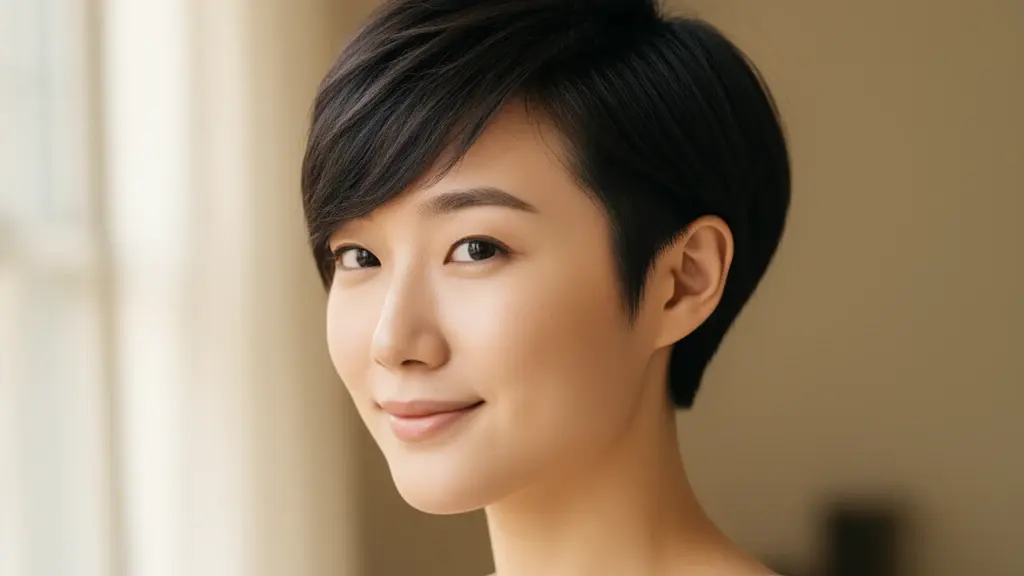
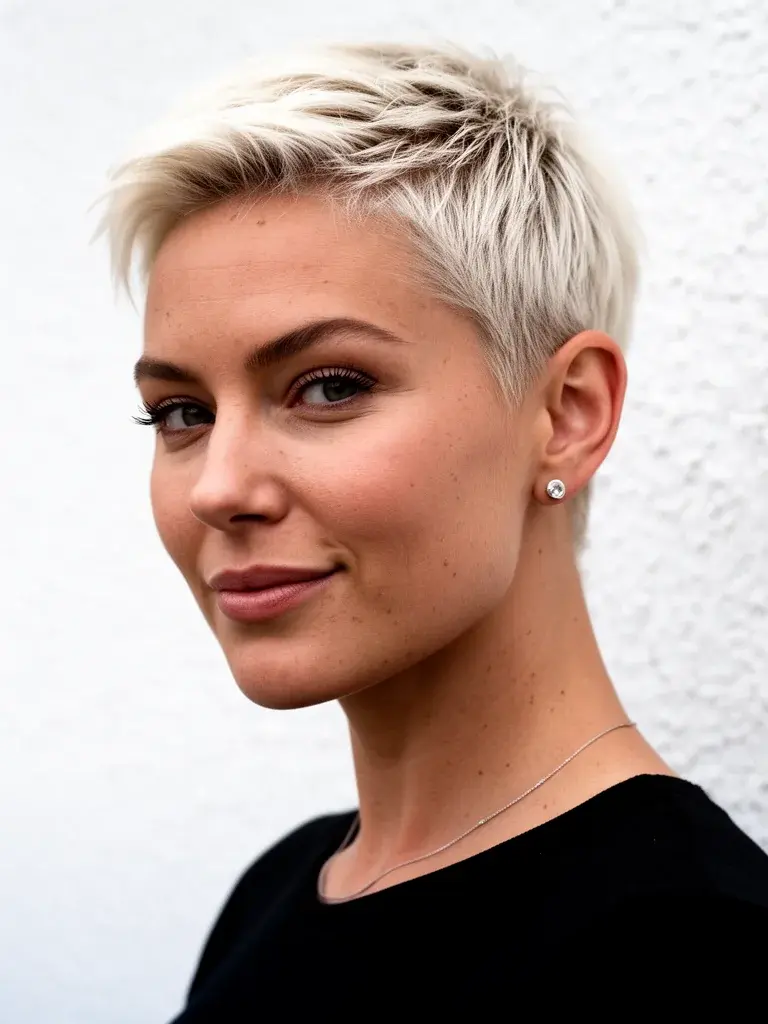
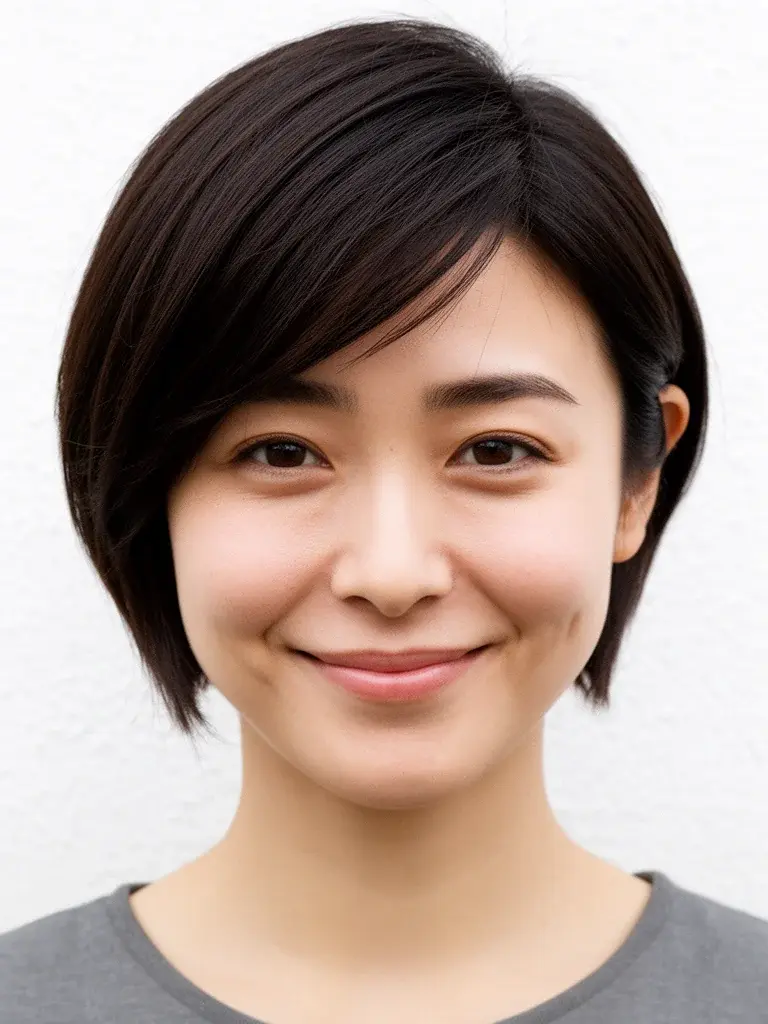
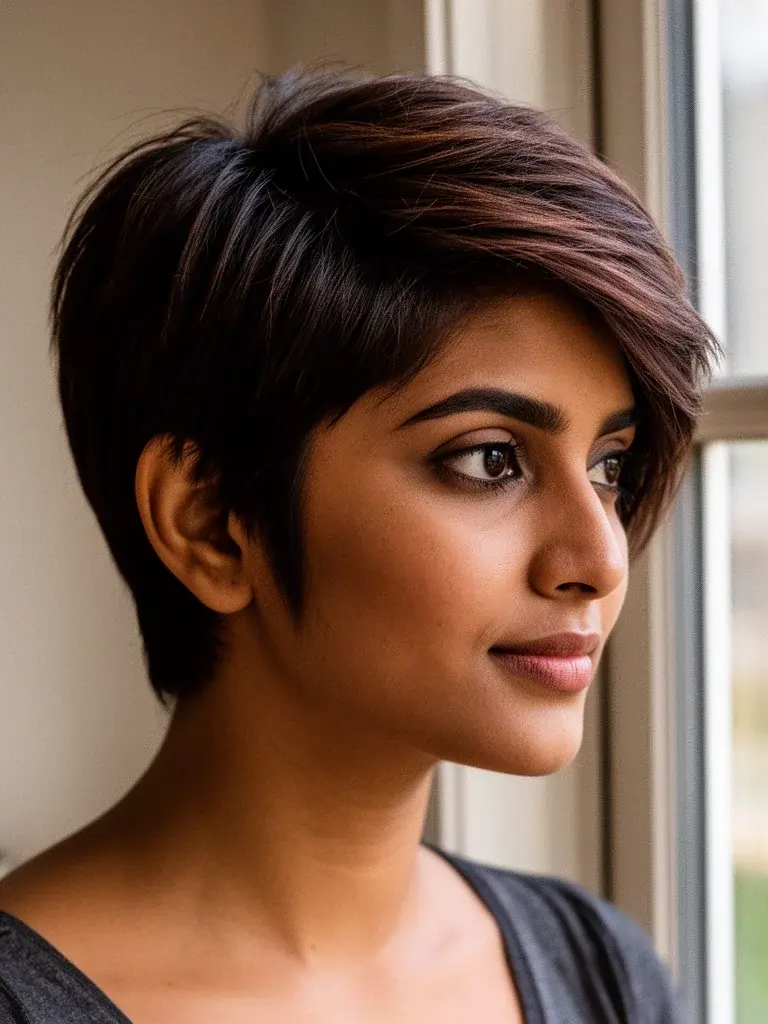
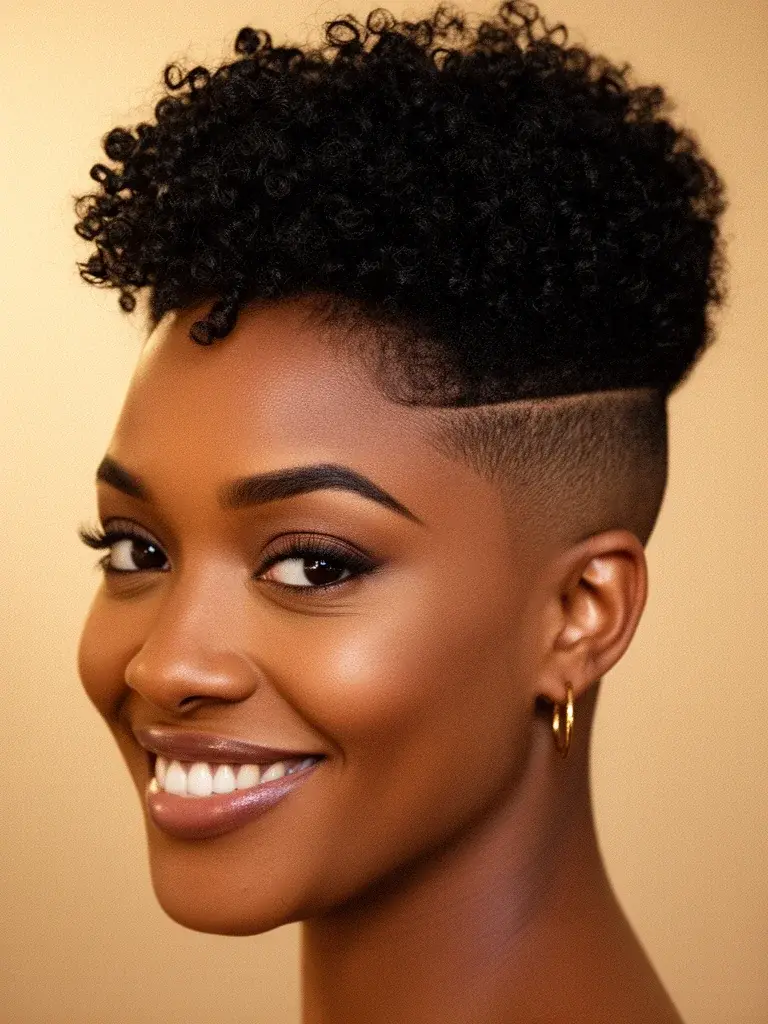
The Pixie Decision Framework
Every pixie starts with three questions. Work through them in order and you'll know exactly which variation to ask for.
1. How much length are you willing to lose?
Very short (under 3 inches on top): Short Pixie or Spiky Pixie — the most committed, most architectural option.
Moderately short (4–6 inches on top): Long Pixie — more styling options, softer transition from longer hair.
Short with built-in texture: Layered Pixie — same top length as a short pixie but internal layers add volume and movement.
2. Do you want your cut to make a statement on its own, or through styling?
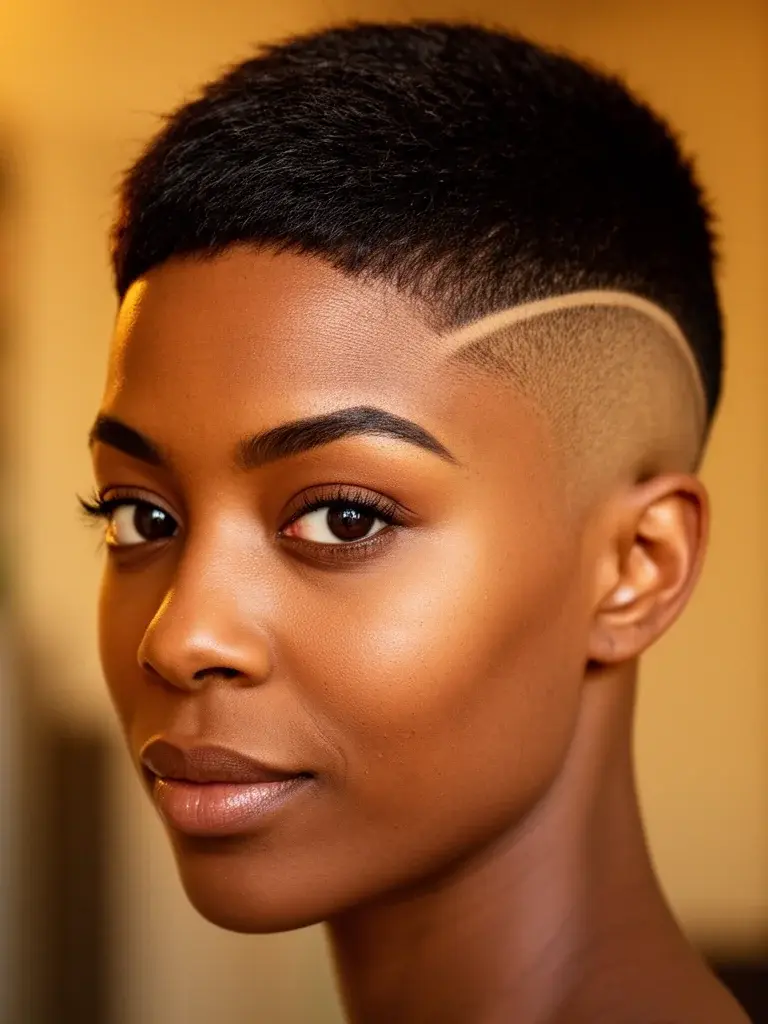
The cut makes the statement → Pixie Side Undercut: shaved section is the statement regardless of how you style the rest.
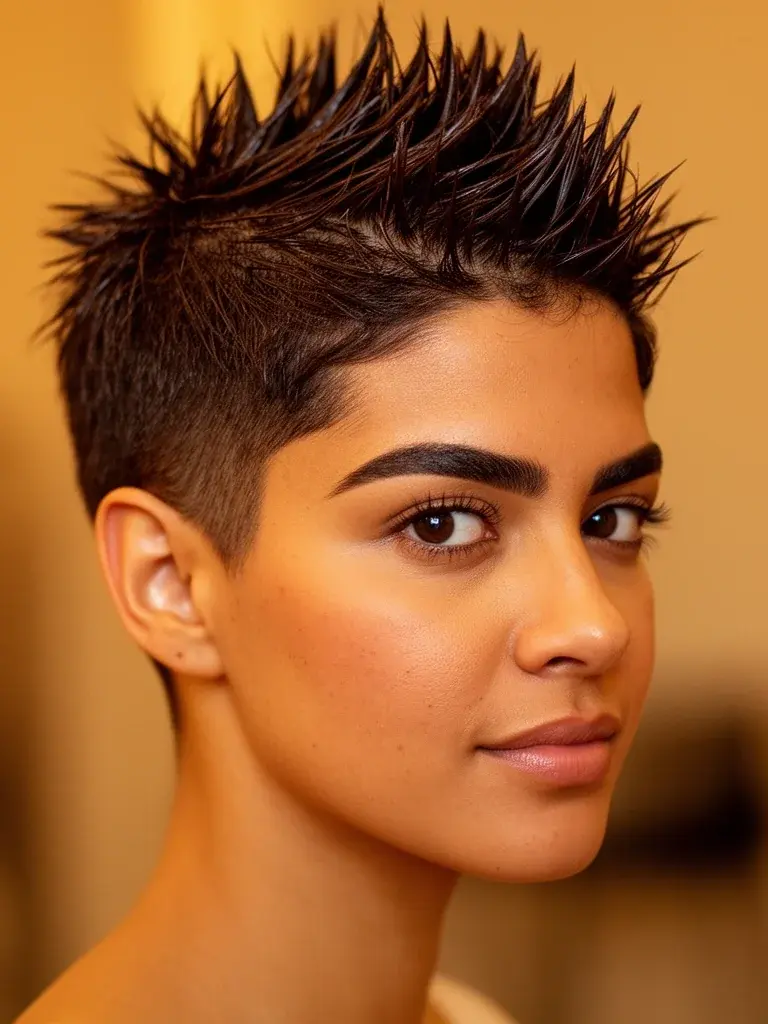
Styling makes the statement → Spiky Pixie: same cut as a short pixie, but wax and technique define the look.
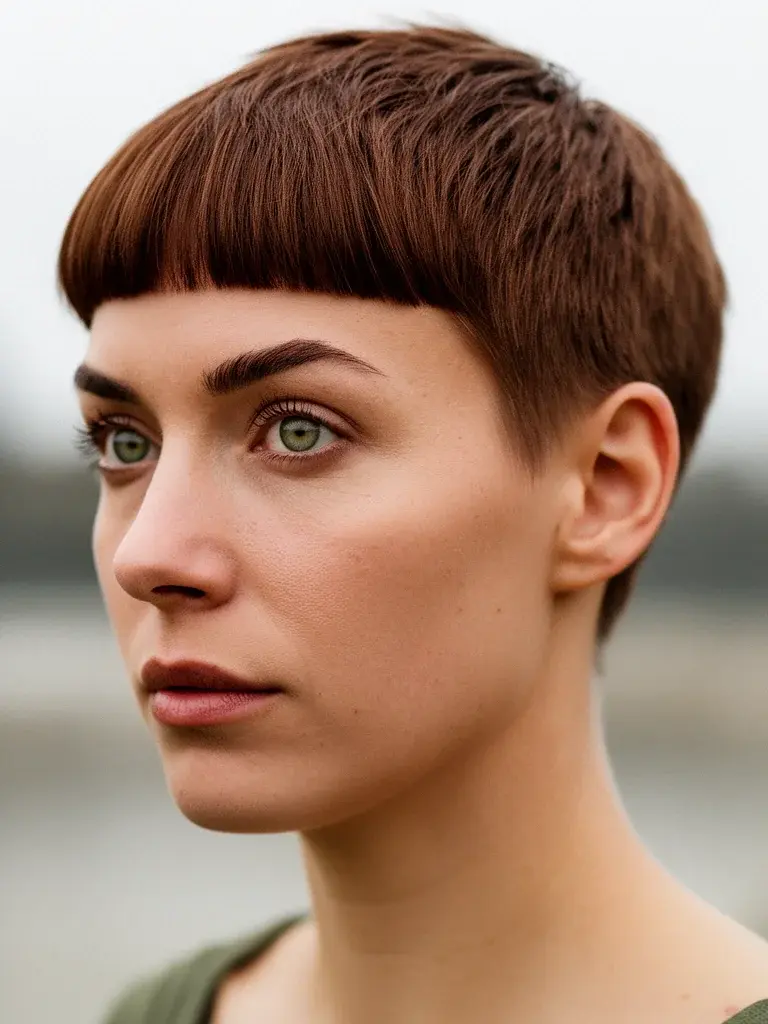
The fringe makes the statement → Pixie Short Bangs: the above-the-eyebrow fringe is the focal point.
3. How frequently can you realistically visit the salon?
| Pixie Type | Trim Schedule |
|---|---|
| Pixie Side Undercut | Every 2–3 weeks (shaved section) + 4–6 weeks (full cut) |
| Short Pixie | Every 4–6 weeks |
| Spiky Pixie | Every 4–6 weeks |
| Pixie Short Bangs | Every 3–4 weeks (bangs) + 4–6 weeks (full cut) |
| Layered Pixie | Every 6–8 weeks |
| Long Pixie | Every 6–8 weeks |
The side undercut and short bangs are the highest-maintenance options. If bi-weekly or monthly visits aren't realistic, choose from the bottom of this table.
Face Shape to Pixie Type
Every pixie works on every face with the right adjustments. These are the strongest natural matches:
Oval — Any pixie, any length, any variation. Oval is the only face shape with complete flexibility. If you have an oval face, let your style preference guide the decision rather than your face shape.
Round — Long pixie or layered pixie, styled for height. The extra top length allows you to build vertical emphasis at the crown, which counteracts face width. Avoid flat-styled short pixies that add no height. A deep side part helps on any pixie length.
Heart — Short pixie or long pixie with a soft top. Heart faces have a wider forehead and narrower chin — the pixie's structure at the sides and back creates visual balance. Avoid very wide, full-coverage fringe (like very short bangs spanning the full forehead) which emphasizes the already wider upper face.
Square — Layered pixie or long pixie with soft, textured styling. The deliberate messiness of layers or natural wave texture contrasts with angular jawlines. Avoid very geometric, clean-edged short pixies that mirror the jaw's horizontal line.
Diamond — Short pixie or pixie with short bangs. Diamond faces have wide cheekbones with a narrower forehead and chin — a pixie's crown volume balances the cheekbones, and a fringe adds weight at the narrow upper face.
Oblong — Long pixie with side fringe. The longer top can incorporate a side fringe that adds horizontal weight to a longer face. Avoid adding height at the crown, which elongates an oblong face further.
Fine Hair and Thick Hair: Different Pixies
Fine hair — Fine hair at pixie length behaves very differently from fine hair in longer styles. Without the weight of longer hair, fine strands lift and move more freely. The best pixies for fine hair:
- Layered Pixie (primary recommendation): internal layers create structural volume that doesn't depend on product or luck. The layers make fine hair appear thicker.
- Long Pixie: the 4–6 inch length on top gives fine hair something to work with; strands can stand rather than collapse.
- Pixie Short Bangs: fine hair creates thin, precise bangs that look elegant rather than sparse.
Avoid: very short one-length pixies on very fine hair, which can look scalpy.
Thick hair — Thick hair at pixie length is powerful but requires management. The right pixie for thick hair removes bulk strategically:
- Short Pixie with interior thinning: thick hair at 2–3 inches on top with significant interior thinning is the cleanest, most manageable option.
- Spiky Pixie: thick hair holds spike definition better than any other type — the body and weight keep spikes upright without excessive product.
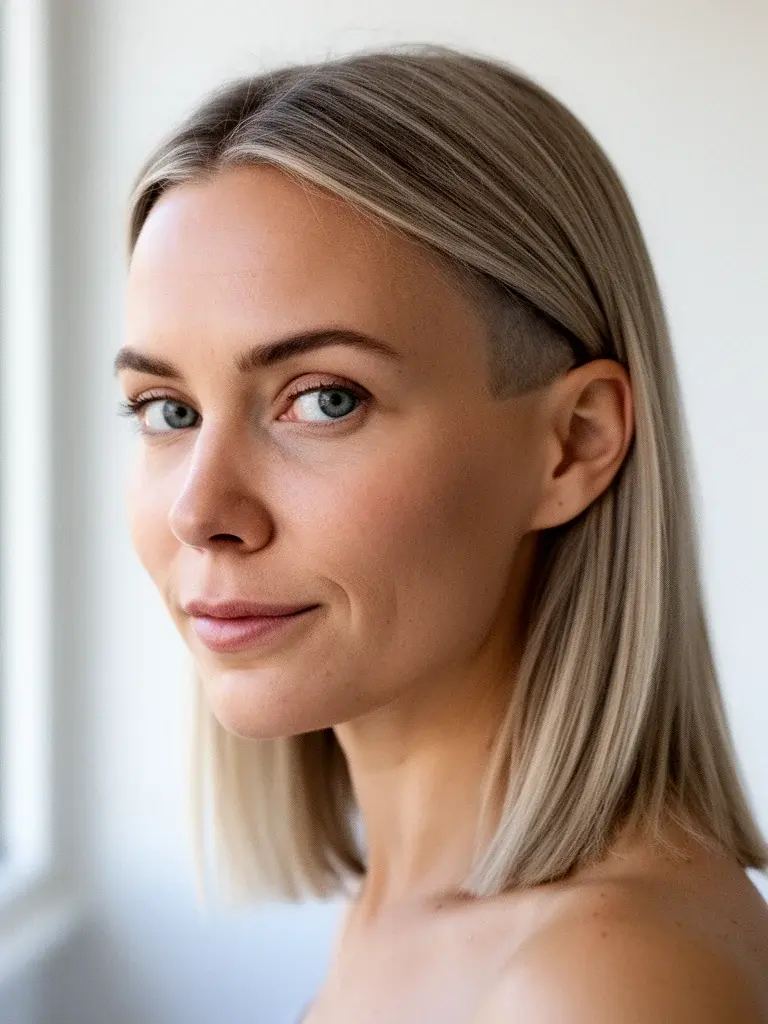
- Pixie Side Undercut: the shaved section removes significant volume from one side, reducing the overall thick-hair weight burden and creating dramatic contrast.
Interior thinning is non-negotiable for thick hair in a pixie — ask for it at every appointment.
Which Pixie to Try First
Never had short hair before → Long Pixie. The top length is the most forgiving first step into short hair, the grow-out is manageable, and you'll know within one cycle whether you want to go shorter.
Had a short cut before and loved it → Short Pixie or Layered Pixie. You know what short hair feels like — now refine it toward structure (short pixie) or texture (layered).
Want texture and movement without adding length → Layered Pixie. Internal layers solve the flat-top problem without requiring longer hair to do it.
Want to make a clear style statement → Spiky Pixie or Pixie Short Bangs. Both are distinct without requiring the irreversibility of a shaved undercut.
Ready for maximum commitment → Pixie Side Undercut. Go in knowing the maintenance schedule and grow-out timeline. Bring a reference photo.
What to Tell Your Stylist
Different pixie variations require meaningfully different instructions. Here's what to say for each:
Short Pixie:
"Short pixie — tapered sides and back, 2–3 inches on top with texture. Blended weight line at the occipital bone, not disconnected."
Long Pixie:
"Long pixie — 4–5 inches on top, graduated sides at 1–1.5 inches, clean nape. Soft layers for movement, not blunt. I want more styling options than a short pixie."
Layered Pixie:
"Layered pixie — 2–3 inches on top with internal point-cut layers for texture and lift. Tapered sides. I want structural volume from the layers, not product."
Spiky Pixie:
"Short pixie that I want to style spiky — about 2 inches on top, tight taper on sides. I need enough length on top to define individual sections with wax."
Pixie Side Undercut:
"Pixie with a side undercut — shave the [left/right] side to clipper guard #[1/2]. Keep the top at [X inches]. [Fade/hard line] where the shaved section meets the top."
Pixie Short Bangs:
"Pixie with short bangs — fringe cut about half an inch above my eyebrows. [Blunt/textured] ends. Full width across my forehead."
Universal tip: bring a reference photo and specify the back and side profile, not just the front. Most pixie confusion happens because the nape and side graduation weren't communicated clearly.