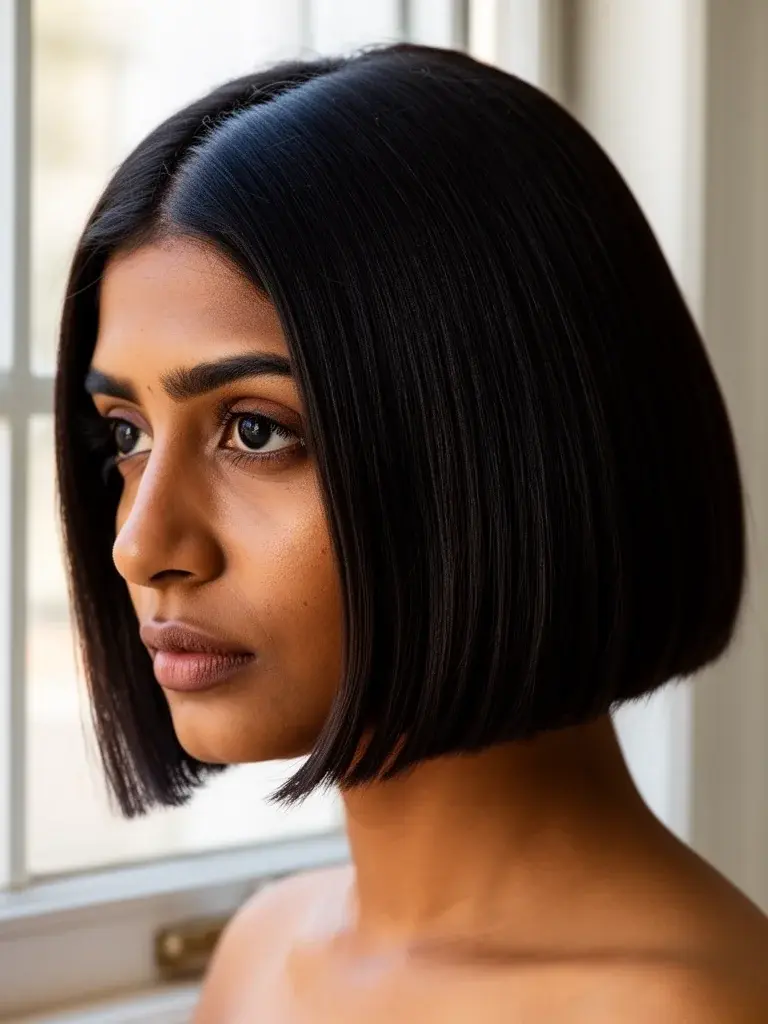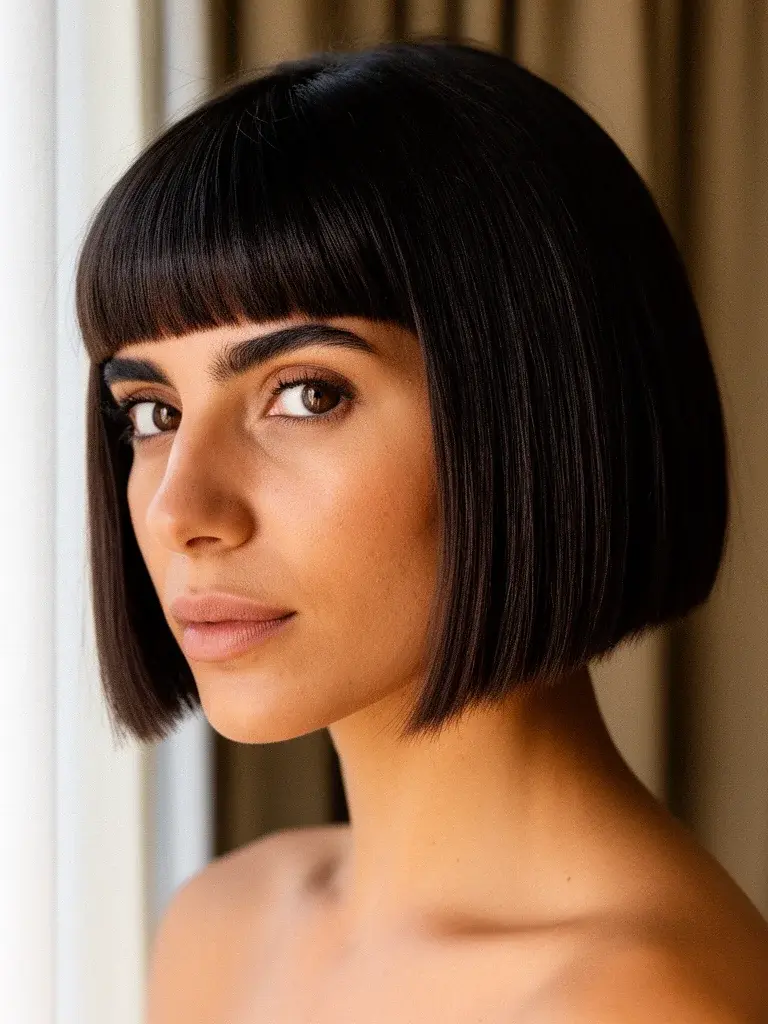

TL;DR
- Best for: Oval, square, and oblong faces; straight and wavy hair; women who want a bob with geometric personality
- Avoid if: You have very curly hair and want a precise angle; you want a symmetrical, harmonious silhouette; you're not comfortable with attention
- Ask your stylist: "Asymmetrical bob — longer on the left, shorter on the right [or specify sides]. About [X inches] difference between the sides. Clean, precise cut — no graduation."
- Maintenance: Trim every 6–8 weeks; short side may need a shape-up at week 4
Who Does It Suit?
Ideal for:
- Oval faces — oval is the only face shape where a truly dramatic asymmetry won't exaggerate any facial feature; you can experiment with maximum length difference
- Square faces — the diagonal line of an asymmetrical bob actively works against the horizontal emphasis of a square jaw; the angle is your ally
- Oblong faces — the asymmetry creates horizontal visual interest that breaks the vertical emphasis of a long face
- Straight hair — the precision of the angle shows most clearly on straight hair where the length difference is unambiguous
- Women who want an architectural cut that communicates a specific aesthetic choice
Hair types:
- Straight: The ideal base — the diagonal angle is sharpest and most precise on straight hair, and the visual difference between the two sides is most dramatic
- Wavy: Natural movement softens the angle slightly, creating a more organic version of the same asymmetrical shape; the wave adds texture that prevents the cut from looking too sharp
Avoid If...
- You have curly hair → curl shrinkage is unpredictable and makes a precise asymmetrical angle very hard to maintain; a skilled curl-cutting specialist is required, and results vary
- You want a harmonious, balanced silhouette → asymmetry is the point of this cut; if visual balance is important to you, try an A-Line Bob which creates direction without the length imbalance
- You don't want to commit to a specific part side → an asymmetrical bob typically requires you to part on the same side consistently; switching parts changes the look significantly
- You have a round face → the longer side of an asymmetrical bob often hits at cheekbone or below-cheekbone level, which can emphasize horizontal face width; try an Inverted Bob for a more length-creating option
What is an Asymmetrical Bob?
An asymmetrical bob is a bob-length haircut where one side is deliberately cut shorter than the other, creating a visible diagonal or angular line from one side of the face to the other. Unlike an A-line bob (where the back is shorter and both front sides are the same length), an asymmetrical bob creates left-to-right imbalance rather than front-to-back angle.
The degree of asymmetry is the main variable in this cut: a subtle version might have one side an inch longer than the other, creating a gentle sweep; a dramatic version might have one side at the chin and the other past the collarbone, with the diagonal visible from across the room. Both are asymmetrical bobs — the styling statement and required commitment are very different.
The cut's effect comes from the deliberate rejection of symmetry. Symmetric haircuts work by balancing features; an asymmetrical bob works by creating dynamic tension — one side is heavy, the other is light, and the viewer's eye moves along the diagonal between them. This visual motion is what makes asymmetrical bobs feel modern and alive in a way symmetric cuts can't replicate.
Asymmetrical Bob vs A-Line Bob vs Inverted Bob
| Asymmetrical Bob | A-Line Bob | Inverted Bob | |
|---|---|---|---|
| Asymmetry axis | Left-to-right | Front-to-back | Front-to-back (stacked) |
| Front view | Two different lengths visible | Symmetric | Symmetric |
| Visual effect | Dynamic, angular | Directional, clean | Volumized back |
| Face shapes | Oval, Square, Oblong | Round, Diamond, Oval | Round, Square |
| Maintenance | 6–8 weeks (+ possible short-side shape-up) | 6–8 weeks | 4–6 weeks |
| Commitment | Specific part side required | Flexible | Flexible |
Bottom line: Asymmetrical bob = left-right imbalance for architectural impact. A-line bob = front-back angle for direction without asymmetry. Inverted bob = graduated back volume for structure.
Cut Specifications
- Layers: Optional; the asymmetrical bob works with or without interior layers; adding layers softens the cut's graphic quality
- Bangs/Fringe: Typically no separate fringe — the longer front piece of the asymmetrical side naturally functions as a face-framing element
- Weight line: Diagonal — the defining feature of this cut; the angle of the weight line determines the visual drama of the asymmetry
- Graduation: Minimal in the classic sense; the shorter side may use a slight graduation at the nape, but the main design element is the diagonal weight line, not graduation
- Trim cycle: Every 6–8 weeks; the shorter side may need a partial shape-up at 4 weeks if the length difference is very dramatic
Color Pairing
- Two-tone color that echoes the asymmetry: An advanced option — using the asymmetrical structure as a color division point (darker on the shorter side, lighter on the longer side) amplifies the visual contrast of the cut. Requires a skilled colorist who can create a clean color division rather than a muddy blend.
- High-contrast highlights on the longer side only: Face-framing highlights on the longer front piece draw the eye along the angle. The shorter side stays at its natural tone, creating a natural contrast that emphasizes the asymmetry.
- Solid bold color: The geometric precision of an asymmetrical bob works especially well with bold single-process colors. The clean diagonal angle is most visible when color is solid rather than dimensional.
Face Shape Tweaks
- Oval: Total flexibility with which side is shorter and how dramatic the length difference is. This is the one face shape where you can push the asymmetry to its most dramatic version.
- Square: Have the longer side sweep forward toward the jaw on the side that needs softening most. The diagonal across a square face creates visual movement that dilutes the jaw's horizontal emphasis. Avoid making the short side very close-cropped — a moderate length difference is more elegant.
- Oblong: Place the longer side across the wider forehead area if possible. The horizontal sweep of the long piece breaks the vertical emphasis of an oblong face. Avoid styles where both sides are very long, which elongates further.
Hair Type Tweaks
- Straight: The sharpest, most architectural version of the asymmetrical bob. Heat styling maintains the precision of the diagonal through the day. A flat iron used on the longer piece to create a slight inward bend at the ends reinforces the angle.
- Wavy: Wave texture softens the angular precision naturally, creating a version that's more editorial and less geometric. Enhance wave with a texturizing spray on damp hair, then scrunch and air-dry — the result looks less structured but retains the essential asymmetrical shape.
The Asymmetry Decision
Before committing, you need to answer three specific questions:
1. Which side is shorter? Most people short the side opposite their natural part — the part sits on the long-side, the short side frames the face on the other. There's no universal rule, but your part preference affects daily wearability significantly.
2. How dramatic is the length difference?
- Subtle (1–2 inches): reads as a stylish cut to most people; easy to maintain; doesn't restrict hair accessories
- Moderate (2–4 inches): clearly asymmetrical; noticeable and deliberate; the sweet spot for most
- Dramatic (4+ inches): very visible from across the room; highest style commitment; shortest side may be chin-level while longest is at collarbone or below
3. Do you want a clean angle or a soft angle? Clean angle: blunt cut, straight diagonal, graphic and precise. Soft angle: slight softening of the weight line with point-cutting, more organic. Bring a reference photo to communicate this clearly.
What to Tell Your Stylist
"Asymmetrical bob — shorter on the [left/right] side, longer on the other. I want about [X inch] difference between the two sides. [Clean, blunt angle / soft, point-cut angle]. [With/without] internal layers."
Reference photo tips:
- Bring photos of both the front view and the side profile. The front view shows the length difference; the side profile shows the angle at the nape.
- Be very specific about the degree of asymmetry — "asymmetrical" means different things to different stylists. A reference photo removes all ambiguity.
- If you have a specific part side you always use, tell your stylist before they start. The cut is planned around your part, so this information needs to come first.
How to Style
Daily (5 minutes):
- Blow-dry with a round brush, directing the longer side downward and forward
- Use a flat iron to add a slight inward curve at the ends of the longer piece — this reinforces the angle
- Leave the shorter side straight or with a very gentle curl
- Apply a small amount of smoothing serum to the longer piece for polish
Polished (8 minutes):
- Apply heat protectant to damp hair
- Blow-dry both sides fully, directing each toward its intended position
- Use a flat iron through the longer side to create a clean, sharp end
- Use your fingers or a clip to secure the longer side in position while it cools (60 seconds)
- Light-hold hairspray to set the shape
No-Heat Alternative:
- Apply a smoothing cream to damp hair to manage frizz without heat
- Use a fine-tooth comb to direct the longer side in its intended direction while damp
- Clip the longer side in place with a flat clip while it air-dries (20–30 minutes)
- Remove clip once fully dry; apply a light serum for shine
- For wavy hair: skip the comb, apply curl cream instead, and let wave activate naturally
Maintenance Schedule
- Week 1–2: The diagonal is sharp and precise. The length difference between the two sides is at its maximum.
- Week 3–4: The shorter side may be growing out at a noticeable rate. For dramatic asymmetry cuts, some people book a partial shape-up at the shorter side only to maintain the ratio.
- Week 5–6: Both sides have grown, but the shorter side has become less short and the length difference is shrinking. The angle is losing its clarity.
- Week 7–8: The asymmetry is significantly reduced — the cut looks more like a regular bob than an asymmetrical one at this point. Book your trim.
If you color your hair:
- If using a two-tone color technique that corresponds to the asymmetry: maintain color as part of every trim appointment
- Single-process: align with your 6–8 week trim schedule
- Highlights: every 8–10 weeks, same as trim if possible
Pro tip: Take a photo of your asymmetrical bob from the front in the first week after the cut, while the diagonal is most precise. Use this as the reference for every subsequent appointment — your stylist needs to see the original angle to maintain it accurately.
Common Mistakes
-
Not specifying which side is shorter before the cut begins Fix: Always specify left or right before scissors come out. Once the cut starts, changing sides means starting over on one side. Bring a reference photo and mark which side is shorter in the photo before your appointment.
-
Choosing a degree of asymmetry that's too dramatic for your lifestyle Fix: A very dramatic asymmetrical bob (4+ inch difference) requires daily styling to maintain the precision of the angle, and some workplaces may flag it. If you're uncertain, start with a moderate asymmetry (2–3 inches) and go more dramatic at the next cut once you know how the cut fits your life.
-
Letting both sides grow evenly between appointments Fix: Growth on an asymmetrical bob is not symmetric — the shorter side needs attention sooner. Consider a partial shape-up at week 4 for the shorter side to maintain the intended ratio.
-
Not blow-drying the longer side into its intended direction Fix: On very straight hair, the longer side of an asymmetrical bob can fall in the wrong direction if not directed with heat. A quick 2-minute blow-dry with a round brush sets the diagonal precisely. Skipping this makes the cut look accidental rather than considered.
-
Assuming the cut maintains itself without effort on straight hair Fix: Unlike a wavy or textured asymmetrical bob that benefits from air-drying, a straight-hair version needs some heat styling to keep the lines clean. Budget 5 minutes in the morning for this — it's the difference between the cut looking intentional and looking like you slept on it wrong.