TL;DR
- Best for: Natural 3C-4A textures wanting tighter definition, or anyone seeking dense, gravity-defying coils
- Avoid if: You want loose, beachy texture or need a style that requires zero product knowledge
- Ask your stylist: "Dry cut, curl-by-curl, respecting shrinkage. I want tight, defined ringlets — not stretched-out spirals. Account for at least 50% shrinkage."
- Maintenance: Wash day every 4-7 days; refresh with water spray between washes; deep condition weekly; trim every 10-12 weeks
Who Does It Suit?
Ringlets are the tightest defined curl pattern before you cross into coil territory. They're a natural texture for millions of women — not a trend to chase, but a pattern to define and celebrate.
Ideal for:
- Natural 3C-4A curl patterns where definition and shrinkage management are the primary goals
- Women transitioning from relaxed or heat-damaged hair back to their natural texture
- Heart and diamond faces where dense ringlet volume softens angular features
- Thick hair that has the mass to support each individual coil's shape without thinning out
- Anyone who's been told they have "curly hair" but whose curls are tighter than the generic advice assumes
Hair types:
- Curly (3C): The natural home for ringlets — your curl pattern IS ringlets. The work is definition and frizz control, not creation
- Coily (4A): On the border between ringlets and coils — your tightest sections may be coils while your looser sections form ringlets. Both patterns can coexist
- Thick: Ideal — thick hair provides the density that makes ringlets look full and substantial. Each coil has enough strand mass to hold its shape independently
Avoid If...
- Your hair is fine and sparse → ringlets need strand density to hold their coil shape. Fine hair can form ringlet-adjacent patterns but each individual curl may not hold the tight circumference, resulting in inconsistent definition. Spiral curls (slightly looser) may work better
- You want volume without density → ringlets pack close together, creating dense mass rather than airy volume. If you want big, spread-out curls with space between them, spiral curls or boho waves give you width without the density
- You're not willing to learn your shrinkage ratio → ringlets shrink 50-65% from wet to dry. If that surprises you every wash day, the style will frustrate you. Understanding your specific shrinkage percentage is non-negotiable for ringlet management
- You straighten more days than you wear it natural → a ringlet-specific cut is designed for the coiled state. Straightening it regularly negates the cut's purpose and gradually damages the curl pattern. Pick one or the other as your primary state
- Your texture is 2A-2C wavy → you can curl your hair into ringlet shapes with tools, but the shape won't hold without significant product and heat. Your natural pattern doesn't support the tight circumference. Beach waves or deep waves work with your texture rather than against it
What are Ringlets?
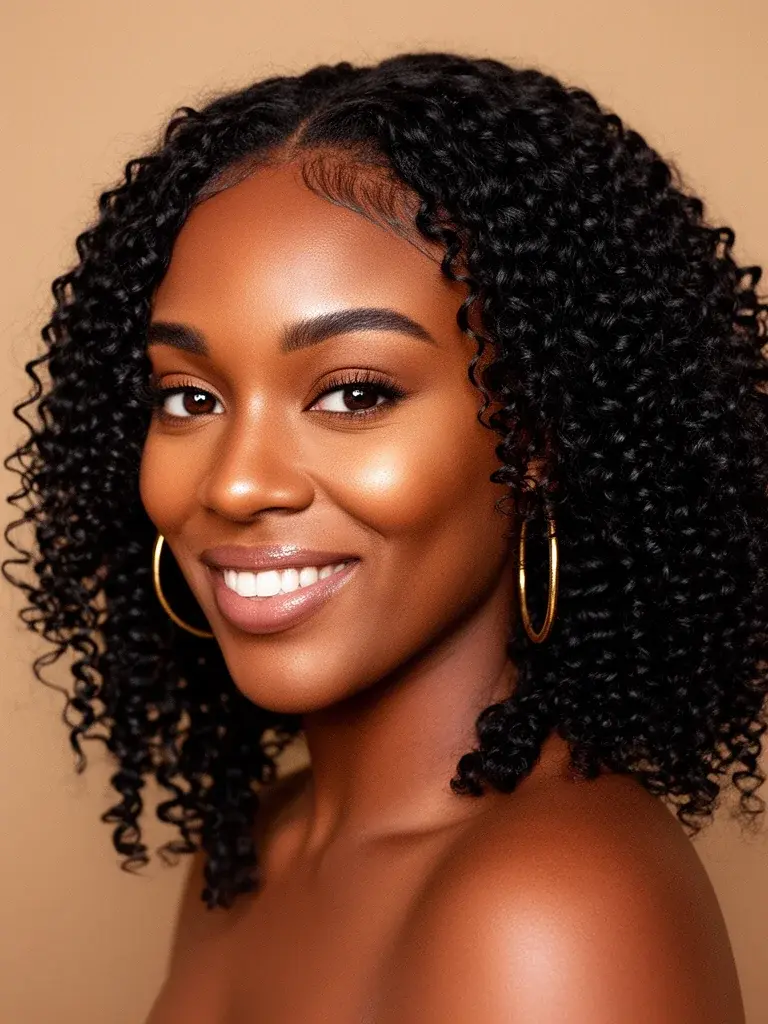
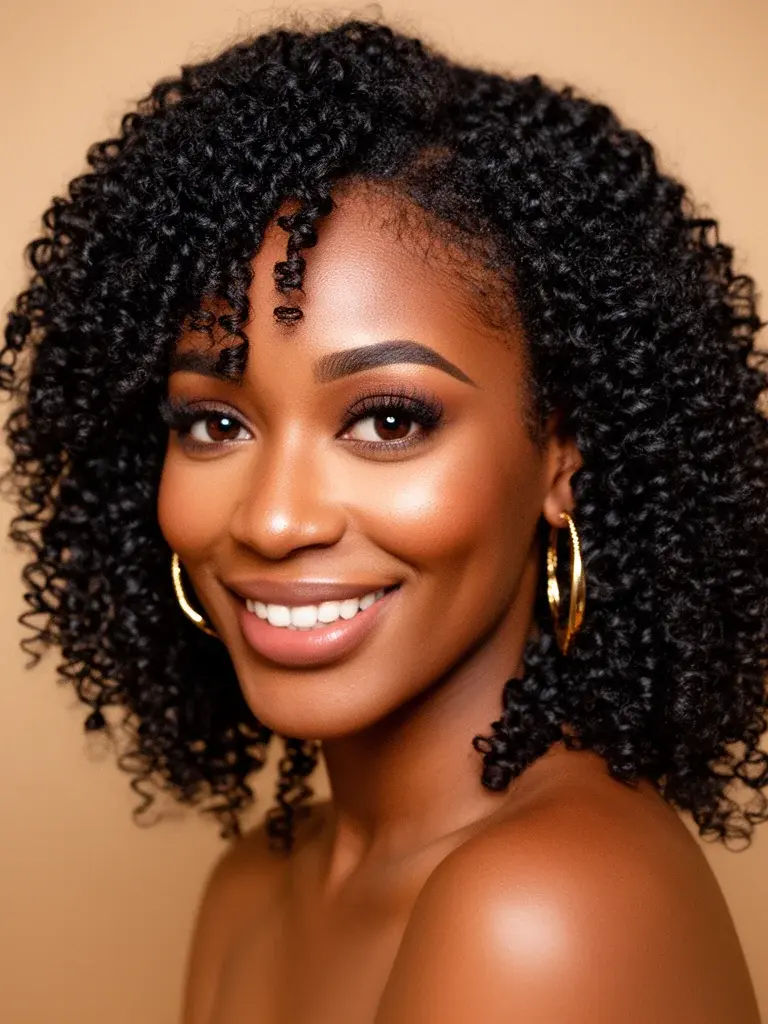
Ringlets are tight, marker-width coils — typically falling in the 3C range on the Andre Walker curl chart — packed close together with minimal space between each curl. Each ringlet is a self-contained spring that wraps around itself in a circumference roughly equal to a Sharpie marker. When stretched, a ringlet can extend to nearly double its resting length, then snap back to its original position.
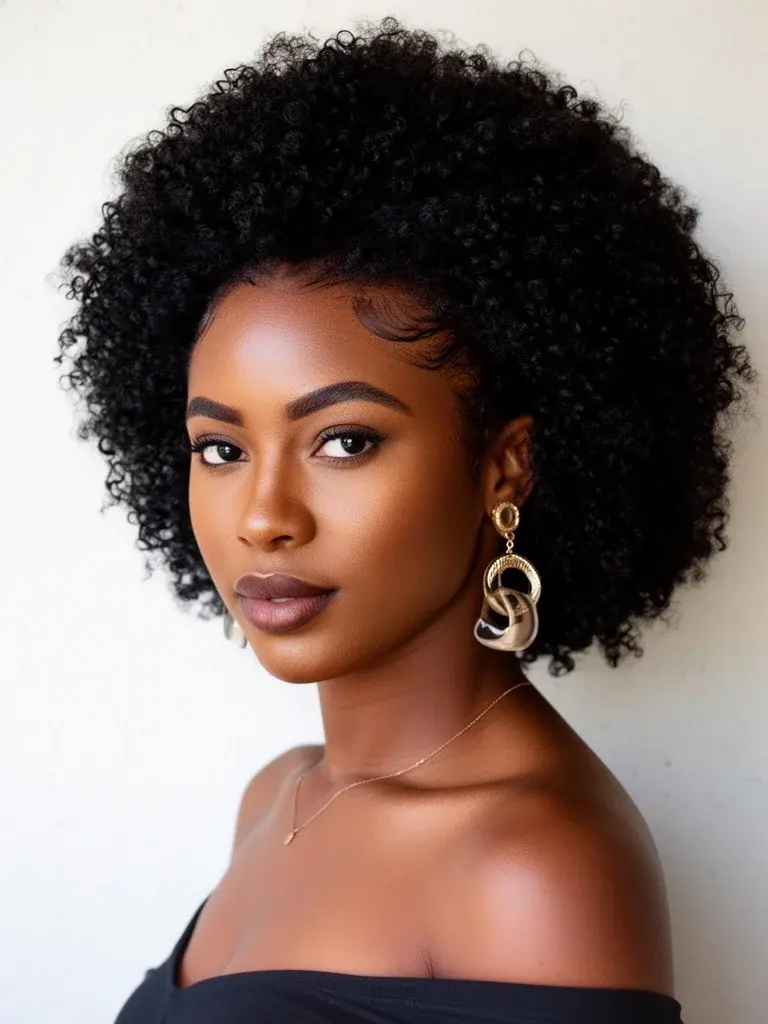
What separates ringlets from spiral curls is tightness and density. Spiral curls (3B) are pencil-width with visible space between curls. Ringlets are marker-width with curls packed shoulder-to-shoulder. The visual difference: spiral curls bounce individually; ringlets move as a dense, cohesive mass. What separates ringlets from an afro is definition — afro textures (4B-4C) are tighter still, with less defined individual curl patterns and more of a cotton-like grouping.
The 2026 curl renaissance has brought ringlets back into editorial visibility — Kate Middleton's corkscrew curls at the BAFTAs and the broader "sculptural curls" movement have pushed salon demand for curl-specific cuts to a five-year high. But ringlets aren't a trend for the women who wear them naturally. They're a permanent texture that editorial fashion cycles in and out of celebrating.
Ringlets vs Spiral Curls vs Finger Coils
| Ringlets | Spiral Curls | Finger Coils | |
|---|---|---|---|
| Curl diameter | Marker-width (~0.5 cm, 3C) | Pencil-width (~1 cm, 3B) | Pen-spring-width (~0.3 cm, 4A) |
| Shrinkage | 50–65% | 25–50% | 65–75% |
| Density | Packed tight, curls touching | Visible space between curls | Densest of the three |
| Hold duration | 3–5 days with proper routine | 2–3 days | 5–7 days |
| Product weight | Medium-heavy (cream + gel) | Light-medium (mousse + gel) | Heavy (butter + gel) |
| Best cut method | Dry curl-by-curl (Rezo/DevaCut) | Dry curl-by-curl | Coil-specific shaping |
| Drying time | 3–5 hours air-dry | 2–3 hours air-dry | 4–6 hours air-dry |
Bottom line: Ringlets sit between spirals and coils on the tightness spectrum — same family, different circumference. If your curls pack tight and shrink past your shoulders when they were at your collarbone wet, you have ringlets.
Cut Specifications
Ringlets demand a fundamentally different approach from straight or wavy hair. The margin for error is smaller because shrinkage amplifies every cutting mistake.
- Cutting method: Dry cut, always, with even more emphasis than spiral curls. Ringlets shrink 50-65% — a wet cut is essentially a blind cut with a 50% error margin. Find a stylist certified in Rezo, DevaCut, or curl-by-curl techniques. Non-negotiable.
- Layer structure: Rounded internal layers that preserve the dense exterior shape while removing weight from underneath. Visible layers on ringlets create shelf lines that look choppy rather than flowing. Internal layering maintains the cohesive mass while preventing triangle shape.
- Shrinkage allowance: Leave 2-4 inches longer than your target dry length, depending on your shrinkage ratio. Your stylist should measure a test curl wet, let it dry, and calculate your personal shrinkage percentage before cutting the rest. This is the single most important step in a ringlet cut.
- Avoid: Razor cuts (split the tight curl structure), thinning shears (create halo frizz around the dense core), and single-length cuts (ringlets without layers form a pyramid). Also avoid stylists who insist on cutting wet and "accounting for shrinkage" mentally — they're guessing.
- Trim cycle: Every 10-12 weeks. Ringlets grow slowly in visible length because of shrinkage — 2 inches of actual growth may show as only 1 inch in styled length. Don't over-trim.
Color Pairing
- Balayage on ringlets: Hand-painted highlights on individual coils create a scattered, dimensional effect. Each ringlet catches light at a different angle, so even subtle color differences become pronounced. The most natural-looking color technique for tight curls.
- Honey and warm caramel on dark bases: Warm mid-tones dispersed through ringlets create the illusion of sun-bleached curls without full-head lightening. The tight coil structure separates colors more dramatically than loose curls — a little color goes a long way.
- Auburn or copper tones: Red-family tones on ringlets create a jewel-box effect — dense, shimmering, multidimensional. Each coil reflects differently, making a single color look like several. Especially striking on darker skin tones where warm tones create visible depth.
- Solid dark color (no highlights): Black, espresso, or deep mahogany as a uniform color lets the coil architecture speak. When your ringlets are well-defined and densely packed, the texture IS the visual statement — color simplicity lets it dominate.
- Caution with bleach: Ringlets are structurally more fragile than looser curl patterns — the tight coil shape creates more stress points along each strand. Heavy bleaching can permanently loosen the curl pattern. Go slow, use bond-repair treatments, and lighten no more than 2-3 levels at a time.
Face Shape Tweaks
- Oval: Ringlets at any length — the balanced proportions handle the dense volume without adjustment
- Heart: Ringlets add volume and width at the jawline area, which balances a wider forehead. Keep the bulk below the ears; avoid extra volume at the crown that would widen the top further
- Diamond: Dense ringlets soften angular cheekbones — wear them at cheekbone length or longer. The coils create a soft frame around the widest point of the face
- Oblong: Ringlets add significant horizontal volume that shortens a long face. This is one of the best face shapes for ringlets — the dense width counteracts vertical length. Add shorter layers above the ears for maximum widening effect
- Round: Strategic placement required — ringlets add volume everywhere. Keep the sides controlled and create height at the crown with shorter top layers. Avoid chin-length ringlets that echo the circular face shape. Below-shoulder length is safer
- Square: Tight ringlets soften angular jawlines naturally — the organic, rounded shapes of each coil counteract geometric facial features. Let ringlets fall slightly below the jaw rather than exactly at jawline level
Hair Type Tweaks
- 3C natural: Your hair IS ringlets. The entire goal is definition and shrinkage management. Apply products to soaking-wet hair, use the gel-cast-and-scrunch method, and don't touch until fully dry. Your product routine should emphasize moisture retention (leave-in + curl cream) with definition on top (gel).
- 4A natural: You're on the border between ringlets and coils. Your front sections may ringlet while your nape sections coil tighter. Don't force one pattern across your whole head — let each section do what it does naturally. Use slightly heavier products on the tighter sections.
- Thick 3C: Your advantage is mass — every ringlet is substantial and holds its shape. Your challenge is drying time (4+ hours air-dry, 45+ minutes diffusing) and product distribution. Section carefully and apply products section-by-section rather than trying to distribute through the whole head at once.
- Permed/tool-created: If your hair is naturally straight or wavy and you're creating ringlets with a perm or small-barrel iron: your ringlets will be more uniform than natural ones (which vary in tightness across the head). This can look slightly artificial — ask your stylist to vary the rod sizes slightly for a more organic result.
Defining Your Ringlets (Shrinkage Management)
Shrinkage is the defining challenge of ringlets. It's not a flaw — it's the curl's spring factor. But managing it is what separates defined ringlets from a shapeless poof.
- Know your number: Wet your hair completely, pull one curl straight, and measure. Let it dry completely and measure again. The difference is your shrinkage percentage. Most 3C ringlets shrink 50-65%. This number dictates everything: your expected dry length, how long your stylist should leave the cut, and which styling techniques work for you.
- Length expectations: If your wet hair reaches mid-back, your dry ringlets may sit at your shoulders. This isn't a problem — it's physics. Set your expectations against your dry length, not your wet length. When someone asks "how long is your hair?" the answer is your dry length.
- Stretching techniques (when you want length): Banding (placing small elastics every 2 inches down sections while drying) stretches ringlets without heat damage. Twist-outs create a slightly elongated ringlet pattern. African threading achieves maximum stretch with zero heat. None of these are permanent — the ringlets return on the next wash day.
- Product application and shrinkage: Apply products to soaking-wet hair — the water weight stretches the curl slightly during application, allowing products to distribute evenly. If you apply to damp hair, the curls have already started shrinking and you get uneven distribution. Wet = good. Damp = too late.
- Diffusing strategy: Diffusing upside down adds root lift that counteracts the visual shortening of shrinkage. Cup ringlets into the diffuser basket from below, bringing the diffuser up to your head. This preserves curl shape while adding the vertical dimension that shrinkage removes.
What to Tell Your Stylist
"I want a dry curl-by-curl cut for 3C ringlets. My shrinkage is approximately [X]%. Cut in rounded internal layers — I don't want visible layer lines. Account for [X]% shrinkage so my dry length ends up at [reference point]. No razor, no thinning shears. Please measure a test curl before cutting the rest."
Reference photo tips:
- Bring photos of ringlets on similar curl tightness and density — 3C on one person looks different than 3C on another depending on strand thickness and head density
- Show photos of DRY ringlets, not wet, stretched, or diffused. The stylist needs to see your target in its natural shrunk state
- If you're transitioning from relaxed or damaged hair, show your root pattern — the stylist needs to understand what your virgin texture does
- Ask specifically if the stylist has experience with 3C-4A textures. A great stylist for 2C waves may not understand shrinkage dynamics
- Request a test curl: the stylist cuts one section, lets it dry, and checks the length before proceeding with the rest
How to Style
Daily (15 minutes):
- Start with soaking-wet hair (shower or spray until dripping)
- Apply leave-in conditioner generously — ringlets need more moisture than spirals
- Apply curl cream section-by-section using "praying hands" method (smooth palms down each section)
- Apply strong-hold gel over the cream, same praying hands method — the gel creates the cast that defines each ringlet
- Scrunch curls upward from ends to roots, encouraging coil formation
- Diffuse upside down on low speed, medium heat until 80% dry, or air dry completely (3-5 hours)
- Once 100% dry, scrunch out the gel cast with dry hands or a few drops of oil — soft, defined ringlets underneath
Polished (25 minutes):
- Follow the daily routine through step 6
- Once dry, use your fingers to separate any clumped ringlets that you want as individual coils
- Apply a small amount of shine serum to the surface ringlets only — too much weighs down the inner coils
- Use a styling pick gently at the roots for additional volume lift without disturbing the defined ringlets below
- Set any flyaway pieces with a tiny amount of edge control gel
No-Heat Alternative:
- Apply full product routine (leave-in + cream + gel) to soaking-wet hair
- Finger-coil each section: wrap small groups of curls around your finger to encourage tight ringlet formation
- Pin each coiled section loosely to your head with bobby pins or clips
- Allow to air dry completely — this will take 4-6 hours or overnight
- Remove pins gently, shake head upside down once, and separate with oiled fingers only where needed
- This method produces the most defined ringlets possible — each curl has been individually set
Maintenance Schedule
- Week 1-2: Ringlets are at peak definition from the fresh cut. Products sit well, shrinkage is predictable. Use this as your baseline for how the style should look at its best.
- Week 3-5: Still looking strong. You've established your wash-day routine and know which products work. Ringlets maintain their shape well between wash days — the tight coil structure holds definition longer than loose curls.
- Week 6-8: The cut is growing out but ringlets mask grow-out well — the dense packing hides length differences. Volume may increase as hair gets longer. The shape is still working.
- Week 9-10: Internal layers are growing past their optimal point. The bottom layer may feel heavier than the rest, pulling ringlets down. The cut's silhouette is softening.
- Week 10-12: Time for a trim. The rounded layer structure has grown into a less intentional shape, and any split ends are creating frizz that products can't fix. A dry trim reshapes everything.
If you color your hair:
- Balayage on ringlets: refresh every 14-18 weeks. Tight curls hide root growth even better than spirals because each coil breaks up the color transition.
- Full color: every 6-8 weeks, with extra attention to deep conditioning. Colored ringlets dry out faster than virgin ringlets — the chemical process opens the cuticle, and tight curls already struggle to retain moisture.
- Deep conditioning: weekly, non-negotiable. Ringlets are structurally more porous than straight or wavy hair and lose moisture through the cuticle gaps in each tight bend. A deep mask once a week is maintenance, not luxury.
Pro tip: Find a Rezo or DevaCut-certified stylist for your first ringlet-specific cut. The difference between a generic "curly cut" and a ringlet-specific cut is the difference between "it's fine" and "where has this been all my life." The cutting technique matters more for tight curls than for any other texture.
Common Mistakes
-
Using spiral curl products on ringlets Fix: Spiral curls (3B) are looser and need lighter products. Ringlets (3C) are tighter and need heavier moisture and hold. Mousse that works for spirals won't hold ringlets — upgrade to curl cream + strong gel. If your ringlets lose definition by midday, your products are too light for your curl tightness.
-
Not accounting for shrinkage when cutting Fix: A stylist who doesn't measure your shrinkage percentage before cutting is guessing your final length. Insist on a test curl: one section cut, dried, and measured before the full cut proceeds. The difference between a good ringlet cut and a disaster is this one step.
-
Brushing ringlets when dry Fix: Never. A brush through dry ringlets doesn't detangle — it destroys the coil clumps and creates a frizz cloud that takes a full wash day to reset. Detangle only when wet, saturated with conditioner, using fingers or a wide-tooth comb from ends upward.
-
Applying products to damp instead of wet hair Fix: "Damp" means the curls have already begun shrinking, trapping air pockets that prevent even product distribution. Apply everything to soaking-wet, dripping hair. If your hair started drying before you applied product, rewet it completely. The water is part of the formula.
-
Expecting ringlets to look like spiral curls Fix: Ringlets are not just "tighter spirals" — they're a different texture with different behavior. They shrink more, pack denser, dry slower, and need heavier products. If you keep trying to make your 3C ringlets look like 3B spirals, you'll be fighting your own texture. Define what you have; don't stretch toward what you don't.