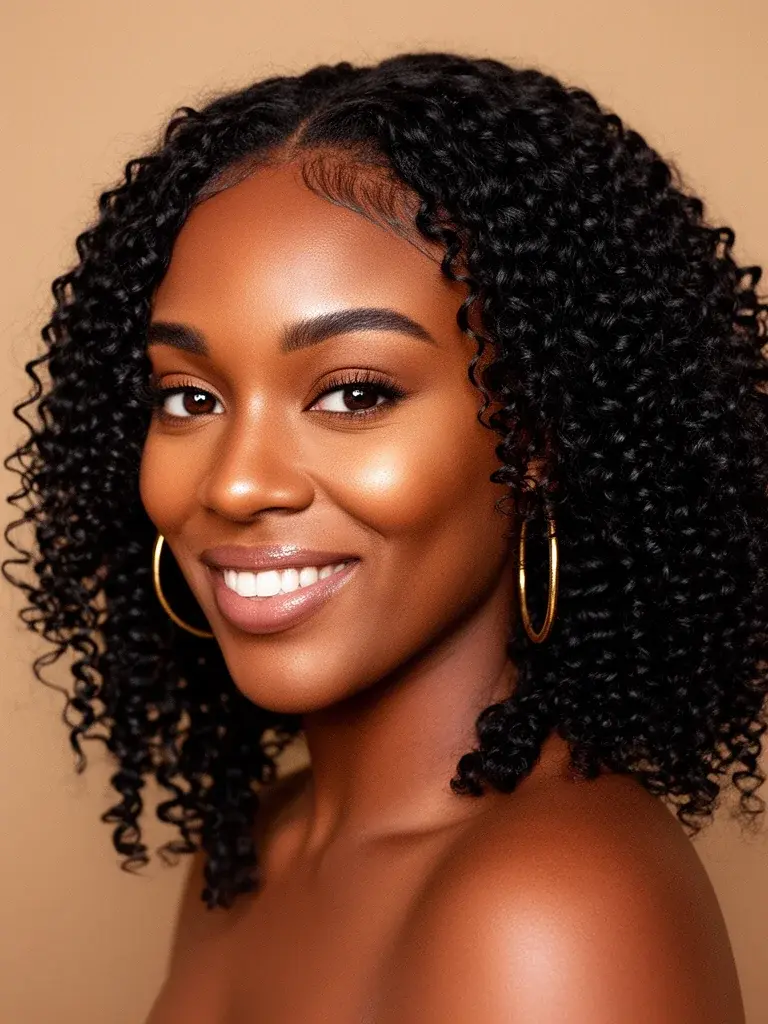
TL;DR
- Best for: Natural 3B–3C textures wanting definition, or anyone seeking the most sculptural curl pattern
- Avoid if: You need a wash-and-go that requires zero styling, or your hair is poker-straight and you won't use tools
- Ask your stylist: "Dry cut, curl-by-curl, round layers that respect my shrinkage. I want each spiral to have its own shape, not blend into the next."
- Maintenance: Refresh curls with water spray between washes; deep condition weekly; trim every 10–12 weeks
Who Does It Suit?
Spiral curls are a celebration of texture — whether you're born with them, perm them, or create them with tools. The key is whether you're willing to work with curls rather than against them.
Ideal for:
- Natural 3B–3C curl patterns that want more definition and less frizz
- Women who've straightened their hair for years and want to embrace their natural texture
- Oval and heart faces where the volume from spirals adds width and balance
- Thick hair that needs shape — spirals channel volume into structure
- Anyone inspired by the 2026 corkscrew curl renaissance (Kate Middleton BAFTA effect)
Hair types:
- Curly (3B–3C): The natural home for spiral curls — you already have the pattern, you just need the right cut and products to define it
- Wavy (2C): Can achieve spiral-adjacent results with the right curl-enhancing products and a diffuser
- Thick: Ideal — thick hair has the mass to hold individual spiral shape without falling flat
Avoid If...
- Your hair is very fine and flat → spiral curls need enough hair mass to hold the corkscrew shape; tool-created spirals on fine hair fall out in hours. Consider beach waves for a texture boost that fine hair can sustain
- You want zero daily effort → natural curls need refresh products between washes; tool-created curls need restyling every 1–2 days. Shoulder-length layers are lower-effort
- You live in extreme humidity and hate volume → humidity inflates spiral curls to maximum volume. If that bothers you, spirals will be a constant battle
- You're committed to straight styling → wearing spiral curls means accepting curl behavior: shrinkage, volume variation, and weather sensitivity. If you straighten more than you wear it curly, the cut won't serve you
- Your hair type is 4B–4C coils → your natural pattern is tighter than spirals; forcing a spiral shape fights your texture. Celebrate your coil pattern with an afro or a texturally appropriate cut
What are Spiral Curls?
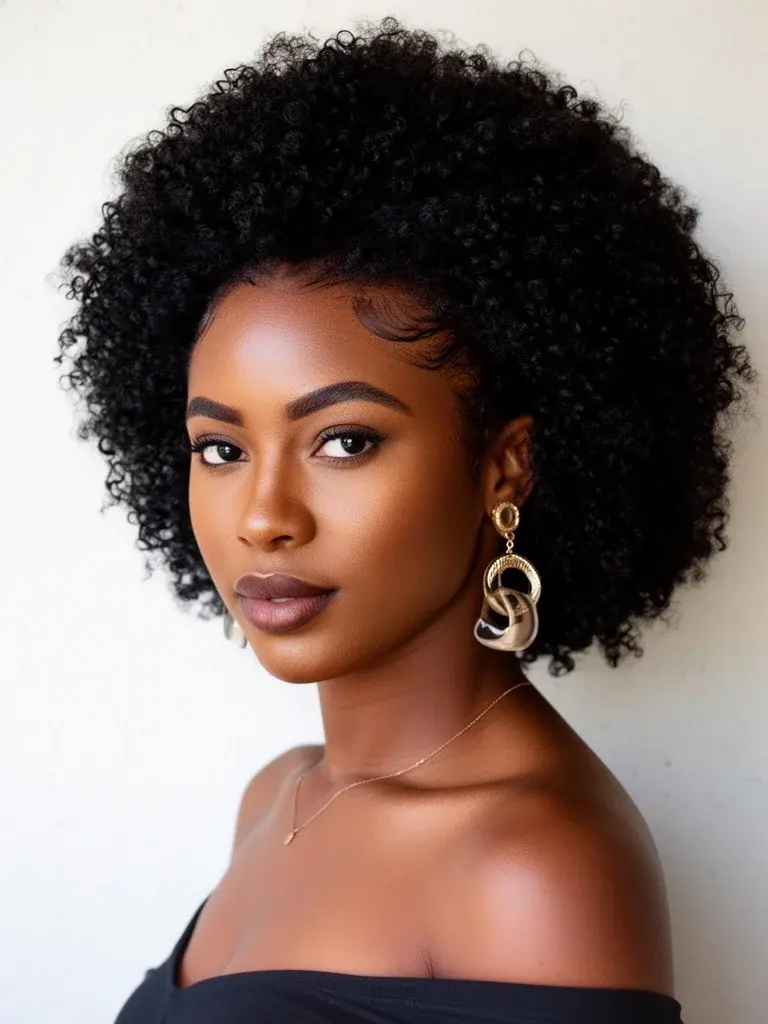
Spiral curls are defined corkscrew-shaped curls that wrap around themselves from root to tip in a consistent helical pattern. On the Andre Walker curl typing chart, they fall primarily in the 3B range — pencil-width circumference, with visible spring and bounce. Each curl is a distinct, self-contained unit with space between it and its neighbors.
What separates spiral curls from other curl types is the consistency of the spiral shape. Beach waves are irregular S-bends. Hollywood waves are sculpted flat waves. An afro features tighter coils packed together. Spiral curls occupy the middle ground — more structured than waves, more separated than coils, and more three-dimensional than flat waves. Each curl has its own cylinder shape, and the overall effect is volume through architecture rather than mass.
The 2026 curl renaissance — catalyzed by Kate Middleton's corkscrew curls at the 2026 BAFTAs — has brought spirals back into mainstream conversation. But spiral curls aren't a trend for the millions of women who wear them as their natural texture. They're a permanent pattern that trends come and go around.
Spiral Curls vs Ringlets vs Beach Waves
| Spiral Curls | Ringlets | Beach Waves | |
|---|---|---|---|
| Curl diameter | Pencil-width (~1 cm) | Marker-width (~0.5 cm) | No consistent diameter — irregular S-bends |
| Curl type | 3B | 3C | 2A–2B |
| Separation | Visible space between curls | Curls packed close together | No individual curl definition |
| Bounce/spring | High — curls spring when pulled | Very high — tight spring | Low — waves don't spring |
| Volume | Medium-high | High — density creates volume | Low-medium |
| Hold duration | All day (natural) or 1–2 days (tool) | All day (natural) or 1 day (tool) | 1–3 days depending on technique |
| Product weight | Medium — gel or mousse | Medium-heavy — cream or butter | Light — salt spray or texture spray |
Bottom line: Spiral curls = defined corkscrews with bounce. Ringlets = tighter, denser corkscrews. Beach waves = loose, undone texture with no curl definition. If you want individual curls that spring, go spiral. If you want effortless texture, go beach waves.
Cut Specifications
Spiral curls require a fundamentally different cutting approach than straight or wavy hair. The cut determines 70% of your curl definition.
- Cutting method: Dry cut, always. Wet curls stretch 30–50% longer than their true resting length. A wet cut on spiral curls is a blind cut — you won't know the real shape until it dries and shrinks. Find a stylist who cuts curl-by-curl (also called Rezo cut, DevaCurl cut, or sculpted dry cut).
- Layer structure: Round layers, not traditional graduated layers. Round layering cuts each curl to create a cohesive shape when the hair falls naturally, rather than creating a flat layer line that fights the curl's natural hang.
- Shrinkage allowance: Leave 1.5–3 inches longer than your target dry length, depending on your curl tightness. A curl that stretches to your collarbone when wet may sit at your chin when dry. Your stylist must account for this.
- Avoid: Razor cuts (create uneven, frizz-prone ends on curly hair), thinning shears (disrupt curl clumping and create halo frizz), and single-length cuts (spirals need layers to avoid triangle shape).
- Trim cycle: Every 10–12 weeks. Spiral curls grow slower visually because of shrinkage — what feels like 2 inches of growth may only show as 1 inch in your curl length. Don't trim more often unless you have split ends.
Color Pairing
- Balayage on spirals: Hand-painted highlights that follow individual curl strands create a dimensional, sun-kissed effect. Each highlighted curl catches light differently because spirals rotate in 3D. The most flattering color technique for defined curls.
- Honey or caramel tones on dark bases: Warm mid-tones scattered through spiral curls create depth without lightening the overall look. The spirals separate the colors visually, making even subtle highlights look dramatic.
- Auburn or copper tones: Red-family tones on spiral curls create a jewel-toned effect — each curl reflects light differently, creating a shimmering, multidimensional finish. Especially striking on 3B–3C textures.
- Solid deep color (no highlights): Black, espresso, or deep mahogany as a uniform color lets the curl architecture be the statement. When your curls are well-defined spirals, the shape is enough visual interest — color simplicity lets it shine.
Face Shape Tweaks
- Oval: Standard spiral curls at any length — no adjustments needed. This face shape handles the volume and width that spirals create
- Heart: Spirals add width at the jawline area, which balances a wider forehead. Keep volume below the ears; avoid excessive crown volume that widens the top
- Diamond: Spirals soften angular cheekbones — wear them at cheekbone length or longer to diffuse the widest face point
- Oblong: Spirals add horizontal volume that shortens a long face visually. Add more layers above the ears to create width. Avoid all-one-length spirals that elongate further
- Round: Be strategic — spirals add volume everywhere. Keep the sides close and create height at the crown with shorter top layers. Avoid chin-length spirals that echo and amplify roundness
- Square: Soft spirals frame and soften angular jawlines. Keep the curls slightly below the jaw rather than at jaw level, which can emphasize squareness
Hair Type Tweaks
- 3B natural: Your hair is already spiral-shaped — the goal is definition and frizz control. Use gel or mousse applied to soaking-wet hair, scrunch upward, and diffuse. Don't touch until fully dry (the "praying hands" application method distributes product without disrupting curl clumping).
- 3C natural: You're on the borderline between spirals and ringlets. Embrace whichever pattern dominates — don't try to force 3C coils into 3B spirals. Use heavier products (curl cream, butter) than 3B textures need, and expect more shrinkage.
- 2C wavy: You can enhance your waves toward spiral territory with curl-enhancing gel, finger-coiling individual sections, and diffusing. The result won't be true 3B spirals but a defined, spiral-adjacent pattern. Embrace the hybrid.
- Thick: Your advantage is mass — thick hair holds spiral definition better than any other type. The challenge is drying time (expect 2+ hours for air-dry, 30+ minutes for diffusing). Layers are essential to prevent the triangle shape that thick spiral hair creates without them.
Defining Your Curls (Without the Crunch)
The number one complaint about styled spiral curls: they look great but feel like a helmet. Here's how to get definition without crunch.
- The gel-cast-and-scrunch method: Apply strong-hold gel to soaking-wet hair. Let it air dry or diffuse completely — don't touch it. The hair will dry into a hard, crunchy cast. Once 100% dry, scrunch the crunch out with dry hands or a drop of oil on your palms. The curls underneath are soft, defined, and frizz-free. The cast is the cocoon; the curl is the butterfly.
- Product layering order: Water (soaking wet) → leave-in conditioner (moisture base) → curl cream or mousse (shape) → gel (hold). Each layer goes on wetter hair than you think is reasonable. Curly styling is aquatic — if your hair isn't dripping, it's not wet enough.
- Diffusing technique: Use a diffuser attachment on low speed, medium heat. Cup the curls into the diffuser basket and bring it up to your head — don't blast downward. Start at the roots for lift, then move to the ends. Stop when 80% dry and let the remaining 20% air dry to avoid over-drying.
- Between-wash refresh: Spray curls with a water/conditioner mix (10:1 ratio) until damp. Scrunch upward. Add a tiny amount of gel to any frizzy sections. Air dry or diffuse briefly. This extends your style 2–3 days between washes.
- Sleep preservation: Pineapple your curls — gather them into a very loose, high ponytail using a silk scrunchie. Sleep on a satin pillowcase. In the morning, shake out and refresh as needed. This preserves 70–80% of your curl definition overnight.
What to Tell Your Stylist
"I want a dry curl-by-curl cut with round layers. Don't cut my hair wet. Account for shrinkage — my curls lose about [X] inches from stretched to dry. I want each spiral defined individually, with enough layers to prevent triangle shape. No razor, no thinning shears."
Reference photo tips:
- Bring photos of spiral curls on similar curl tightness to yours — 3B curls on one person look different than 3B on another depending on density and strand thickness
- Show photos of curls in their natural, dry state — not stretched, not wet, not blown out
- If you've been straightening your hair, bring old photos of your natural texture (or show your root pattern) so the stylist understands what they're working with
- Ask if the stylist has experience cutting curly hair specifically. A great straight-hair stylist may be mediocre with curls — the techniques are different
- Request a dry cut. If the stylist insists on wetting your hair first, they may not be experienced with curl-specific cutting
How to Style
Daily (10 minutes):
- Start with soaking-wet hair (shower or spray until dripping)
- Apply leave-in conditioner, distribute with "praying hands" (palms smoothing down sections)
- Apply curl gel or mousse — more than you think, distributed section by section
- Scrunch curls upward from ends to roots
- Diffuse on low speed until 80% dry, or air dry completely
- Once 100% dry, scrunch out any crunch with dry hands or a drop of oil
Polished (20 minutes):
- Follow the daily routine through step 5
- Once dry, use a small curling wand (3/8 inch) to redefine any curls that didn't form properly
- Separate any clumped sections with oiled fingers for more individual curl definition
- Apply a light shine spray from 12 inches away for glossy, editorial-quality spirals
- Set the shape with a light mist of flexible-hold spray
No-Heat Alternative:
- Apply styling products to soaking-wet hair (same routine as daily)
- Two-strand twist each section of hair and pin in place with bobby pins or clips
- Let air dry completely (2–4 hours depending on density and length)
- Remove twists — each section will have enhanced, defined spiral pattern
- Separate gently with oiled fingers for volume
Maintenance Schedule
- Week 1–2: Curls are at peak definition from a fresh cut. Products sit perfectly. This is your reference for how the style should look.
- Week 3–6: Curls are still looking good. You've found your product routine. Some ends may be starting to thin or split, but definition is strong.
- Week 7–10: Growth is adding length, which means more weight and slightly less spring. The cut's shape is softening. This is normal — curls grow down and out simultaneously.
- Week 10–12: Time for a trim. The round layer shape has grown out, curls at the bottom are losing definition, and split ends are creating frizz that products can't fix. A dry trim reshapes and refreshes everything.
If you color your hair:
- Balayage on curls: refresh every 12–16 weeks. Curls hide root growth better than straight hair because the spiral pattern breaks up the color transition naturally.
- Full color: follow your normal 6–8 week schedule. Use color-safe, sulfate-free products — color-treated curly hair needs extra moisture protection.
- Deep conditioning: weekly, regardless of color status. Spiral curls are structurally more porous than straight hair and lose moisture faster. A deep mask once a week prevents breakage and maintains elasticity.
Pro tip: Find a DevaCurl or Rezo-trained stylist for your first curl cut. The cutting technique matters more for spirals than for any other hair type. A bad straight-hair cut grows out. A bad curl cut disrupts your curl pattern for months.
Common Mistakes
-
Brushing spiral curls when dry Fix: Never brush spiral curls when dry — it breaks the curl clump and creates a frizz cloud. Detangle only when wet with conditioner in the hair, using a wide-tooth comb or your fingers. Start from the ends and work up to the roots. If you need to refresh the shape between washes, use water and product, not a brush.
-
Using terry cloth towels Fix: Terry cloth creates friction that disrupts curl definition and causes frizz. Switch to a microfiber towel or an old cotton t-shirt. Scrunch (don't rub) the hair to absorb water. This single change eliminates 40% of frizz for most people.
-
Applying products to damp (not wet) hair Fix: "Damp" is too dry for curl styling. Products need to be applied to soaking-wet, dripping hair — the water is part of the formula. It distributes the product evenly and allows curls to clump properly. If your hair has started drying before you apply product, rewet it completely.
-
Cutting curly hair wet Fix: A wet cut on spiral curls is guesswork. When wet, curls stretch 30–50% longer than their resting dry length. The stylist can't see the true curl pattern, true length, or true shape. Demand a dry cut. If your stylist doesn't do dry cuts on curly hair, find one who does.
-
Using too many heavy products Fix: Heavy creams and butters weigh down spiral curls, pulling out the spring that defines them. The result: limp, elongated curls that don't bounce. Use lightweight products — gel and mousse provide hold without weight. Save heavier products for 3C–4C textures that need the moisture. For 3B spirals, lightweight is the rule.