TL;DR
- Best for: Shoulder-length to long hair of any face shape; anyone wanting texture without commitment to a cut; low heat or no-heat option for daily styling
- Avoid if: You have very short hair (under shoulder length); you want tight defined curls rather than loose relaxed waves
- Ask your stylist: Nothing — boho waves are a styling method. Optional add: "Add face-framing layers for more dimension around the face"
- Maintenance: This is a styling technique, not a cut. No trim schedule. Style as often or as rarely as you want
Who Does It Suit?
Boho waves are a styling method, not a haircut — which means they suit anyone with sufficient length. There's no "wrong face shape" for waves.
Ideal for:
- Any face shape — Soft waves work with all face shapes; specific wave placement can emphasize or de-emphasize features
- Women with naturally straight hair who want texture — The styling method adds wave that their natural hair doesn't provide
- Women with naturally wavy hair — The techniques enhance existing wave and add controlled irregularity
- Anyone wanting low-commitment texture — No salon appointment, no chemical treatment, no haircut required
- Women with medium-to-long hair — The wave pattern reads most fully on collarbone-length to mid-back hair
Hair types:
- Straight: Can achieve boho waves with any technique — heat, braids, or sock bun. Takes wave easily but may need light hold to keep it
- Wavy: The best starting point. Natural wave just needs enhancement, not creation. Diffusing with product often enough
- Fine: Takes wave easily; may not hold it as long. Products and dry shampoo help
- Thick: May need more time for the wave to set. Larger sections work well for the wide, sweeping wave that works with thick hair's natural density
Avoid If...
- Your hair is shorter than shoulder length → the wave pattern can't complete; try a textured blowout or diffused styling instead
- You want tight spiral or defined curls → Beach Waves with a smaller barrel are closer; for actual curls, a curling technique with setting products is needed
- You have chemically relaxed or permanently straightened hair → heat waves will be very temporary; consult a stylist about adding wave-friendly texture to chemically treated hair
- You're looking for wash-and-go → boho waves are a styling step, not a hairstyle that forms on its own. Some wave hair types come close, but true boho waves require 10–30 minutes of styling depending on the method
What are Boho Waves?
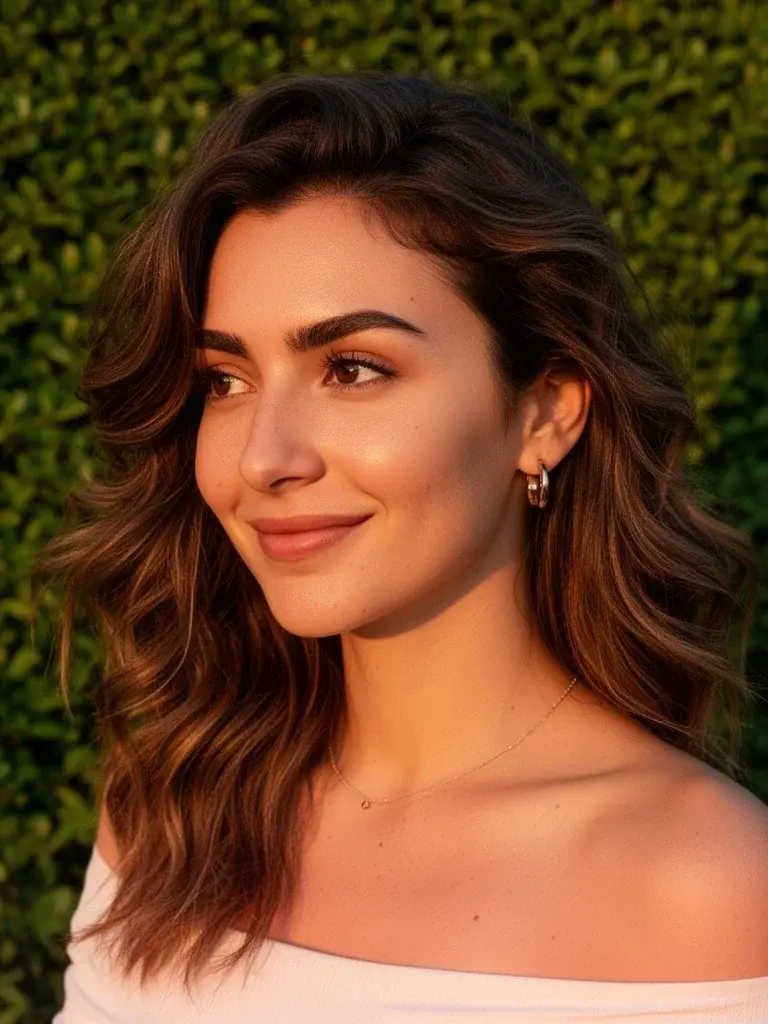
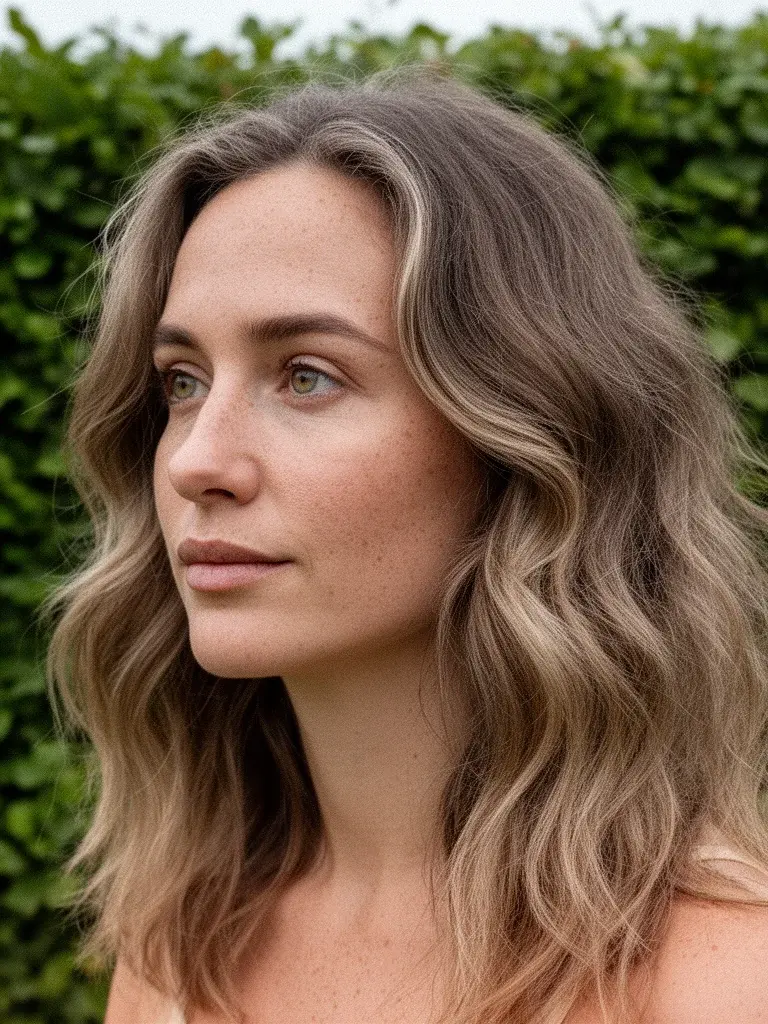
Boho waves are a loose, organic wave texture achieved through styling rather than cutting. The defining quality is their irregularity — unlike beach waves (which aim for uniform texture) or salon curls (which are set and defined), boho waves are deliberately imperfect: some pieces wavy, some straighter, varying wave sizes, random-looking.
The "boho" (bohemian) reference points to the aesthetic: romantic, effortless, nature-adjacent. The look is meant to suggest that the waves happened naturally, not that they were manufactured. This is achieved through techniques that create unpredictable results — overnight braids (which produce varied wave sizes), different-direction curling (which breaks up the uniformity), and deliberate under-styling (which lets the wave loosen and soften).
Critically, boho waves don't require a haircut. Any length from shoulder to long can achieve this look. Layers — particularly face-framing layers — enhance the result because shorter pieces interact with the wave differently and add dimension around the face. But the waves themselves are entirely technique-based.
Boho Waves vs Beach Waves
| Boho Waves | Beach Waves | |
|---|---|---|
| Texture | Soft, irregular, romantic | More defined, salt-textured, active |
| Uniformity | Deliberately varied | More consistent wave size |
| Product feel | Light or product-free | Often uses salt spray for texture/grip |
| Heat required | Optional — no-heat methods available | Usually some heat involved |
| Occasion feel | Every day, relaxed, versatile | Casual, summer, outdoor |
| Hair type sweet spot | Straight to wavy | Fine to medium wavy |
Bottom line: Boho = romantic and effortless, variety welcome. Beach = active texture with more product grip and definition.
Styling Method 1 — Wide Barrel Iron (Heat)
Best for: Straight and slightly wavy hair that needs consistent wave creation.
- Start with dry, product-free hair. Apply a light heat protectant spray
- Take 1–2 inch sections (larger sections = looser waves; smaller = tighter)
- Wrap each section around a 1.25–1.5 inch barrel iron, alternating direction section to section — some wrapping inward toward the face, some outward away
- Hold 5–8 seconds per section, release without unrolling
- Let all waves cool completely before touching
- Once cool, break apart with fingers only — no brush
- Optional: apply a tiny drop of light oil to the surface for shine
Styling Method 2 — Overnight Braids (No-Heat)
Best for: Avoiding heat damage; achieving boho wave naturally; works on any hair type.
- Start with damp, product-applied hair (light mousse or wave cream)
- Divide into 3–5 sections and braid loosely — tighter braids = tighter waves
- Secure with fabric hair ties (elastic leaves a crease)
- Sleep or wait until hair is completely dry
- Undo braids and separate with fingers only
- The irregular braid tension creates natural variation in wave size
- Add a small amount of dry shampoo at the roots if needed for lift
Styling Method 3 — Diffuser (Enhance Natural Texture)
Best for: Already wavy or curly hair that needs enhancement.
- Apply a curl cream or diffusing mousse to dripping-wet hair
- Scrunch through from ends upward
- Use the diffuser attachment on a blow-dryer at low heat, medium speed
- Cup sections in the diffuser bowl and lift toward the scalp — no up-and-down dragging
- Diffuse until approximately 90% dry, then air-dry the rest
- Scrunch out any product crunch with palms once fully dry
Color Pairing
- Balayage: The most synergistic color technique with boho waves. The sun-bleached-looking lighter ends that balayage creates mirrors the casual, sun-touched aesthetic of the wave style. Light throughout mid-lengths and ends, natural roots
- Bronde: The space between brunette and blonde — a tonal, multidimensional color that adds visual texture even before styling. Pairs with boho waves to create a layered, natural richness
- Warm tones: Caramel, copper, and golden brown tones catch the light in waves beautifully. The light interacting with wave sections creates natural highlights that cool tones don't achieve as dramatically
Face Shape Tweaks
Boho waves are a styling method, not a cut, so face shape "tweaks" apply to how you style and where you place the waves:
- Round faces: Add volume at the crown by starting waves closer to the root on top sections. This adds height that counters roundness
- Square faces: Focus wave movement around the jaw line — waves that fall alongside the jaw soften the angular corners
- Heart faces: Waves that fall to the mid-length and below add visual weight at the lower face, balancing a prominent forehead
- Oblong faces: Wider waves (larger barrel or loose braids) add horizontal volume rather than length
- Oval/Diamond: No adjustment needed
Hair Type Tweaks
- Straight: Takes wave from any technique but may need light hold to maintain it through the day. Set waves with a light-hold spray while still warm
- Wavy: Enhance your natural texture with diffusing or overnight braids. The wave is already there — you're just organizing and softening it
- Fine: Use smaller sections and lighter product. Fine hair waves more easily but the wave collapses faster — dry shampoo at the roots before styling extends the wave's lifespan
- Thick: Use larger sections for bigger, looser waves. Multiple smaller sections can make thick hair look crimped rather than wavy. Overnight braids in 3–4 large sections work extremely well on thick hair
Maintenance Schedule
Boho waves have no maintenance schedule because there's no cut to maintain.
Style as often or rarely as suits your routine:
- Daily styling: Recreate fresh waves using the method that works for your hair type and time available. Most methods take 15–30 minutes
- Second-day waves: Often better than day-one. The wave loosens and the style looks more naturally developed
- Third-day waves: Use dry shampoo at roots and a few drops of oil on mid-lengths. Lightly re-scrunch or re-wrap any fully straightened sections
- Reset: Wash, condition (focus on mid-lengths and ends), and start again
Optional cut maintenance: If you've added face-framing layers to enhance your boho waves, maintain those layers every 8–12 weeks to preserve the face-framing dimension.
Pro tip: For hair that loses its wave quickly, use a lighter-hold product and let waves set completely before breaking them apart — even 5 extra minutes of setting time makes a difference.
Common Mistakes
-
Brushing or combing when breaking out the waves Fix: Fingers only. A brush separates individual strands that should move as groups — the result is frizz and a puffed, triangle-shaped style instead of defined wave sections.
-
Using product on dry hair instead of damp Fix: Most wave products (mousse, curl cream, wave spray) activate on damp hair and set as the hair dries. Applying to dry hair sits on the surface without penetrating the hair shaft.
-
All sections curled in the same direction Fix: Alternating direction — some sections inward, some outward — is what creates the irregular, natural quality of boho waves. All inward = very defined, possibly unnaturally uniform. All outward = the same. Mixed = organic.
-
Touching the waves before they're cool Fix: Waves set on the way down from heat. Touching or brushing before they've fully cooled breaks the wave before it's fixed in place. Wait at least 10 minutes after completing the last section.
-
Expecting straight hair to hold boho waves without any product Fix: Straight hair can achieve boho waves but needs some hold to maintain them. A light-hold spray applied while waves are still warm, or a mousse worked through before the iron, gives the wave something to grip.