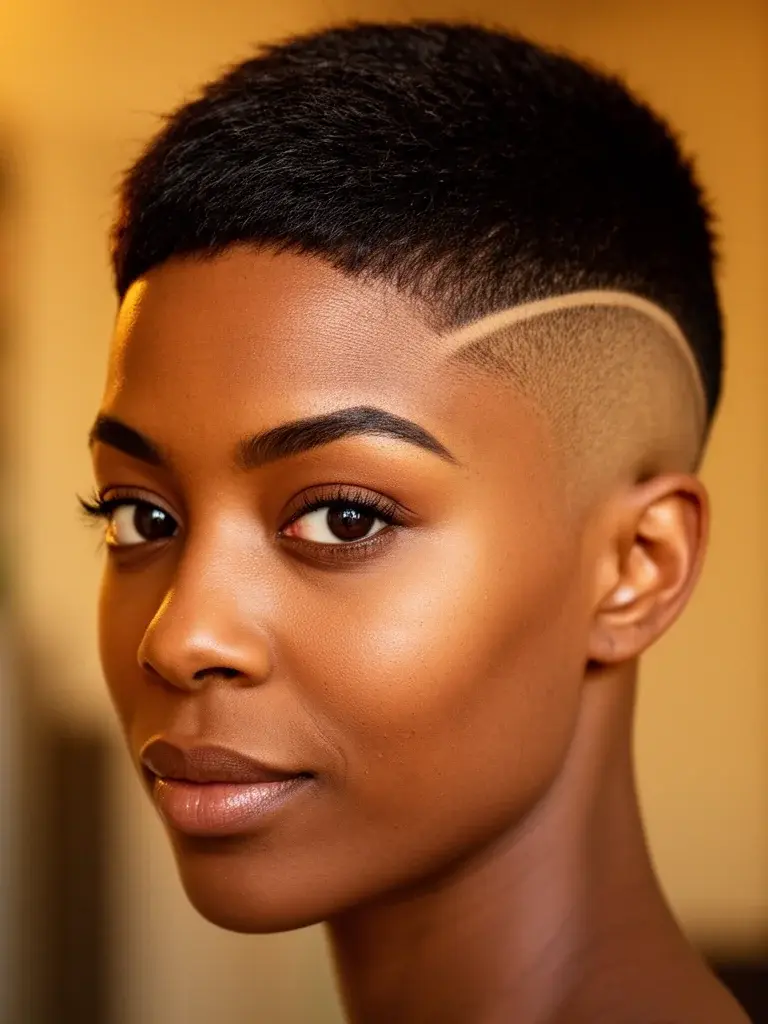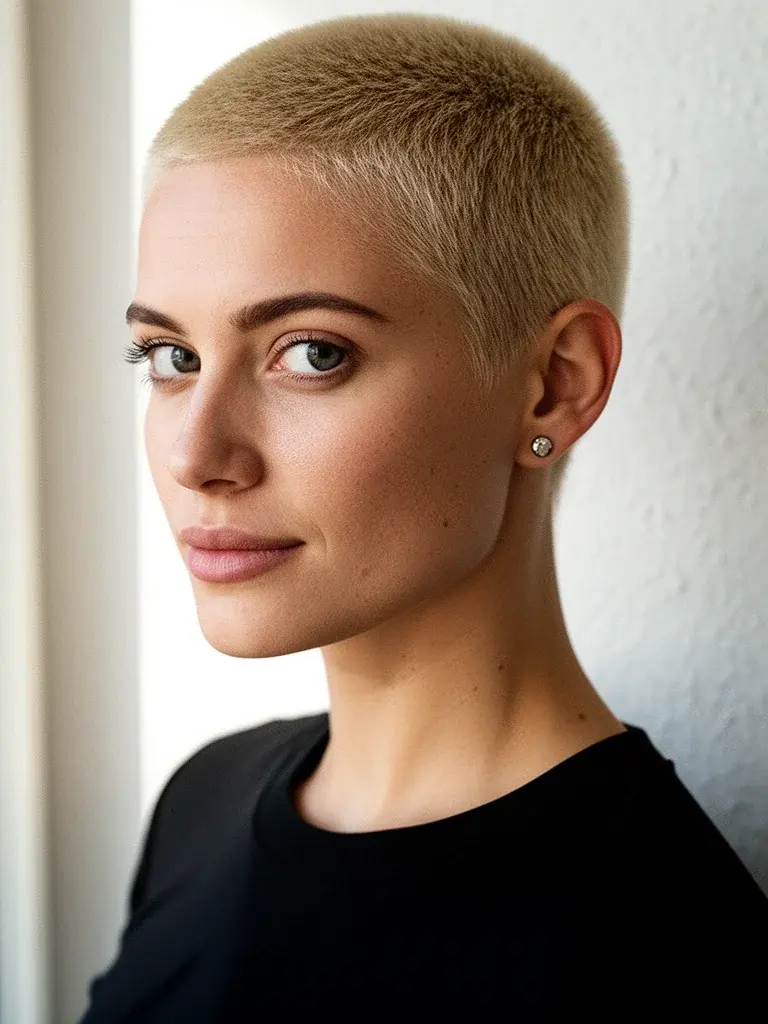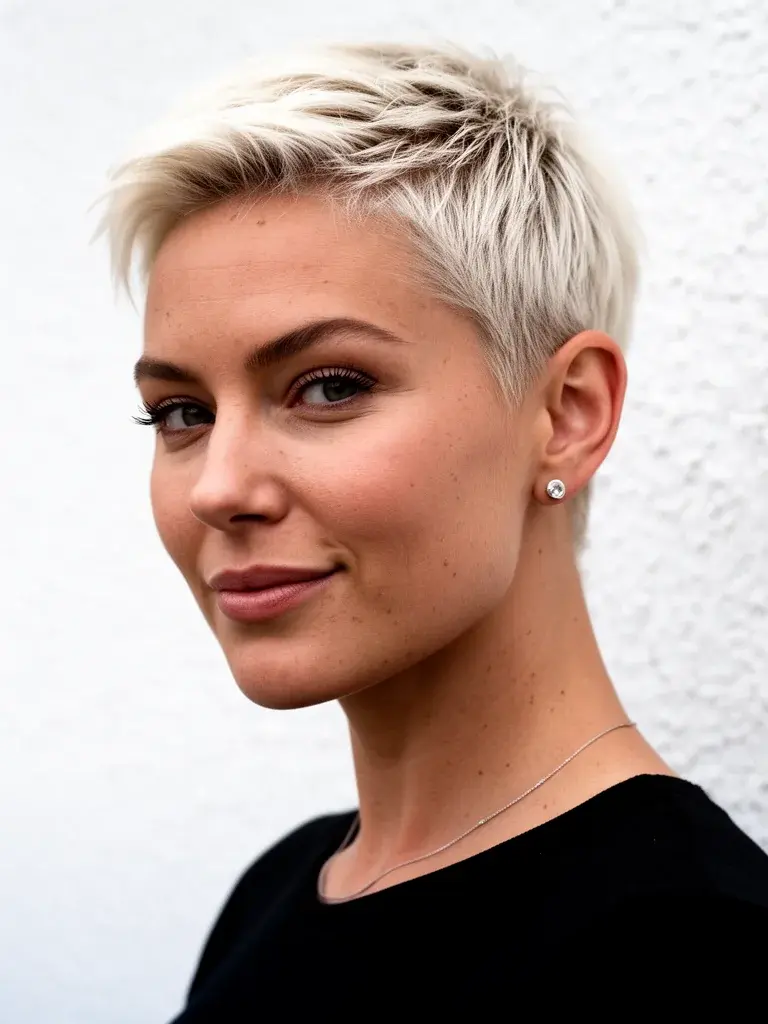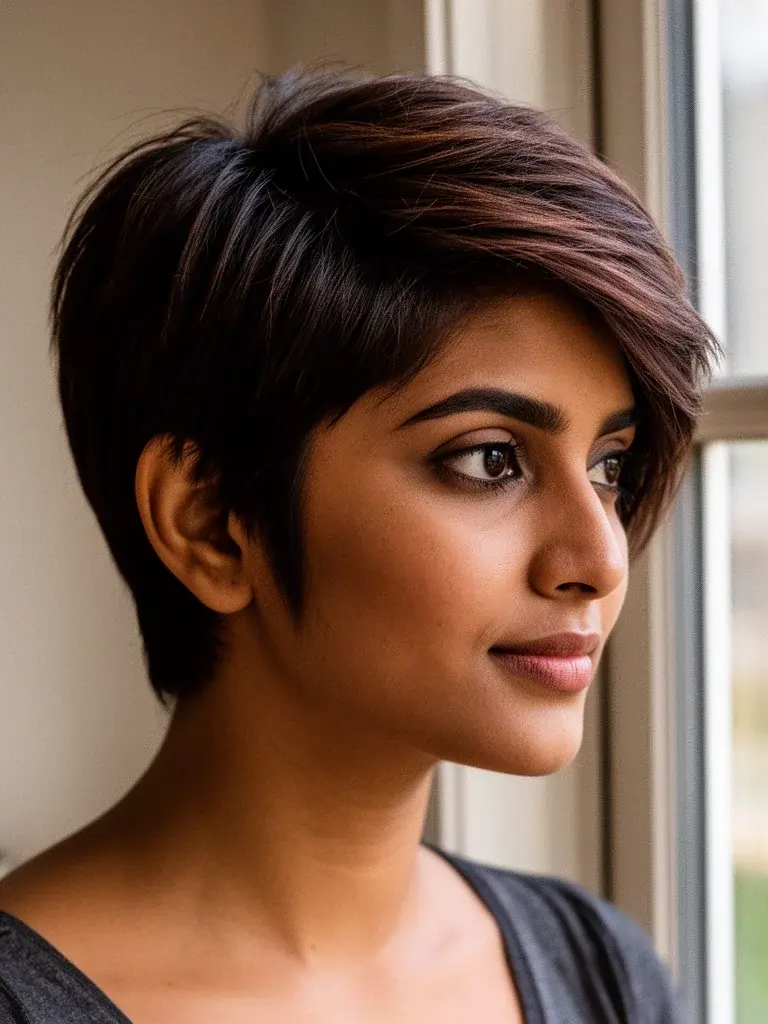

TL;DR
- Best for: Thick hair that needs bulk reduction, anyone who wants a dual-identity haircut (office-safe down, edgy up)
- Avoid if: Very fine hair that can't afford to lose density, or you hate the commitment of 3–4 week maintenance
- Ask your stylist: "I want a nape undercut — clipper guard #2, following my natural hairline, hidden under my layers when hair is down"
- Maintenance: Buzz every 3–4 weeks to keep the contrast clean
Who Does It Suit?
The undercut isn't about face shape — it's about hair behavior and lifestyle. It works on almost everyone because the shaved section is hidden by default.
Ideal for:
- Thick, heavy hair that makes every hairstyle feel bulky and hot
- Women who want a "secret" edgy element without changing their visible look
- Active lifestyles where ponytails and updos are frequent (undercuts shine when hair goes up)
- Anyone who's bored with their current cut but doesn't want to lose length
- Creative professionals who want versatility between conservative and bold
Hair types:
- Thick: The ideal candidate — undercuts were invented to solve the thick-hair bulk problem
- Wavy/Curly: Works beautifully — the top texture hides the shaved section perfectly, and the weight reduction lets curls spring
- Straight: Clean reveal when hair goes up, completely invisible when down — the sharpest contrast
- Fine: Proceed with caution — only a small nape undercut; avoid removing density from the sides
Avoid If...
- Very fine, low-density hair → you can't afford to lose volume from any area; consider face-framing layers for shape without sacrifice
- You hate regular maintenance → undercuts need buzzing every 3–4 weeks; letting them grow out creates an awkward mullet-adjacent layer
- You wear your hair up daily for work → a nape undercut is visible every time you tie your hair back, which defeats the "hidden" purpose if your workplace is conservative
- You're growing your hair out → an undercut adds 6+ months to the grow-out timeline for the shaved section
- You want full-coverage long hair → shoulder-length layers or butterfly cut give shape without shaving
What is an Undercut?
An undercut is any haircut where the lower section of hair (nape, sides, or both) is shaved or clipped significantly shorter than the top layers. The top falls over the shaved section, creating two distinct lengths that coexist — long on the surface, short underneath.
What separates an undercut from a standard layered cut is the disconnect. In layered cuts, the short and long sections blend gradually. In an undercut, there's a hard line where long meets short — no graduation, no blending. This disconnect is the defining feature. When your hair is down, the short section hides. When your hair goes up, it's revealed. Two looks in one cut.
The technique works at any length. You can pair a nape undercut with a lob, a bob, waist-length hair, or a pixie. The undercut is a modifier — it adds onto your base style rather than replacing it.
Undercut vs Pixie Side Undercut vs Buzz Cut
| Undercut | Pixie Side Undercut | Buzz Cut | |
|---|---|---|---|
| Coverage | Shaved section hidden under longer top layers | Shaved section exposed — it's part of the visible design | Entire head is one short length |
| Concealment | Hidden when hair is down | Always visible | Nothing to hide |
| Length range | Works with any top length (bob to waist) | Short — pixie length on top | Uniform short all over |
| Commitment | Medium — you can grow it out under your hair | High — visible during entire grow-out | Very high — months to any other style |
| Bulk reduction | Yes — primary functional benefit | Some — but more aesthetic than functional | Maximum — no bulk at all |
| Maintenance | Buzz every 3–4 weeks | Buzz sides every 2–3 weeks + style top | Buzz every 2–4 weeks |
Bottom line: Undercut = secret weapon, hidden by default. Pixie side undercut = visible statement, always on display. Buzz cut = maximum commitment, no hiding.
Cut Specifications
The undercut is a modifier — specify it alongside your base haircut, not instead of it.
- Shave placement: Nape (most hidden), one side (moderately visible), both sides (bold), or U-shaped nape-to-ears (maximum). For a first undercut, start with nape only.
- Clipper guard: Guard #1 (3mm) for bold contrast, guard #2 (6mm) for moderate contrast, guard #3 (10mm) for subtle. Most start with #2.
- Boundary line: The line where the shave meets your long hair. Should follow your natural occipital bone for a nape undercut. For side undercuts, the boundary runs from the temple to behind the ear. Discuss the exact height with your stylist — even half an inch higher changes the look dramatically.
- Top layer length: Minimum 3 inches above the undercut to cover it when hair is down. More top length = more concealment options.
- Disconnection vs. blend: A true undercut has no blending at the boundary line. If you want a softer transition, that's a disconnected undercut (slightly graduated near the boundary). Specify which you want.
- Trim cycle: Buzz the undercut every 3–4 weeks. Your base haircut follows its own schedule.
Color Pairing
- Peek-a-boo color: Dye the undercut section a vivid or contrasting color (pink, teal, platinum) while keeping the top your natural shade. Hidden when down, dramatic pop when up. Low-risk color experimentation because you can literally cover it.
- Shadow root on top: Dark root melting into lighter ends on the top layers, paired with a natural undercut. The contrast between styled top and raw-shaved underside creates an intentional duality.
- Platinum undercut: Bleach only the shaved section platinum while keeping the rest dark. Minimal commitment because the bleached section gets buzzed off every month — no damage accumulation.
- Natural everywhere: An undercut is already a strong design element. Solid natural color lets the architecture of the cut speak for itself. Often the best choice for a first undercut — don't add color complexity to cut complexity.
Face Shape Tweaks
- Oval: Any undercut placement works — this face shape has no proportional concerns to correct
- Round: Nape undercut preferred — side undercuts expose the widest part of a round face. If you want side undercuts, keep the boundary line low (below the ear)
- Square: Nape undercut softens the back silhouette. Side undercuts work if paired with longer, softer layers on top to balance the angular jaw
- Heart: Nape undercut adds visual weight at the bottom of the head, which balances a wider forehead. Side undercuts can exaggerate the top-heavy proportion
- Oblong: Side undercuts add visual width, which can help balance an oblong face. Nape undercuts have minimal face-shape effect on oblong faces
Hair Type Tweaks
- Thick: The dream candidate. Go aggressive — guard #1 or #2, larger shaved area. The thicker your hair, the more dramatic the before/after weight difference. You'll notice it instantly in ponytails and updos.
- Wavy: Waves hide the boundary line better than any other texture. The transition from shaved to long is virtually invisible. Cut the boundary line slightly lower than you think — wave pattern will conceal it.
- Curly: Same logic as wavy, amplified. Curly top layers spring out and fall over the undercut naturally. The weight reduction lets curls bounce more freely. An undercut can transform heavy 3A–3B curls from weighed-down to bouncy.
- Straight: The boundary line shows more clearly on straight hair — which can be a feature or a bug. If you want full concealment, keep the shaved area small (nape only) and the top layers long enough to cover completely.
- Fine: Small nape undercut only. Removing density from the sides or temple area will make fine hair look thin when down. The nape area contributes the least to visible volume, so it's the safest zone.
Living With Two Looks
The undercut's unique proposition is that you get two hairstyles in one. Managing both takes a small mental shift.
- The "down" wardrobe: When your hair is down, you have your normal hairstyle — lob, bob, long layers, whatever your base cut is. Nobody knows you have an undercut. Your work meetings, formal events, and conservative contexts all see this version.
- The "up" wardrobe: When your hair goes up — ponytail, bun, half-up — the undercut reveals. This is the casual, weekend, creative, going-out version. The contrast between shaved and styled is the entire point.
- The transition moment: The most satisfying part of an undercut is the reveal. Pulling your hair up at the end of a workday, tying it back before a workout, twisting it into a bun at a bar. It's a costume change that takes two seconds.
- Sleep considerations: The shaved section means less hair trapping heat against your neck at night. If you run hot, this is a legitimate quality-of-life improvement. Many undercut converts cite better sleep as an unexpected benefit.
- Product split: Your top layers need your normal products (whatever your texture requires). The shaved section needs nothing — maybe a light oil rub if the scalp gets dry from clipper contact. Don't apply styling products to the shaved area; there's nothing to style.
What to Tell Your Stylist
"I want a nape undercut — guard #2, following my natural hairline shape, with a clean disconnection line. I want it completely hidden when my hair is down. My base style is [describe your current cut]. Don't blend the boundary — I want the hard line."
Reference photo tips:
- Show photos of undercuts on similar hair density to yours — a nape undercut on thick hair looks different than on fine hair
- Bring photos with hair both up AND down — your stylist needs to understand both the hidden and revealed look you want
- Point to the exact height you want the boundary line — "up to here" (gesture on your head)
- If this is your first undercut, say so — a conservative nape undercut is the best starting point. You can always go wider or higher next time
- Ask to see the boundary line from all angles before your stylist finishes — adjustments are easy at this stage, impossible after you leave
How to Style
Daily (1 minute):
- Style your top layers as normal — the undercut section requires zero daily work
- If your hair is going up, run a hand over the shaved section to smooth any new growth
- Done — the undercut is the lowest-effort element of your entire hairstyle
Polished (3 minutes):
- Style your base cut as usual (blow dry, waves, straighten — whatever your top layers need)
- For the reveal look: pull hair into a sleek low bun or ponytail, smoothing the transition zone with a small amount of edge control or gel
- The cleaner the top-to-shaved boundary looks, the more intentional the undercut reads
No-Heat Alternative:
- Air-dry your top layers with whatever product your texture needs
- For updos: braid the top section or twist into a loose bun — the undercut handles the "back of the head" automatically
- The shaved section actually makes air-dry updos easier because there's less bulk to wrangle at the nape
Maintenance Schedule
- Week 1–2: Undercut is sharp and clean. The boundary line is crisp. Maximum contrast between shaved and long.
- Week 3–4: Time to buzz. The shaved section has grown about a quarter inch — it's starting to feel like very short hair rather than a shave. The boundary line is softening. Book a quick clipper touch-up.
- Week 5–6: If you skipped the touch-up, the undercut is now a very short layer underneath your hair. The "two looks" effect is fading. It still reduces bulk, but the visual contrast is gone.
- Week 7–8+: The undercut has grown into an unintentional short layer. Not terrible, but not an undercut anymore. Either buzz it back to shape or commit to growing it out.
If you color your hair:
- Peek-a-boo undercut color: refresh every 4–6 weeks (timed with your buzz). Since you're cutting the colored section off each time, damage doesn't accumulate.
- Top layers with balayage/highlights: follow your normal 10–12 week schedule. The undercut section doesn't need color unless you're doing the peek-a-boo look.
- Single process: the undercut section grows out faster than you'd notice color-wise because it gets buzzed before roots show. Low-maintenance from a color perspective.
Pro tip: Buy your own clippers (a basic Wahl or Andis kit costs $25–40) and do maintenance buzzes at home between salon visits. Same guard number every time. Follow the existing shape — don't try to redesign the boundary line yourself.
Common Mistakes
-
Going too high on the first undercut Fix: Start with a conservative nape undercut — just the hairline area at the back of the neck. You can always go higher and wider on the second visit. Going too high on the first cut means months of grow-out if you don't like it. Your stylist can extend the undercut in any direction; they can't put hair back.
-
Choosing a side undercut when you always wear hair down Fix: A side undercut only makes sense if you regularly wear your hair up or behind your ears. If your hair is always down, a nape undercut gives you the bulk reduction without a shaved section peeking out when the wind blows. Match the undercut placement to your actual daily hairstyle, not the look you want once a month.
-
Skipping maintenance past 5 weeks Fix: An overgrown undercut isn't an undercut — it's an unintentional short layer that creates a weird bump under your hair. If you're not willing to buzz every 3–4 weeks, either commit to a longer clipper guard (#3 or #4) that grows out more gracefully, or skip the undercut entirely.
-
Applying styling products to the shaved section Fix: The undercut section needs nothing. No gel, no mousse, no serum. These products build up on short stubble and make the shaved area look greasy or flaky. If the scalp feels dry, a drop of lightweight oil (jojoba or argan) rubbed in after showering is all it needs.
-
Not communicating the boundary line clearly to your stylist Fix: "I want an undercut" is too vague — it could mean nape only, full sides, temple to temple. Use your hands to show exactly where you want the shaved section to start and stop. Bring reference photos showing the boundary from the back AND the sides. The boundary line is the most important decision in an undercut, and it's the hardest to fix if it's wrong.