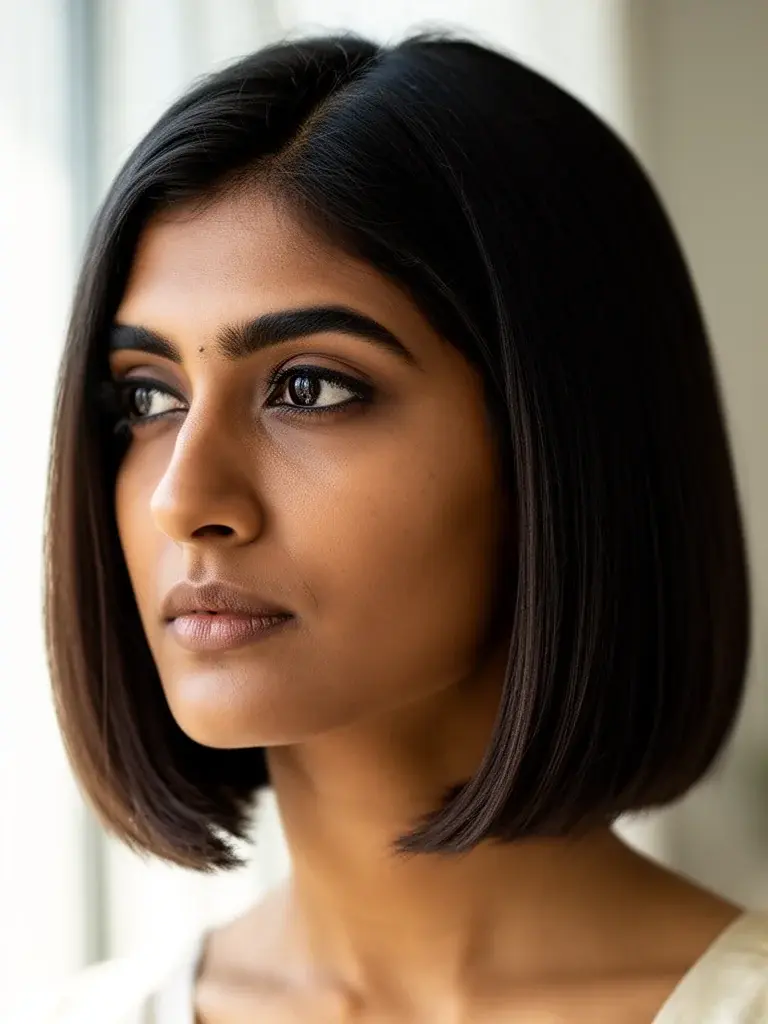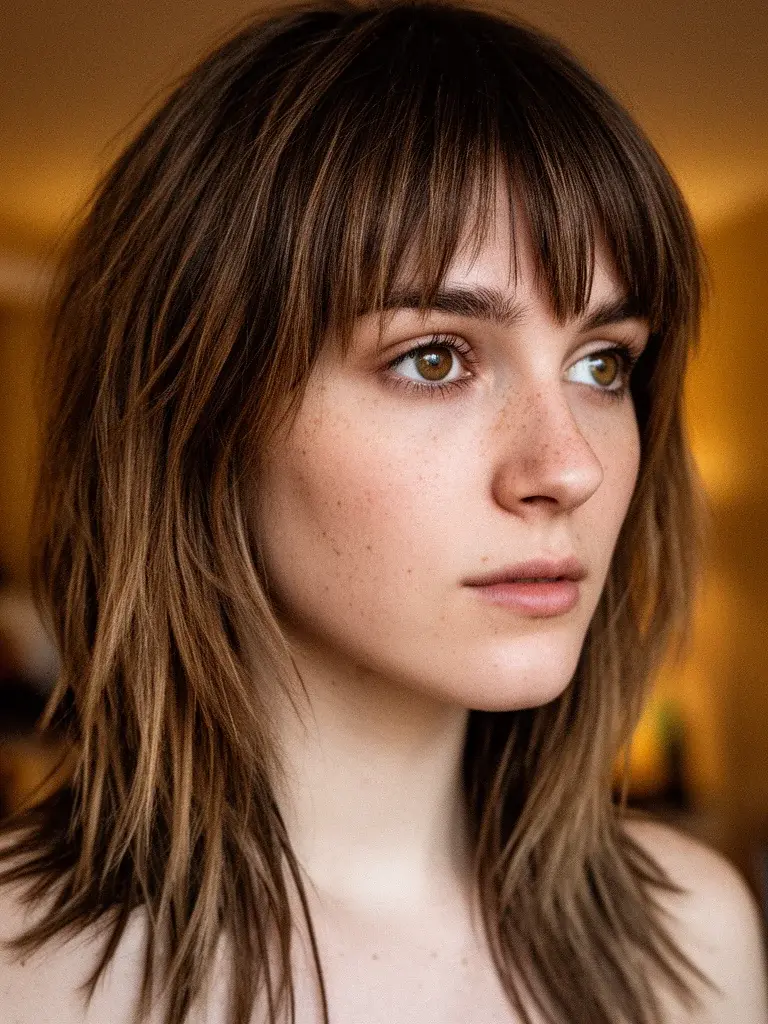

TL;DR
- Best for: Long hair wanting dimension without losing length; any face shape needing some structure; wavy and curly hair that wants more movement
- Avoid if: You put your hair up most of the time and don't want anything falling out; you have short hair (this technique is for medium-to-long lengths)
- Ask your stylist: "Face-framing layers only — [chin / cheekbone / collarbone] length framing pieces on both sides. Do not change the back length."
- Maintenance: Every 8–12 weeks; very graceful grow-out
Who Does It Suit?
Face-framing layers are the most genuinely universal of all hairstyles. Because they add to rather than change the existing hair, they benefit almost any starting point.
Ideal for:
- Any face shape — The placement and length of the framing pieces can be adjusted for every face
- Long hair that looks flat — The structural contrast between shorter front pieces and long back creates dimension
- Women who don't want to commit to a full restyle — This is a targeted addition, not a complete change
- Wavy and curly hair — Wave and curl patterns interact beautifully with the shorter front pieces, creating natural movement
- Women growing hair out — Face-framing layers can refresh the look while everything else continues to grow
Hair types:
- Straight: Creates clean, visible contrast between framing pieces and long hair
- Wavy: Wave movement in the shorter framing pieces creates natural face-framing without daily styling
- Curly: Curl pattern amplifies the framing effect; pieces spring up around the face naturally
- Thick: The shortened framing sections remove bulk from the front, which can make thick long hair feel lighter and more balanced
- Fine: Shorter framing pieces can make fine hair look thicker at the face — the shorter strands have less length pulling them flat
Avoid If...
- You always wear your hair up and want everything contained → framing pieces at chin-cheekbone length won't stay in a ponytail; go for Shoulder-Length Layers which are long enough to pin back
- You have short hair → face-framing layers require at least medium-length hair (past the chin); on shorter hair, the same technique becomes a different cut entirely
- You want all-over volume and texture → a Wolf Cut distributes layers throughout and creates more comprehensive movement and volume
- You want fringe (forehead coverage) → face-framing layers start at or below the cheekbone and don't cover the forehead; wispy or side-swept bangs serve the forehead-coverage function
- You need one-length precision → if your existing style depends on all hair hanging at the same length, any face-framing layers disrupt that
What are Face-Framing Layers?
Face-framing layers are shorter sections of hair cut specifically from the front of the hair, designed to sit around the face from cheekbone to jaw level. Unlike full-head layering which affects the entire length and volume distribution, face-framing layers only modify the pieces that sit closest to the face.
The technique involves isolating the front sections — from the hairline back to approximately the temples — and cutting them shorter than the rest of the hair. The cut line is typically a gentle curve following the face's contour rather than a straight horizontal line. This curved shape is what makes the layers "frame" rather than just "hang shorter."
What makes them distinctly different from other layer types is their isolation. The back length is completely untouched. The transition between the shorter front pieces and the long back is handled by blending — so there's no visible step or disconnection. The result is long hair that has structural interest at the front without sacrificing the overall length.
Face-Framing Layers vs U-Cut vs V-Cut vs Shoulder-Length Layers
| Face-Framing Layers | U-Cut | V-Cut | Shoulder-Length Layers | |
|---|---|---|---|---|
| Where cut | Front sections only | Back, curved upward | Back, V-shape | Throughout, at shoulder |
| Affects length | No | Slightly | Slightly | Yes |
| Adds face framing | ✅ Primary purpose | ❌ Back-focused | ❌ Back-focused | ⚠️ Indirect |
| Creates movement | Front + face | Back + perimeter | Back | Overall |
| Best starting length | Medium to long | Long | Long | Medium |
Bottom line: Face-framing layers change the front only; U-cut and V-cut shape the back perimeter; shoulder-length layers add texture throughout at a specific length.
Cut Specifications
- Section: Front sections from hairline to approximately the temple or ear — the pieces that fall around the face
- Length: Typically chin to cheekbone. Longer (collarbone) = subtle, versatile, stays in updos. Shorter (cheekbone) = more defined, more visible when hair moves
- Shape: A soft curve following the face contour — not a straight horizontal line
- Technique: Usually scissors or point-cutting to create a soft graduation between the shorter framing pieces and the longer back
- Back length: Completely unchanged
- Trim cycle: Every 8–12 weeks for the framing pieces; much more forgiving than bangs
Color Pairing
- Balayage concentrated on the framing pieces: Lightening the shorter face sections draws the eye to the framing layers and makes the face-shaping effect more visible. The classic approach: lighter framing pieces that catch the light when the hair moves
- Contrast highlights: A notable color difference between framing pieces and the back creates a clear visual separation that emphasizes the layering
- Shadow root: Dark roots growing into lighter mid-lengths and ends. The transition tends to fall right at the face-framing layer zone, which looks entirely intentional on this cut
- Rich natural brunettes: Deep mahogany or chestnut single-process catches beautifully on the movement of shorter framing pieces, especially on wavy hair
Face Shape Tweaks
- Oval: No adjustment needed. Any length from cheekbone to collarbone works
- Round: Cut the framing pieces longer rather than shorter — collarbone length creates more vertical lines. Avoid very short framing at the cheekbone level, which can add visual width
- Square: Position the framing layers to start just above the jaw — pieces hitting at jaw level soften the jawline's sharp angle
- Heart: Longer framing pieces (below chin) add visual weight at the narrower lower face, balancing a prominent forehead
- Oblong: Shorter framing pieces (chin level) break the long face's vertical emphasis more effectively than collarbone-length pieces
- Diamond: Framing pieces at or below the chin add width at the narrowest part of the face
Hair Type Tweaks
- Straight: The framing pieces sit predictably. The visual contrast between front and back is clean and readable
- Wavy: Natural wave movement in the shorter framing pieces creates face movement without daily styling. Ask for slightly shorter framing than you think you want — wave shortens apparent length
- Curly: Must cut dry or compensate significantly for shrinkage. Curl in the framing pieces creates incredible natural face-framing. Ask for framing pieces 2–3cm longer than the target length when cutting wet
- Thick: The shorter framing pieces reduce bulk at the front and lighten the "curtain" effect that thick long hair creates
- Fine: Shorter framing pieces appear thicker because they have less length pulling them flat. The contrast with the long back creates dimension that fine one-length hair can't achieve
How to Style
Daily (5 minutes):
- Let hair air-dry (or blow-dry briefly) until mostly dry
- Use fingers to separate the shorter framing pieces from the back and pull them forward
- Apply a small amount of light oil or cream to the framing pieces for shine and definition
- Let the framing pieces fall naturally or curl them slightly with fingers for added shape
Polished (15 minutes):
- Apply heat protectant to damp hair
- Blow-dry the back section smooth and flat
- Use a small-to-medium round brush on the framing pieces, rolling inward at the ends to direct them toward the face
- Finish with a few drops of shine serum on the framing pieces only
No-Heat:
- Apply a small amount of curl cream or wave spray to damp framing sections
- Scrunch and twist the framing pieces to encourage their natural movement direction (inward toward the face)
- Pin or clip the back out of the way while the framing sections set
- Release when dry — the framing pieces will have more texture and movement than the back
Maintenance Schedule
- Week 1–4: Perfect definition. Framing pieces sit clearly shorter than the back and move independently
- Week 5–8: Growth softens the length contrast slightly but the framing is still visible and intentional-looking
- Week 9–12: The shorter framing pieces are approaching the transition point with the longer back. Some people prefer the more grown-in look at this stage; others want a trim to restore the original contrast
- Week 12+: Without a trim, the framing layers are now functioning as longer layers rather than true face-framing pieces — they've grown to blend
If you color your hair:
- Color timing and layer maintenance can align at 8–10 week intervals
- If the framing pieces have balayage, they can stretch 12–14 weeks before the color looks notably grown-out
Pro tip: Face-framing layers are one of the few cuts where you can ask to maintain just the framing pieces at a single visit without touching anything else. A "framing layer refresh" is a quick, inexpensive service at most salons.
Common Mistakes
-
Saying "add some layers" instead of specifying face-framing only Fix: "Face-framing layers only — front sections, do not touch the back length" is the complete instruction. "Add some layers" can mean anything from surface layers to a full restyle.
-
Getting the framing layers too short on the first visit Fix: If uncertain, start with collarbone-length framing. You can always go shorter on the next visit. Going from chin-level framing back to long hair requires growing out, which takes months.
-
Not telling the stylist you wear your hair wavy or curly Fix: The stylist cuts to a different length depending on your hair's texture. A straight-hair chin-length framing layer will be above the chin by several centimetres once your hair curls or waves. Communicate your natural texture before any cutting begins.
-
Forgetting the framing layers exist when putting hair up Fix: If you prefer no pieces falling around your face in updos, get framing layers at collarbone length or longer — long enough to be pinned back. Shorter framing layers will always fall out of ponytails and buns.
-
Letting them grow completely out and never refreshing Fix: Face-framing layers at 8–12 months of growth just look like long hair with a slight length variation. A light trim to re-establish the framing is a 10-minute appointment that dramatically refreshes the look.