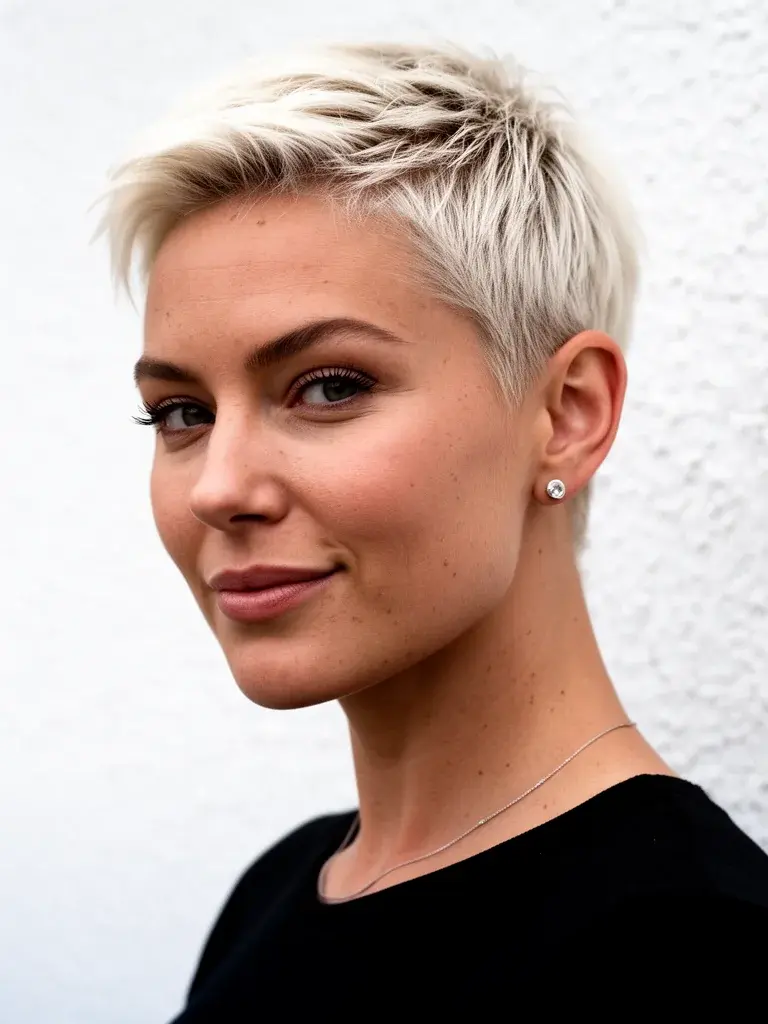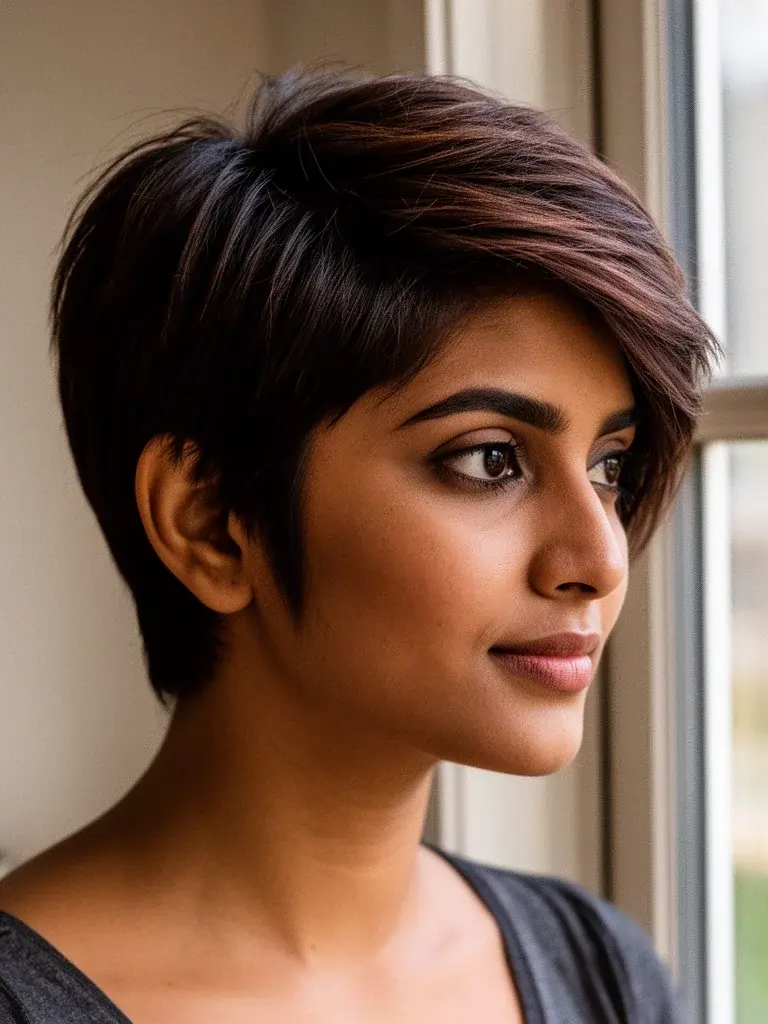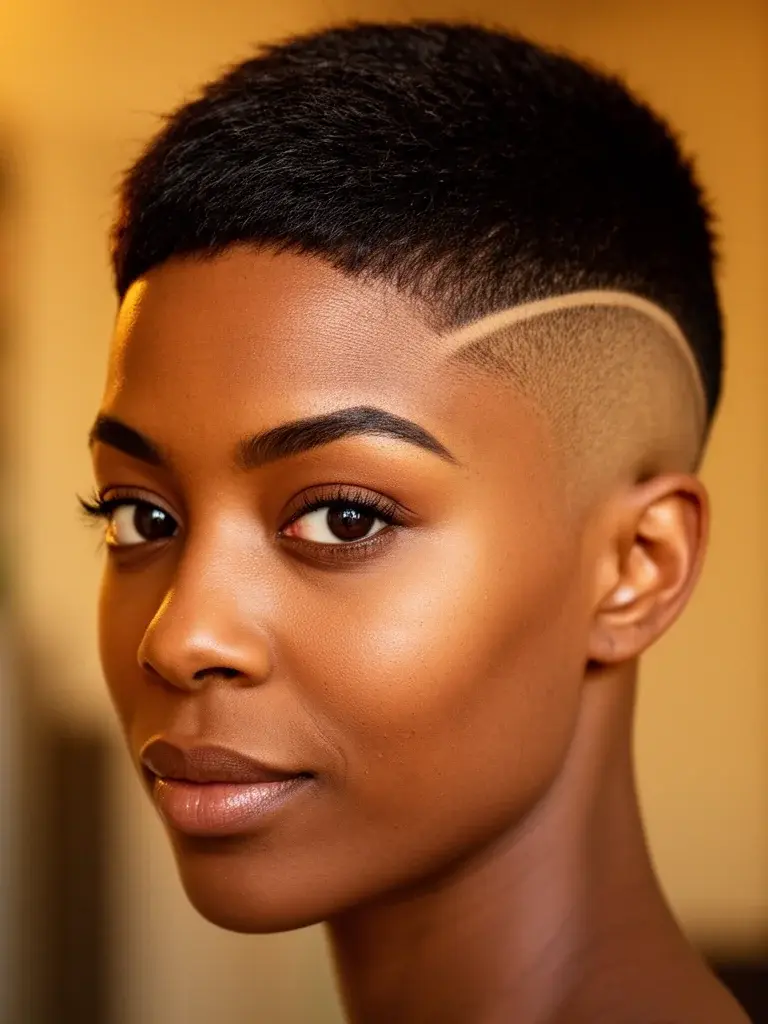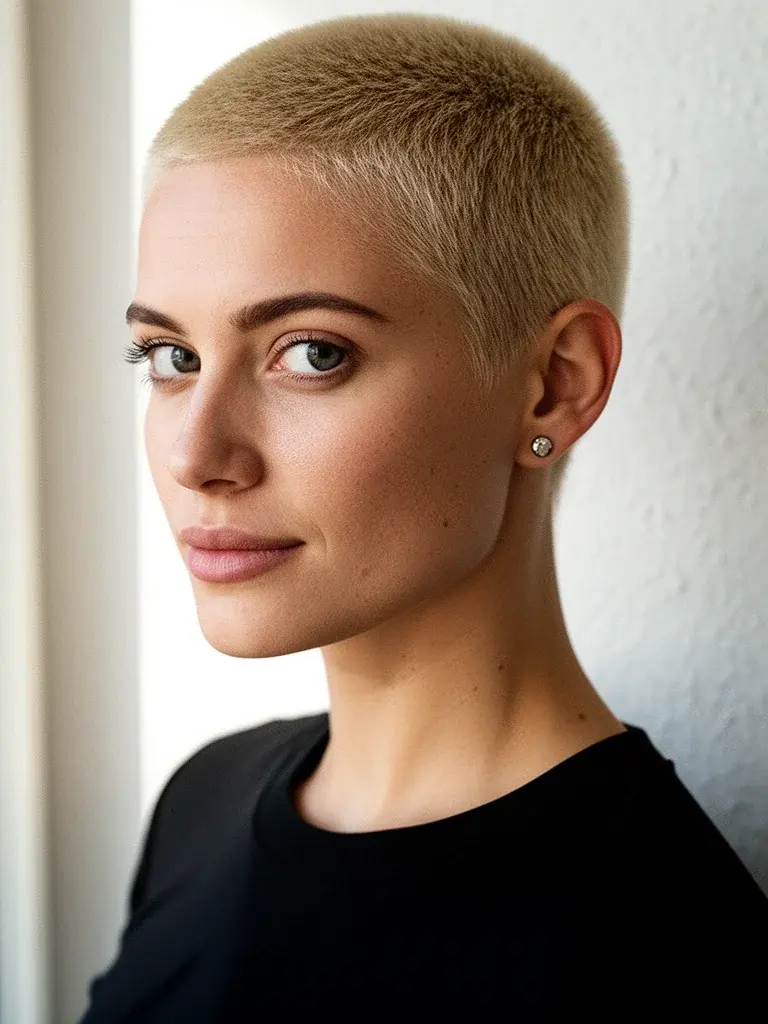
TL;DR
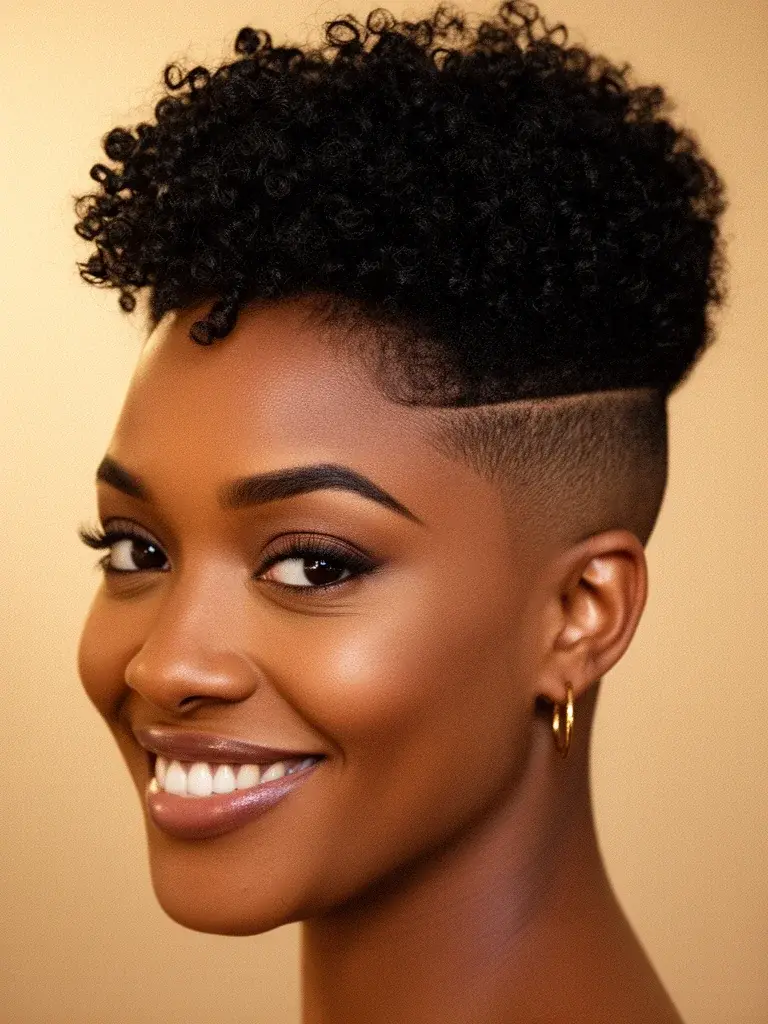
- Best for: Natural hair textures wanting to showcase curls on top with blended short sides; women wanting a short cut that's softer than a fade
- Avoid if: You want exposed-skin boldness (get a fade) or if you prefer longer versatile styling (get a pixie)
- Ask your stylist: "Tapered sides and nape — blended, not skin. Keep the length and volume on top. Cut dry if possible."
- Maintenance: Taper zone every 3-4 weeks; full cut every 4-6 weeks
Who Does It Suit?
The tapered cut is the foundation cut that other short styles are built on — pixies, TWAs, bixies, and even some undercuts start with a taper. Understanding the taper means understanding short hair architecture. It's the cut that creates shape by subtraction: gradually removing length from nape to crown, letting the natural head shape and hair texture create the silhouette.
Ideal for:
- Women with natural 3B-4C texture who want to go short while showcasing their curl pattern — the taper is the most curl-friendly short cut because it keeps volume where curls live
- Anyone transitioning from relaxed to natural hair (the "big chop" starting point) — a tapered cut shapes the new growth while the damaged ends are removed
- Women who want a short cut that's softer and more blended than a buzz cut but less styled than a pixie
- Low-maintenance short-hair lovers who want a wash-and-go style that looks intentional with zero styling products
- Anyone exploring the 2026 "tapered bixie" or "trixie" trend — these are tapered-back variations of longer pixie and bob hybrids
Hair types:
- Curly (3A-3C): The taper showcases curl definition on top while keeping the sides from puffing out. The contrast between curly top and tapered sides is one of the most flattering short-hair looks for curly textures
- Coily (4A-4C): The taper's natural habitat. Coily texture creates instant volume and shape on top that no other texture can replicate. The taper frames this volume with clean, close sides. DRY CUTTING IS NON-NEGOTIABLE for 4A-4C tapered cuts
- Straight: A tapered cut on straight hair reads as a textured pixie with a blended back. The lack of natural volume on top means you may want to keep the crown slightly longer, or use a texturizing paste to create the height that curly textures provide naturally
- Wavy: Waves add natural movement to the tapered top, creating a lived-in look without effort. The wave pattern softens the taper's precision, which can work for or against you depending on whether you want sharp or organic
Avoid If...
- You want exposed skin at the sides or nape → That's a fade, not a taper. A taper always leaves hair coverage. If you want the bold, clean-line contrast of skin fading into hair, ask for a buzz cut with a fade or a pixie side undercut — these go to skin where a taper wouldn't
- You want styling versatility (updos, braids, different looks) → A tapered cut is short. The top has some styling flexibility (defined curls, slicked back, textured), but you can't braid it, pull it back meaningfully, or change the silhouette dramatically. If versatility matters, a long pixie or layered pixie gives more styling range while still being short
- Your stylist doesn't cut textured hair → A tapered cut on natural hair is a specialized skill. If your stylist primarily works with straight hair, they may not understand shrinkage, curl clumping, or dry-cutting techniques. The result: uneven, flat, or misshapen. Find someone whose portfolio shows tapered cuts on YOUR curl type
- You want a low-frequency-trim hairstyle → Tapered cuts need maintenance every 3-4 weeks. The short zones grow out fast and lose their shape quickly. If you want to go 6-8 weeks between trims, a short pixie with more uniform length holds its shape longer
- You're testing whether you like short hair → Committing to a tapered cut means committing to the maintenance cycle. If you're experimenting with going short, start with a long pixie — you can always go shorter, but you can't undo a taper without growing it out for months
What is a Tapered Cut?
A tapered cut is a hair-cutting technique where the length gradually decreases from the crown of the head to the nape and sides, creating a seamless gradient. The word "taper" literally means to become progressively narrower — and that's exactly what the hair does: full volume at the top, narrowing to close-cut (but not skin) at the perimeter.
The taper is the architectural foundation of most short women's haircuts. When someone says they have a pixie, a TWA (teeny weeny afro), or a bixie, there's usually a taper underneath providing the structural shape. What sits on top — curls, fringe, texture — varies, but the tapered gradient beneath is the skeleton.
In 2026, the tapered cut has re-entered the conversation through two doors: the natural hair community (where the tapered TWA never went away and is experiencing a social-media renaissance) and the trend-driven "tapered bixie" and "trixie" (tapered pixie) hybrids being reported by Refinery29, Who What Wear, and Latest Hairstyles. Both share the same principle: let the top have personality while the perimeter stays clean.
Tapered Cut vs Fade vs Pixie
| Tapered Cut | Fade | Pixie | |
|---|---|---|---|
| Shortest point | Short but never skin | Skin at the baseline | Varies — 0.5 to 2 inches |
| Transition | Gradual, blended | Sharp gradient to skin | Layered, textured |
| Barber or stylist | Either — depends on texture | Barber preferred | Stylist preferred |
| Natural hair friendly | Excellent — showcases curl pattern | Good — bald fade frames curls | Good — depends on curl length |
| Maintenance frequency | Every 3-4 weeks | Every 2-3 weeks | Every 4-6 weeks |
| Grow-out | Graceful — shape holds | Harsh — line disappears fast | Awkward — uneven stages |
| Styling time | 5 min or less | 5 min or less | 5-15 min |
| Best for | Texture showcase, subtle short | Bold contrast, clean lines | Versatile short styling |
Bottom line: Taper is the blueprint — fades and pixies are variations built on top of it. When in doubt, start with a taper; you can always go shorter.
Cut Specifications
- Crown length: 2-4 inches for curly/coily textures (appears shorter due to shrinkage); 1-3 inches for straight/wavy. The crown is where the character lives — curl definition, texture, color, volume all happen here
- Side graduation: Gradual blend from crown length down to 0.5-1 inch at the lowest point above the ear. The blend should be seamless — no visible line where long meets short
- Nape taper: Blended from the occipital bone down to 0.25-0.5 inches at the hairline. The nape is where taper and fade diverge: a taper leaves hair at the hairline; a fade takes it to skin
- Weight line: Sits at or just above the occipital bone — the natural bump at the back of the skull. This is where the longest length transitions into the tapered zone. A clean weight line creates the illusion of height
- Sideburn area: Tapered to match the nape length, creating a continuous frame around the ear. The ear should be fully or mostly exposed, with the taper hugging the contour
- Trim cycle: Taper zone every 3-4 weeks (the short areas change shape fast). Full cut including crown reshape every 4-6 weeks
Color Pairing
- Platinum or bleached top with natural taper: The contrast between light crown and dark tapered sides creates an instant focal point. This works especially well on natural textures where the bleached coils on top create a golden crown effect. High maintenance (touch-up every 4-6 weeks) but high visual impact.
- Copper or auburn on top: Warm tones on the crown area pop against closely tapered dark sides. The color fades into the taper zone naturally as the hair shortens, creating a built-in gradient effect. Less maintenance than platinum because the grow-out blends more gracefully.
- Natural color throughout: The tapered cut derives its visual interest from shape and texture, not color. Keeping your natural color lets the architecture speak — especially on natural textures where the curl pattern is the main event. Zero color maintenance, maximum structural focus.
- Frosted tips on coils: Short coils or curls on top with lightened tips create definition and depth without a full color commitment. Each coil catches light differently, and the color variation makes the texture more visible and dimensional. Works best on 3C-4B textures where individual coils are distinct.
Face Shape Tweaks
- Oval: Any taper length and proportion works — oval faces are the most flexible canvas for short cuts. You can go dramatic (very short taper, long top) or subtle (gradual transition) without face-shape concerns
- Heart: The taper's volume-on-top, narrow-at-the-sides silhouette naturally echoes a heart-shaped face. Keep the taper soft at the temples (not too close) to avoid emphasizing a wide forehead. Volume at the crown balances the narrow chin
- Diamond: Similar to heart — the taper works well but keep the temple area slightly longer to avoid emphasizing the widest point of the face. Let the crown volume sit slightly forward (with bangs or a textured fringe) rather than straight up
- Square: The rounded volume on top softens angular features. Keep the taper close at the jaw to avoid adding width at the strongest angle. A slightly asymmetric top (longer on one side) breaks the symmetry that can feel boxy on square faces
- Round: Keep maximum height on top with a close taper at the sides — the vertical emphasis creates an oval illusion. This is the tapered cut's strongest face-shape correction. Avoid rounding the top shape or adding volume at the sides, which mirrors the circular face
Hair Type Tweaks
- Curly (3A-3C): Dry cut is strongly preferred — the stylist needs to see the curl pattern at its natural shrinkage to judge the final shape. Leave enough length on top for 2-3 full curl clumps to form. The taper should follow the curl's natural fall line, not fight against it. Product: a lightweight curl cream defines without weighing down
- Coily (4A-4C): DRY CUT IS MANDATORY. 4c hair has 60-75% shrinkage — cutting wet means the crown will spring up to half the expected length once dry. The stylist should shape the silhouette on dry hair, checking from every angle. Leave crown length at 3-4 inches minimum (which will present as 1-2 inches after shrinkage). Product: a curl butter or twist cream for definition, or nothing at all — 4c TWAs often look best product-free
- Straight: Without natural volume, straight-haired tapered cuts depend on the crown length for shape. Keep the top at 2-3 inches and use a matte texturizing paste to create height and direction. Without product, straight tapered cuts can fall flat — the styling step matters more than on textured hair
- Wavy: A natural advantage — waves add movement and body to the crown without effort. The taper can be slightly shorter than on straight hair because the wave provides built-in volume. A sea-salt spray or texturizing tonic on damp hair before air-drying creates the perfect messy-intentional finish
- Thick: Thick hair creates bold, dramatic tapers — the density on top contrasts sharply with the close-cut sides. Ask your stylist to thin the crown area slightly (point cutting, not thinning shears) if the weight feels heavy or the shape is too round. Thick tapered cuts hold their shape well between appointments
- Fine: The taper exposes scalp at the shortest points, which can read as thinning on already-fine hair. Keep the taper conservative — don't go as short at the nape and sides as you would on thick hair. A moderate taper (half-inch minimum at the shortest point) preserves the illusion of density while still creating the graduated shape
Natural Hair Considerations
The tapered cut has a special relationship with natural textured hair (3B-4C) that goes beyond simple face-shape matching. Natural hair tapers aren't just a trend — they're a structural solution for showcasing curl patterns.
- The big chop entry point: For women transitioning from relaxed to natural hair, a tapered cut is often the starting shape after the big chop. It provides structure to new growth while removing the last of the chemically processed hair. The taper makes the transition look intentional, not in-between.
- Shrinkage planning: Every 4c tapered cut must account for shrinkage. A crown that's 3 inches wet/stretched will present as 1-1.5 inches dry. The stylist must know the client's shrinkage ratio — and the only way to know is to cut dry or to have cut this specific client's hair before. Never let a new stylist cut your 4c taper wet on the first visit.
- TWA styling on taper: The tapered TWA (teeny weeny afro) is one of the most popular natural hair shapes in 2026. Style options on a tapered TWA: defined finger coils on top, twist-out for pattern, wash-and-go with gel for hold, or completely product-free for maximum coil freedom. The taper at the sides frames every top-styling choice cleanly.
- Product weight matters: On tapered natural hair, heavy products (butters, thick creams) on the crown can weigh down coils and reduce the volume that makes the taper look dramatic. Lightweight gels, mousses, or water-based curl activators maintain volume while adding definition. Save heavy moisture for wash-day deep conditioning, not daily styling.
- Stylist selection is critical: Not every stylist can cut a natural hair taper well. Look for: a portfolio showing tapered cuts on YOUR curl type; dry-cutting as a standard practice; understanding of shrinkage by texture type; willingness to check the shape from every angle before finishing. The wrong stylist on textured hair isn't just a bad haircut — it's months of grow-out.
What to Tell Your Stylist
"I want a tapered cut — gradual blend from longer on top to short at the sides and nape, but not down to skin. Keep the crown at [desired length] and taper the sides to about [half-inch/quarter-inch]. Please cut dry if my hair texture allows it."
Reference photo tips:
- Bring photos of tapered cuts on YOUR hair texture. A taper on straight hair looks completely different from a taper on 4c coils — showing a photo of the wrong texture creates miscommunication about volume, length, and shape expectations
- Show multiple angles — front, side, back, and three-quarter. The taper is a 3D shape, and a single front-facing photo doesn't capture the graduation at the sides and nape
- If you want a tapered bixie specifically, bring separate photos for the front (longer fringe) and back (tapered nape) and explain that you want the transition blended, not stepped
- For natural hair: show your stylist your curl pattern at its natural state (not stretched, not freshly washed). They need to see the shrinkage pattern to plan the cut correctly
How to Style
Daily (5 minutes or less):
- For natural texture: mist with water, apply a lightweight curl cream or gel, scrunch, go. The taper's shape does the work — you're just activating the curl pattern on top
- For straight/wavy: apply a small amount of texturizing paste to damp crown hair, tousle with fingers for height and direction, let air dry or rough-dry. The product provides the hold that natural texture provides for free
- The sides and nape need no styling — they're too short for product or tool intervention
Polished (10 minutes):
- For natural texture: defined finger coils or a twist-out on the crown. Apply gel to damp sections, twist or coil each clump, diffuse on low or air dry. The defined pattern on top against the clean taper is the polished version of this cut
- For straight/wavy: blow dry the crown with a vent brush for volume, then apply matte paste for texture and height. Use a flat iron on just the top pieces if you want a sleek-top-tapered-sides look
- Edge work: use edge control gel to smooth the hairline and baby hairs if desired — this frames the taper with precision
No-Heat Alternative:
- Wash, condition (deep condition the crown where the oldest hair is), squeeze out water
- Apply styling product to the crown only — leave the tapered sides product-free
- For curls/coils: apply gel, define coils or twists, let air dry completely
- For straight/wavy: apply mousse, comb into desired direction, let air dry. The shape will be softer than blow-dried but the taper still provides structure
Maintenance Schedule
- Week 1-2: Fresh taper. The blend is clean, the shape is defined, the contrast between crown and sides is at its sharpest. This is the "just got a haircut" window.
- Week 3-4: The taper zone is starting to fill in. The sides and nape have grown enough to soften the blend. The shape is still good but the crispness is gone. For most women, this is the appointment window for a taper touch-up (just the sides and nape — crown can wait).
- Week 4-6: Without a touch-up, the taper has grown into more of a uniform short cut. The graduated effect is largely gone. The crown has grown enough that the overall shape may need reshaping. Full cut appointment: taper + crown reshape.
- Week 6+: The taper has grown out entirely. You're now in pixie territory — short all over with no visible graduation. Time for a full reset if you want the tapered look back.
If you color your hair:
- Color on the crown only: touch up on the same schedule as crown trims (every 4-6 weeks). The tapered sides stay natural, creating a built-in color gradient
- Full-head color: the tapered zone grows out fast, so new growth shows every 2-3 weeks. If root visibility bothers you, keep color close to your natural shade or embrace the grow-out as part of the aesthetic
Pro tip: Find a barber for your taper touch-ups and a stylist for your crown shaping — they're different skills. Many natural-hair women split their maintenance between a barber (taper precision every 3 weeks) and a curl specialist (crown shape and health every 6-8 weeks). The $20 taper touch-up between full appointments keeps the shape alive without paying for a full cut every time.
Common Mistakes
-
Confusing taper with fade and getting a skin fade by accident Fix: Say "taper — no skin" explicitly. Show a photo where the shortest point still has visible hair. The words "taper" and "fade" are used interchangeably by some stylists, which leads to the single most common tapered-cut disaster: exposed scalp when you wanted coverage. The phrase "blend to short, never to skin" eliminates ambiguity.
-
Letting a straight-hair stylist cut a 4c taper Fix: Find a stylist who specializes in your texture. Cutting 4c hair wet, using thinning shears on coily texture, or judging length on stretched hair are all common mistakes from stylists unfamiliar with natural hair. The result: a shape that looks fine wet and terrible dry. Ask to see their tapered-cut portfolio on textured hair before booking.
-
Going too long between taper touch-ups Fix: The taper zone needs refreshing every 3-4 weeks. Unlike a pixie that can stretch to 6-8 weeks, the tapered gradient changes shape within 2-3 weeks as the short zones fill in. Budget for a quick taper touch-up ($15-25 at most barbers) as a separate, more frequent appointment from the full crown reshape.
-
Applying heavy product to the tapered sides Fix: The tapered zone is too short for styling products — they just sit on the scalp. Product goes on the crown only. Applying thick curl creams or pomades to the tapered sides creates buildup, makes the short hair look greasy, and can clog follicles. If the tapered zone needs moisture, apply lightweight oil to the scalp directly, not to the hair.
-
Expecting a tapered cut to grow out into a pixie gracefully Fix: It won't. A tapered cut grows out into a mushroom shape — the crown stays proportional while the sides and nape grow uniformly, eliminating the graduated contrast. If you're growing out a taper into a pixie, you need at least one reshaping appointment during the transition to maintain proportion. The grow-out path is taper → awkward mushroom → reshaped pixie, not taper → natural pixie.