
TL;DR
- Best for: Oval, square, and heart-shaped faces who want noticeable layers without a structured cut
- Avoid if: You have very fine hair and refuse to use any product, or you need a polished daily look
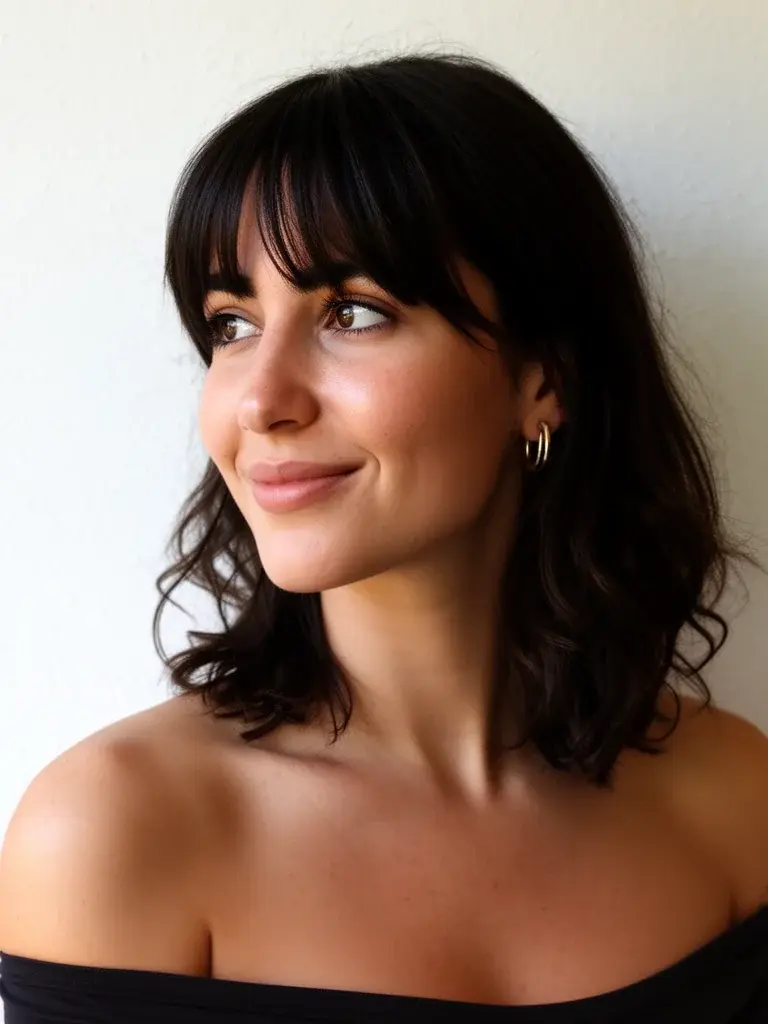
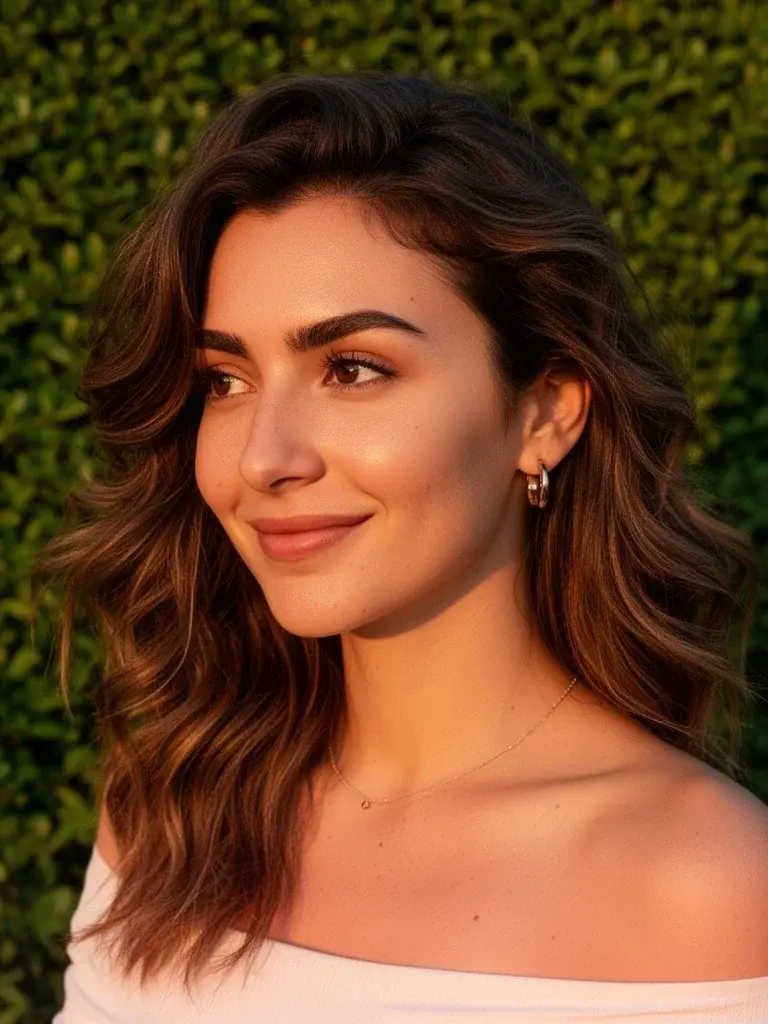
- Ask your stylist: "Wolf cut — heavy layers through the crown and mid-length, lighter ends, face-framing pieces either as curtain bangs or tucked behind the hairline"
- Maintenance: Trim every 6–8 weeks; 5–10 minutes of styling daily
Who Does It Suit?
The wolf cut is built on contrast. Short, heavy layers at the top against longer, lighter ends at the back. That contrast creates shape — face shapes that benefit from structure do best.
Ideal for:
- Oval faces — The layered shape doesn't fight any bone structure, so every element works
- Square faces — Soft layers around the temples and jawline round out the angularity
- Heart faces — Shorter face-framing layers narrow the visual width of the forehead; longer back adds chin-area weight
- Oblong faces — Side layers add horizontal volume that breaks a long face's vertical emphasis
Hair types:
- Wavy: The optimal hair type for a wolf cut. Wave pattern separates the layers naturally without product. Air-dry only
- Curly: Creates incredible volume and shape. Layers reduce bulk without losing curl integrity — one of the best haircuts for type 3 curls
- Straight: Works but requires minimal effort styling (sea salt spray + diffuser or texturizer). Without anything, straight hair wolf cuts fall flat at the crown
- Thick: Layers remove the weight that makes thick hair unmanageable. This cut channels volume into intentional shape
- Fine: Counterintuitively good — removing length weight stops fine hair pulling itself flat. Keep layers light and avoid heavy products
Avoid If...
- You want zero daily styling → try a Boy Cut or Buzz Cut
- You have a round face → the wide top layers can emphasize width; a Lob with face-framing pieces is safer
- You need a polished, corporate-appropriate daily look → wolf cuts look intentionally undone; a Classic Bob reads more formal
- Your hair is very fine and you won't use any product → the layers will fall flat without at least a sea salt spray
- You're committed to one-length hair → this cut is entirely layer-dependent; there's no wolf cut without layers
What is a Wolf Cut?
The wolf cut is a medium-to-long layered haircut that borrows from two older styles: the shag (70s rock, full rounded layers) and the mullet (shorter top, longer back). The wolf cut takes the layer density of the shag and the directional silhouette of the mullet and strips both down to a modern, less costume-y shape.
The defining features: heavy curtain layers through the crown and temples that frame the face, a mid-section with visible layer separation, and longer back pieces that hang with less volume. The ends are typically point-cut — not blunt — to keep them light and textured.
What makes it different from adjacent cuts is the intentional weight contrast. The top is heavy and shaped; the back is light and loose. That contrast is what creates the "wolf" shape — structured at the top, flowing at the back.
Wolf Cut vs Shag vs Butterfly Cut
| Wolf Cut | Shag | Butterfly Cut | |
|---|---|---|---|
| Layer shape | Top-heavy, directional | Uniform, rounded | U-curve, wing-like |
| Back length | Long, lightened out | Mid-back, layered | Shoulder–collarbone |
| Face framing | Curtain bangs or layers | Heavy fringe | Soft face layers |
| Overall feel | Edgy, modern | Retro, full | Feminine, bouncy |
| Best hair type | Wavy, curly | All types | Straight, wavy |
| Styling effort | 5–10 min | 5–15 min | 5–10 min |
Bottom line: Wolf cut = modern edge with contrast. Shag = retro fullness without direction. Butterfly cut = soft femininity with lift.
Cut Specifications
- Layers: Heavy through crown and temples; medium through mid-length; lighter/point-cut ends
- Face framing: Curtain bangs (optional) or shorter face-framing layers — pieces should hit between chin and cheekbone
- Back length: Typically mid-back to below collarbone; longest pieces should contrast visibly with crown layers
- Graduation: None through the back — the longer back sections are intentionally separated from the layered top
- Ends: Point-cut throughout — blunt ends kill the movement that defines this style
- Neckline: No cleanup needed — the natural, slightly untidy back neckline is part of the aesthetic
- Trim cycle: Every 6–8 weeks; the face-framing pieces are the first to lose definition
Color Pairing
- Face-framing highlights: Light pieces concentrated around the shorter face-framing layers draw attention to the cut's most defining feature. Balayage that's darkest at the back and lightest around the face reinforces the contrast that makes the wolf cut work
- Money piece: A bright money piece (2–4 shades lighter than your base) on the shortest face-framing sections creates a focal point without coloring the whole head. High-impact, low-commitment
- Shadow root: Dark root + lighter mid-length + even lighter ends reads as natural and low-maintenance. Works with the undone aesthetic rather than against it
Face Shape Tweaks
- Oval: No adjustment needed. Ask for the full cut as described — curtain bangs optional
- Square: Request point-cut ends through the layers at jaw level to avoid any blunt heaviness that echoes the jawline. Ask for layers that begin above the ear rather than at chin level
- Heart: Keep face-framing layers shorter (above chin) to narrow the visual width of the temples. Request length at the back be kept at or below the chin
- Oblong: Ask for maximum volume at the sides — layers that kick out horizontally rather than falling straight. Avoid excessive crown height
Hair Type Tweaks
- Straight: Request slightly shorter layers — the lack of wave means layers need to be more pronounced to read. Diffuse with sea salt spray for volume or accept a softer, less dramatic result
- Wavy: This is the default reference hair type for the wolf cut. Minimal adjustments; air-dry for best results
- Curly (Type 3): Ask your stylist to dry-cut the layers — cutting curly hair wet results in layers that are too short once it dries. The curl pattern will do most of the styling work
- Thick: Request layering through the interior as well as the surface — without internal thinning, thick hair can create a blocky shape rather than the intended contrast
- Fine: Go lighter on the layers (fewer, wider-spaced cuts) to preserve density. Avoid razoring the ends, which thins fine hair too aggressively
How to Style
Air-dried (10 minutes):
- Towel-blot damp hair — don't rub
- Apply sea salt spray or curl cream through mid-lengths and ends
- Scrunch ends upward to encourage movement
- Let dry naturally — don't touch until completely dry or you'll disrupt the wave formation
Styled (15 minutes):
- Apply heat protectant to damp hair
- Blow-dry crown sections with a diffuser, lifting at the roots
- Leave ends to air-dry or wrap sections around a 1-inch wand for loose texture
- Break up pieces with fingertips — avoid brushing
No-Heat:
- Braid damp hair into 3–4 sections overnight
- Undo in the morning and shake out
- Apply light texturizer through the roots — done
Maintenance Schedule
- Week 1–2: Peak shape. Crown layers are well-defined, face-framing pieces hit exactly where they should
- Week 3–4: Back length grows faster than the top layers, which is normal. Shape holds well; just a little more growth at the ends
- Week 5–6: Face-framing layers start losing their definition — they look more like "long layers" than intentional framing. Still wearable but pushing toward a trim
- Week 7–8: Time to trim. The contrast between crown layers and back length softens, and without that contrast the wolf cut reads as a generic layered haircut
- Growing out: The wolf cut grows into a shag, then a layered cut, then just long hair. The grow-out is relatively graceful — request trimming only the shortest pieces at each visit if you want to extend the length
Common Mistakes
-
Asking for "lots of layers" without specifying placement Fix: Show a reference photo and specifically say "heavy layers concentrated at the crown and temples, lighter through the back." Generic layer requests produce generic results.
-
Using heavy products Fix: Wolf cuts live and die by movement. Heavy wax, cream, or serum kills the separation that makes the style work. Stay with sea salt spray, light mousse, or nothing.
-
Brushing dry wolf-cut hair Fix: Brush before washing only. Brushing dry wolf-cut hair separates layers that should move as groups — the result is frizzy and flat. Use your fingers or a wide-tooth comb on dry hair.
-
Letting the face-framing layers grow past the chin without trimming Fix: Book a trim as soon as the shortest pieces reach your chin. Past that point, the defining feature of the cut disappears.
-
Getting it cut too short the first time Fix: Start with mid-back length if you have it. A wolf cut on hair shorter than collarbone looks more like a shag with extra steps. You can always shorten on the next visit once you've seen how the layers behave on your hair.