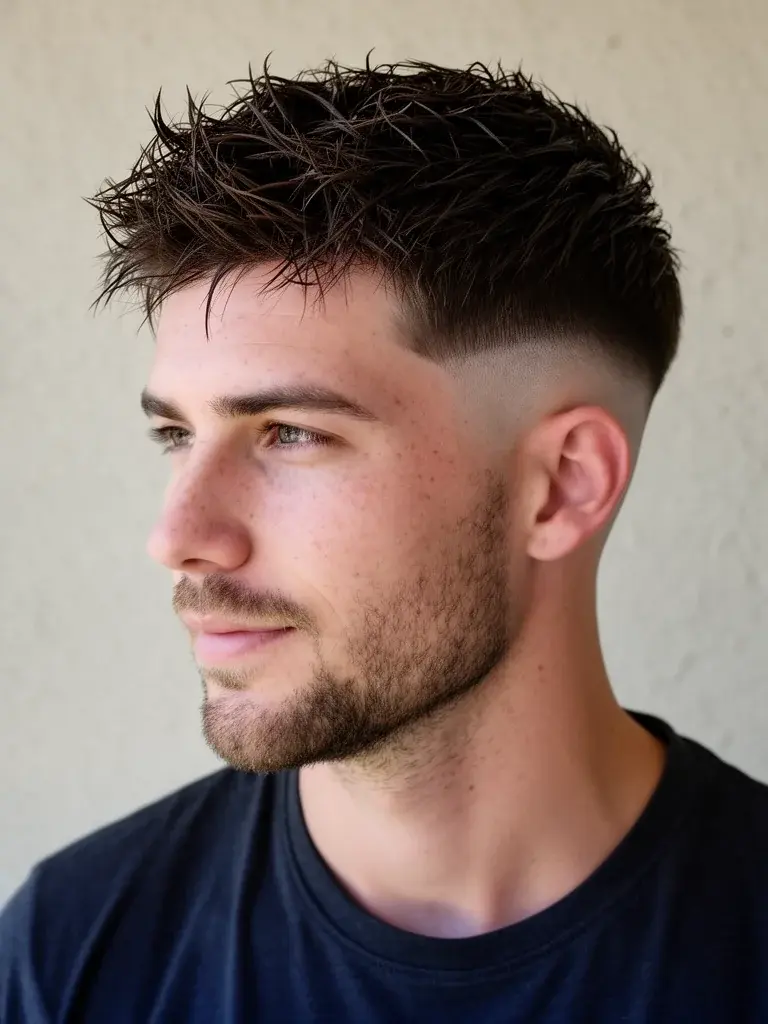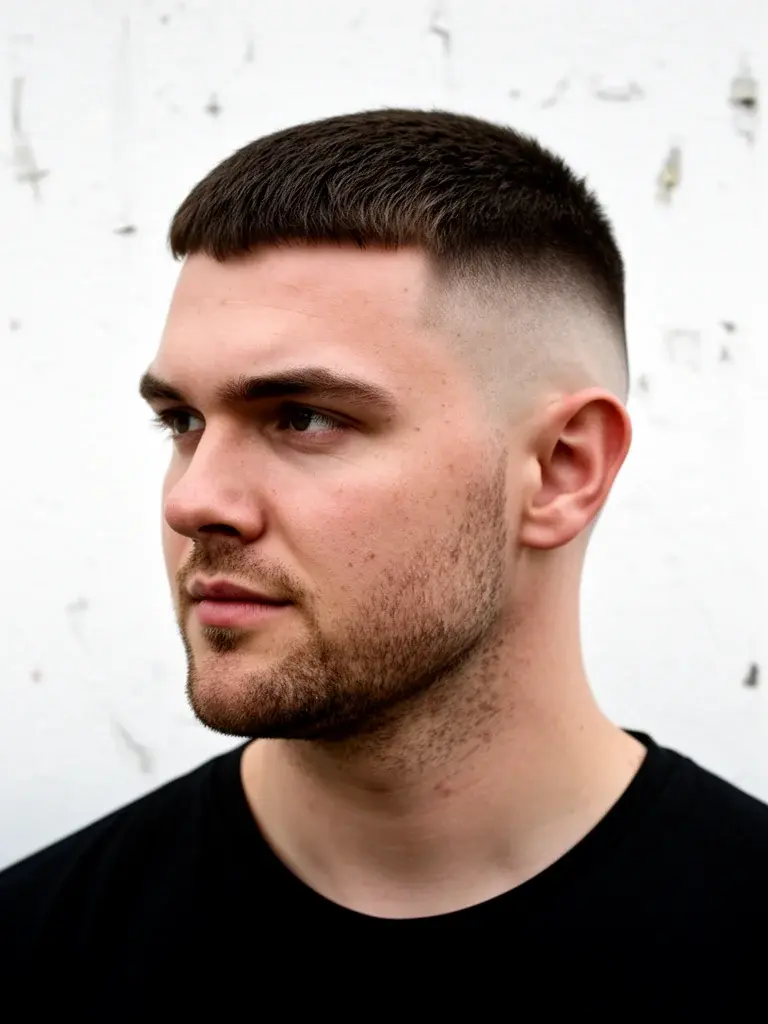
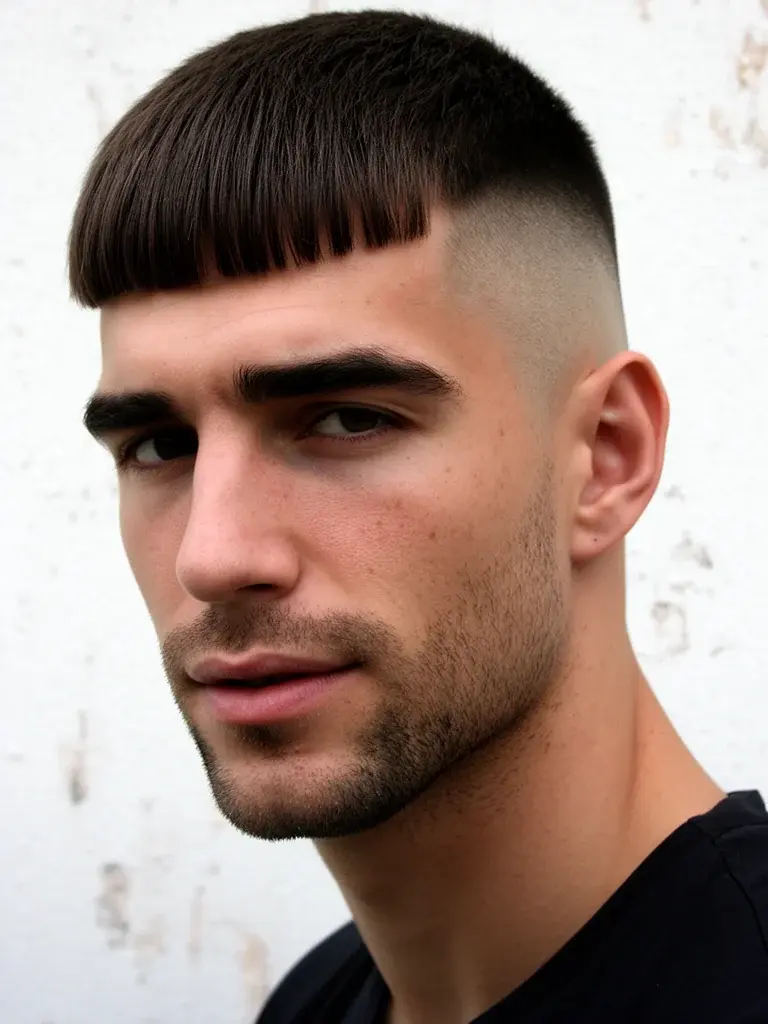
TL;DR
- Best for: High foreheads, round or oblong faces, anyone wanting a clean low-effort cut
- Avoid if: You want volume or height on top, or prefer a messy aesthetic
- Ask your barber: "French crop with a blunt fringe, fade the sides from #1 to #2, keep 1.5–2 inches on top"
- Maintenance: Trim every 3–4 weeks
Who Does It Suit?
The French crop is one of the most universally flattering men's cuts — especially if you want forehead coverage without length.
Ideal for:
- High or large foreheads (the fringe is your best friend)
- Round faces needing a structured frame
- Oblong faces that benefit from horizontal fringe lines
- Men who want a polished look with zero styling time
- Thinning hair on top (fringe disguises early recession)
Hair types:
- Straight: Clean, sharp fringe line — the classic French crop look
- Wavy: Adds natural texture to the fringe, looks effortlessly cool
- Thick: Works well but needs thinning to prevent the fringe from puffing out
Avoid If...
- You want volume or height → the French crop is flat by design, try a Soft Quiff or pompadour
- Very curly hair → curls fight the blunt fringe line, consider a Textured Crop instead
- You hate frequent trims → the fringe grows into your eyes fast, needs upkeep every 3–4 weeks
- You prefer a messy look → this cut is structured and deliberate, not tousled
- Extremely fine hair → fringe may look sparse and see-through
What is a French Crop?
A short cut with the hair on top brought forward into a defined fringe that sits across the forehead. The sides are faded or tapered, and the top is kept at 1–2 inches. The defining feature is the fringe — blunt, deliberate, and covering the forehead.
Unlike the textured crop (which celebrates messy separation), the French crop is about clean lines and controlled shape. It's the European barber's signature cut.
French Crop vs Textured Crop vs Caesar Cut
| French Crop | Textured Crop | Caesar Cut | |
|---|---|---|---|
| Fringe | Blunt, defined | Choppy, separated | Short, straight across |
| Top length | 1–2 inches | 2–3 inches | 0.5–1.5 inches |
| Texture | Smooth or minimal | Maximum texture | Minimal |
| Maintenance | Every 3–4 weeks | Every 4–5 weeks | Every 2–3 weeks |
Bottom line: French crop = clean fringe with structure. Textured crop = messy and modern. Caesar = shorter and more uniform.
Measurements
- Top: 1.5–2 inches (brought forward)
- Fringe: Blunt cut at eyebrow level or slightly above
- Sides: #1–#2 guard with fade or taper
- Trim: Every 3–4 weeks
Face Shape Tweaks
The fringe length and fade height do the heavy lifting.
- Oval: Standard French crop works perfectly — any fringe length
- Round: Higher fade, keep fringe slightly shorter to avoid widening effect
- Oblong: Longer fringe to shorten face visually, low fade to add width
- Heart: Standard fringe covers wide forehead, low fade adds jaw balance
- Square: Softer fringe edges, mid fade — avoid too blunt a line
- Diamond: Keep some weight at temples, fringe softens wide cheekbones
Hair Type Tweaks
- Straight: Ideal for the clean blunt fringe; minimal product needed
- Wavy: Let natural wave add character to the fringe; avoid over-straightening
- Thick: Ask for thinning shears on the fringe to prevent it from sticking out
- Fine: Go slightly longer on top (2 inches) so fringe doesn't look sparse
- Asian: Hair may stick up — ask for texturizing and use a light wax to keep fringe down
If You Have a High Forehead
The French crop was practically designed for you. Here's how to maximize the coverage:
- Ask for a longer fringe: 2 inches minimum so it sits well below the hairline
- Blunt cut, not feathered: A solid fringe line creates the illusion of a lower hairline
- Avoid high fades: They expose more forehead on the sides — stick to mid or low
- Style the fringe forward and down: Never push it to the side, that defeats the purpose
- Consider a slightly textured fringe: Breaks up the line so it looks natural, not like a helmet
What to Tell Your Barber
"I want a French crop: fade the sides from #1 to #2, keep about 1.5–2 inches on top, and cut the fringe blunt across my forehead. I want it to cover my forehead but not touch my eyebrows."
How to Style
Daily (30 seconds):
- Towel dry
- Push hair forward with fingers
- Done — seriously, that's it
Polished (1–2 minutes):
- Apply small amount of matte paste to damp hair
- Push forward and down
- Use fingers to define fringe line
- Optional: light hairspray to lock fringe in place
Maintenance Timeline
- Week 1–2: Perfect shape. Fringe sits exactly where you want it. Fade is crisp.
- Week 2–3: Still great. Fringe starting to reach eyebrows. Sides filling in slightly.
- Week 3–4: Time to book. Fringe is in your eyes, sides losing definition.
- Week 4+: Overdue. The structured look is gone — you now have a generic short cut.
Pro tip: The French crop has a shorter maintenance window than most crops because the fringe grows into your field of vision.
Common Mistakes
-
Fringe too short Fix: Tell your barber you want it to reach mid-forehead minimum; too short looks like a Caesar
-
Sides too tight for the top Fix: The contrast should be moderate — skin fade + French crop can look disconnected
-
Using shiny product Fix: Matte finish only; shine makes the fringe look greasy and flat
-
Letting it grow too long before trimming Fix: This cut has a 3–4 week window — book in advance
-
Asking for texture when you want a French crop Fix: French crop = blunt and clean. If you want texture, get a textured crop instead