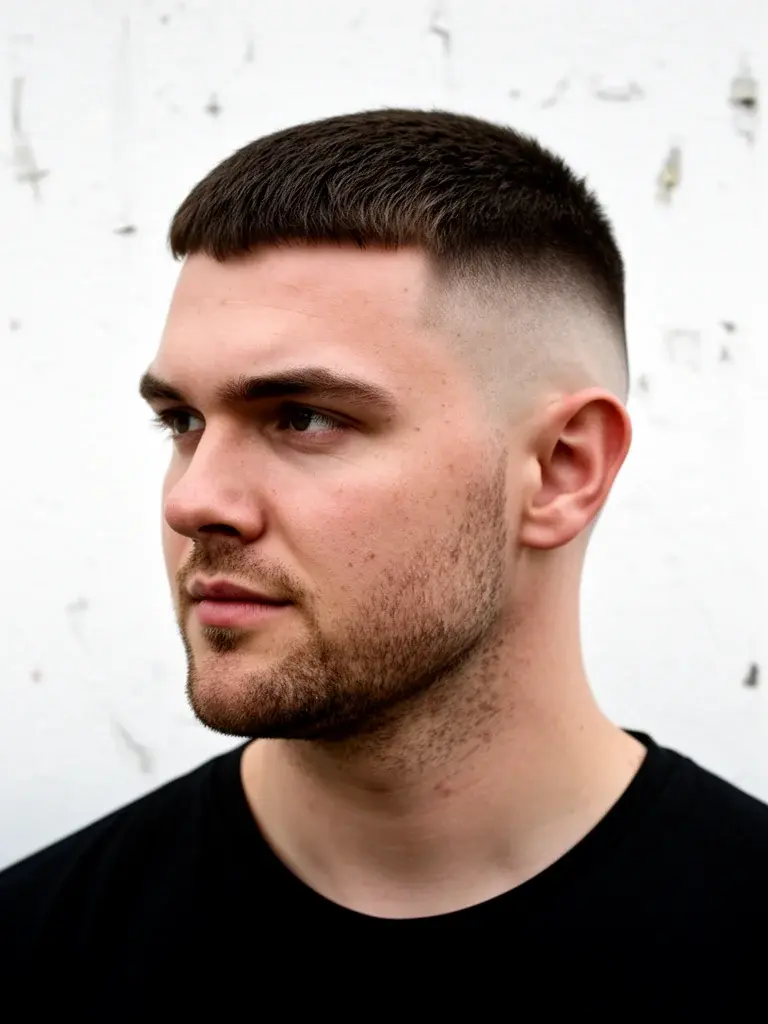
TL;DR
- Best for: Oval, square, or heart-shaped faces who want zero daily styling
- Avoid if: Very round face or concerned about scalp visibility
- Ask your barber: "#1–2 sides with gradual blend, 1.5 inches on top, front slightly longer"
- Maintenance: Trim every 3–4 weeks
Who Does It Suit?
Best for people who want a clean, low-maintenance cut.
Ideal for:
- Oval, square, or heart-shaped faces
- Professionals needing a polished look
- Athletes and active lifestyles
- Thick hair that looks bulky when longer
- Anyone who hates spending time on hair
Hair types:
- Straight: Holds shape perfectly, no product needed
- Wavy: Natural texture adds movement, leave top slightly longer
- Curly: Keep top 2+ inches to show curl pattern, avoid ultra-short sides
Avoid If...
- Very round face → choose a Soft Quiff or High Volume Pompadour for more height
- Very long face → get a cut with more side volume
- Scalp visibility concerns → try a Textured Crop or longer style
- Irregular head shape → longer styles hide bumps better
- Can't visit barber every 3–4 weeks → choose a style that grows out better
What is a Crew Cut?
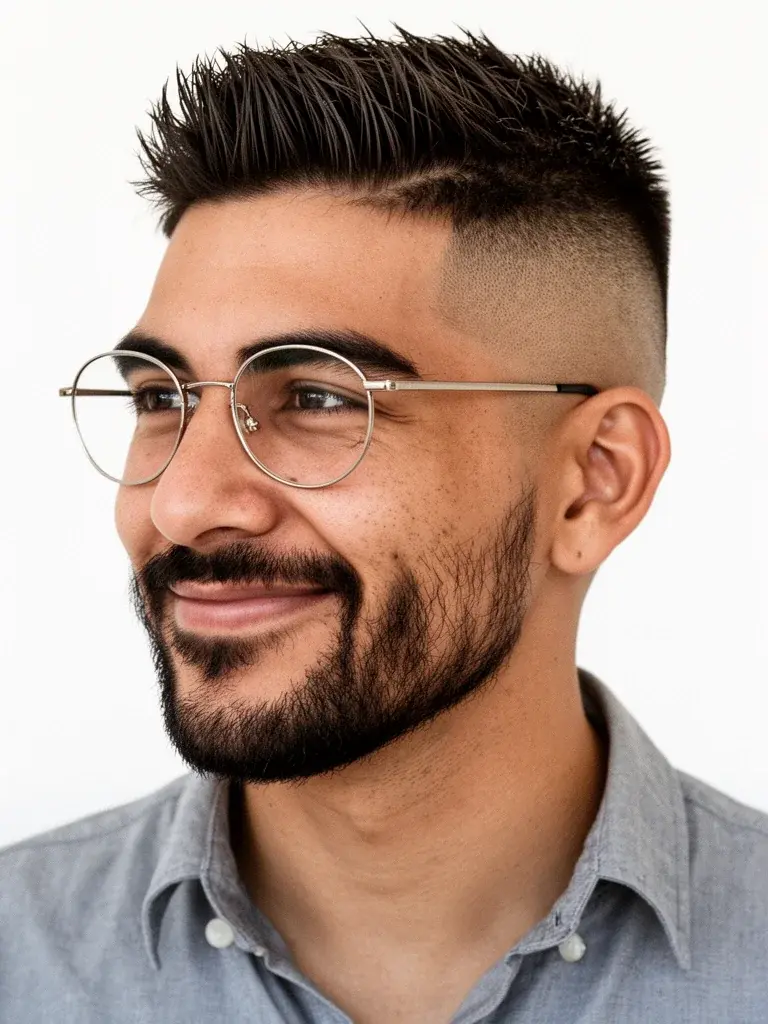
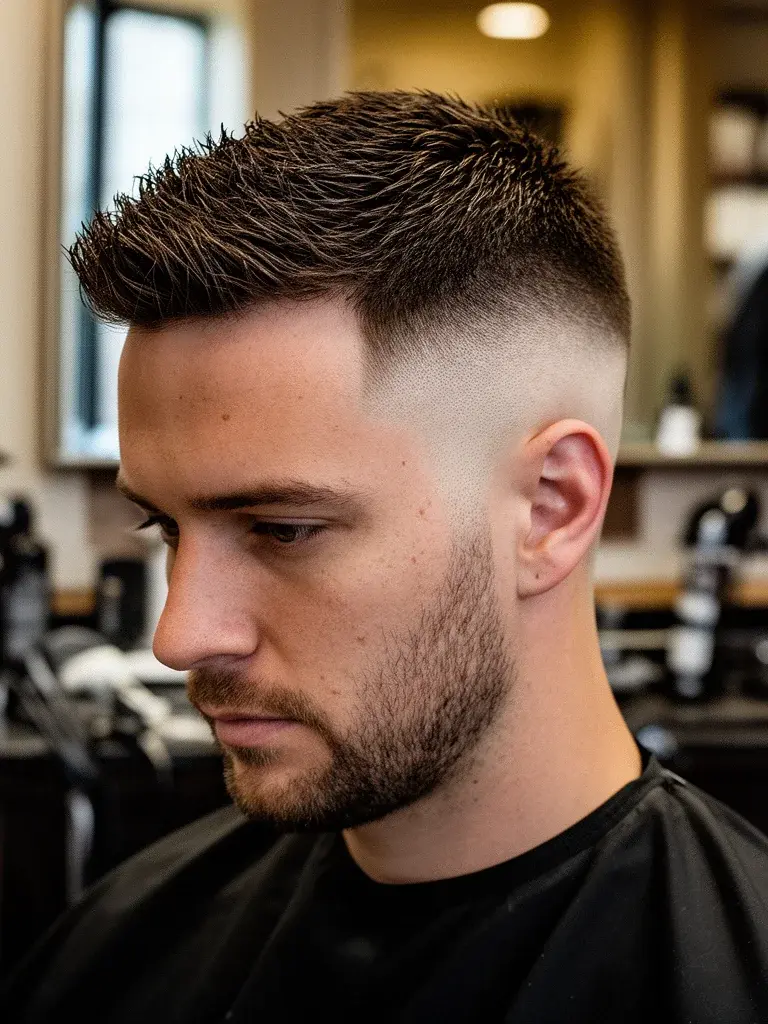
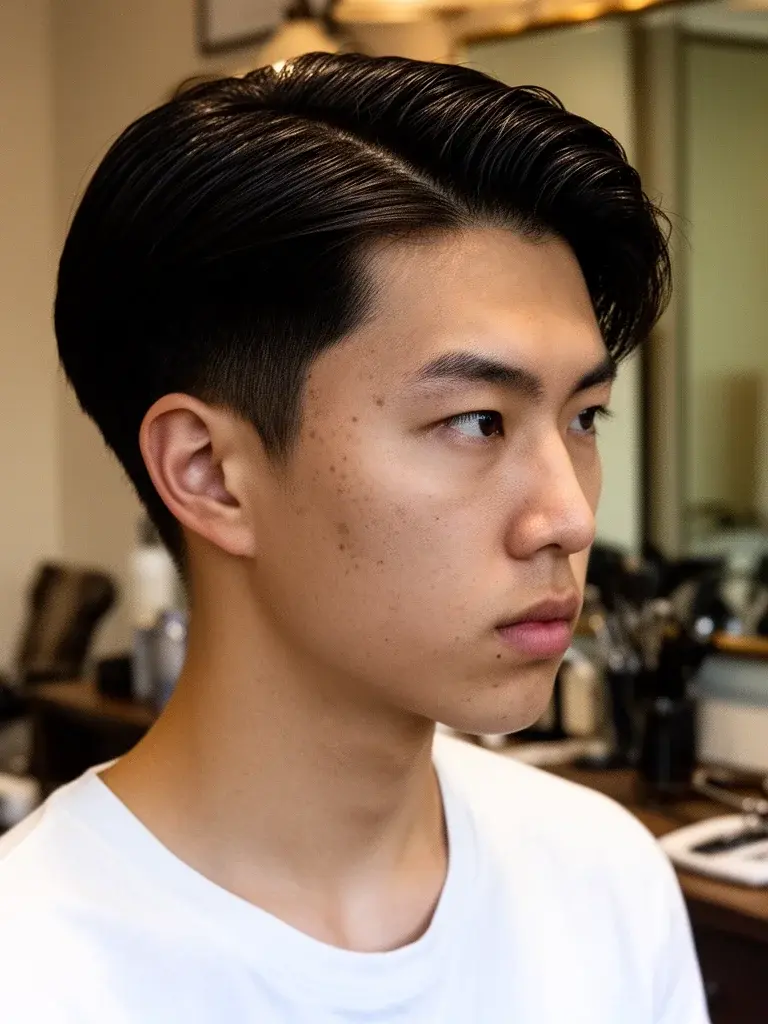
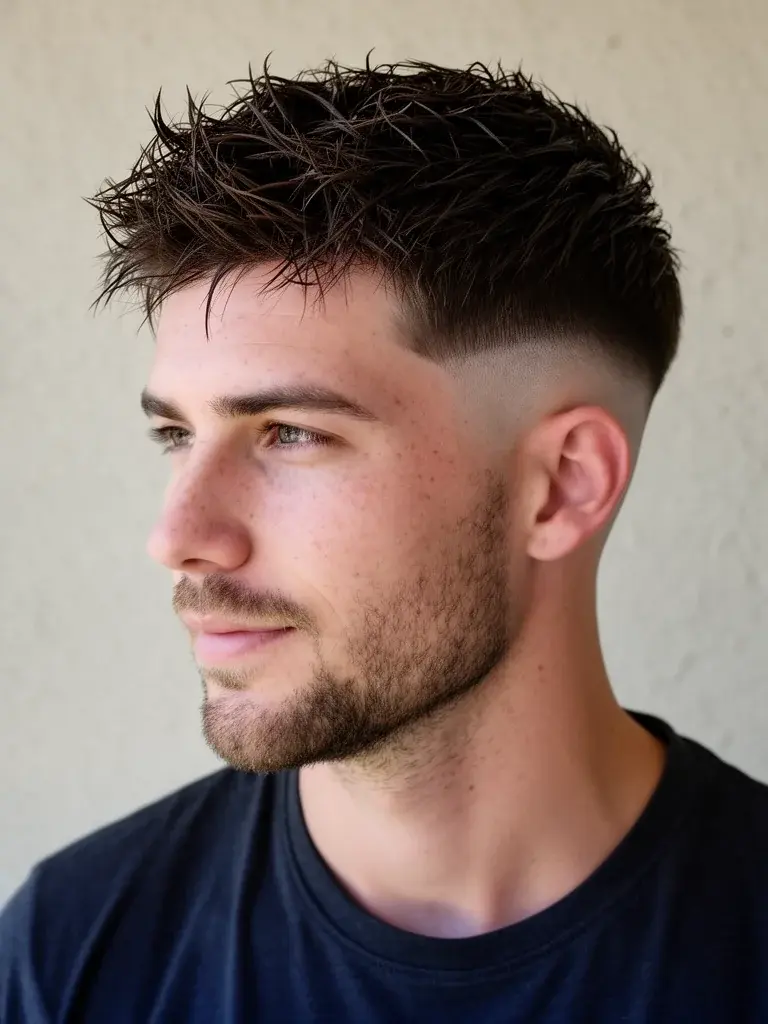
Short sides (#1–2 guard or taper) with 1–2 inches on top. The top is styled forward or to the side, with the front slightly longer. Clean, professional, and requires almost no daily effort.
Crew Cut vs Textured Crop vs French Crop
| Crew Cut | Textured Crop | French Crop | |
|---|---|---|---|
| Top length | 1–2 inches, uniform | 2–3 inches, choppy layers | 1–2 inches, blunt fringe |
| Face shape | Best for oval/square | Best for round (adds angles) | Best for high forehead |
| Maintenance | Every 3–4 weeks | Every 4–5 weeks | Every 3–4 weeks |
| Thinning hair | Shows scalp more | Texture hides thinning | Fringe covers hairline |
Bottom line: Crew cut = cleanest and easiest. Textured crop = most modern. French crop = best for hiding hairline.
Measurements
- Top: 1–2 inches (add more for round faces)
- Sides: #1–#2 guard or taper
- Fade: Low to mid (avoid high fade if scalp contrast is a concern)
- Trim: Every 3–4 weeks
Face Shape Tweaks
Adjust top height and side tightness to fit your face shape.
- Round: 2+ inches on top, high fade, longer front for height
- Square: Standard crew cut, gradual fade
- Oval: Any variation works, experiment freely
- Heart: Keep sides slightly fuller, low to mid fade
- Oblong: More length on sides (#2+), avoid extra height on top
Hair Type Tweaks
- Straight: No product needed daily; ask for texture with point cutting if hair is dense
- Wavy: Leave top 1.5–2 inches; use sea salt spray to enhance waves
- Curly: Keep top 2+ inches (curls shrink 30–40%); avoid ultra-short sides
- Thick: Ask barber to thin out the top to prevent helmet look
- Fine/Thin: Go shorter to avoid wispy look; use matte product for texture
If You Have Thinning Hair
Crew cuts can work with thinning hair, but need adjustments:
- Avoid high fades: Stark contrast between scalp and hair draws attention to thin areas. Stick to low or mid fade.
- Keep top slightly longer: 1.5–2 inches with texture hides sparse spots better than ultra-short.
- Use matte products only: Shiny products reflect light and make scalp more visible.
- Skip hard lines: Avoid sharp edges at hairline or part—soft blends look more natural.
- Consider a textured crop instead: If thinning is significant, the choppy texture disguises it better than the uniform crew cut top.
What to Tell Your Barber
"I'd like a classic crew cut: #1–2 on the sides with a gradual blend, about 1.5 inches on top, front slightly longer."
How to Style
Daily (30 seconds):
- Towel dry
- Run fingers through hair
- Done
Polished (60 seconds):
- Towel dry until slightly damp
- Apply pea-sized matte clay
- Push forward or to the side
- Define with fingertips
Maintenance Timeline
- Week 1: Sharpest look. Fade is crisp, top holds shape, neckline clean.
- Week 2: Top starts to lose structure. Sides still acceptable. May need light product.
- Week 3: Sides visibly growing out. Fade losing definition. Neckline fuzzy.
- Week 4: Time to book. Shape is gone. Quick trim at home can extend 3–5 days if needed.
Pro tip: Learn to trim your own neckline with clippers—buys you an extra week between visits.
Common Mistakes
-
Going too short too fast Fix: Start with 2+ inches on top, go shorter next time
-
Mismatched fade and top length Fix: Match fade intensity to top length for cohesive look
-
Neglecting the neckline Fix: Maintain neckline with clippers between barber visits
-
Using heavy products Fix: Use half the amount you think you need
-
Skipping scalp care Fix: Use quality shampoo; short hair shows dandruff