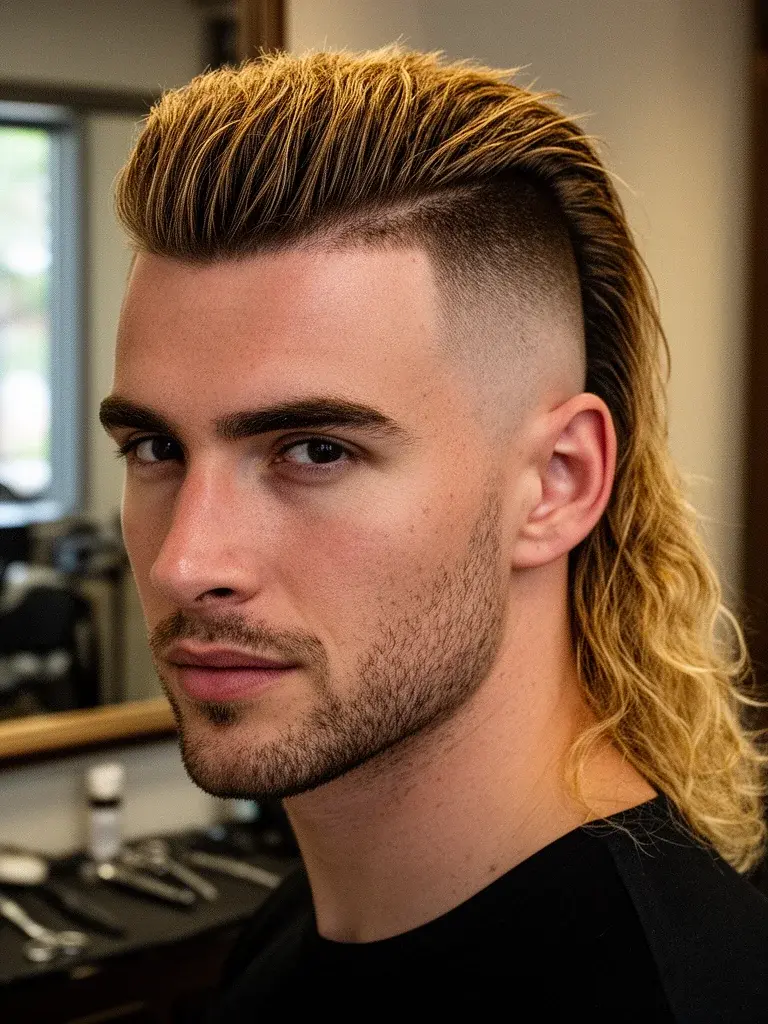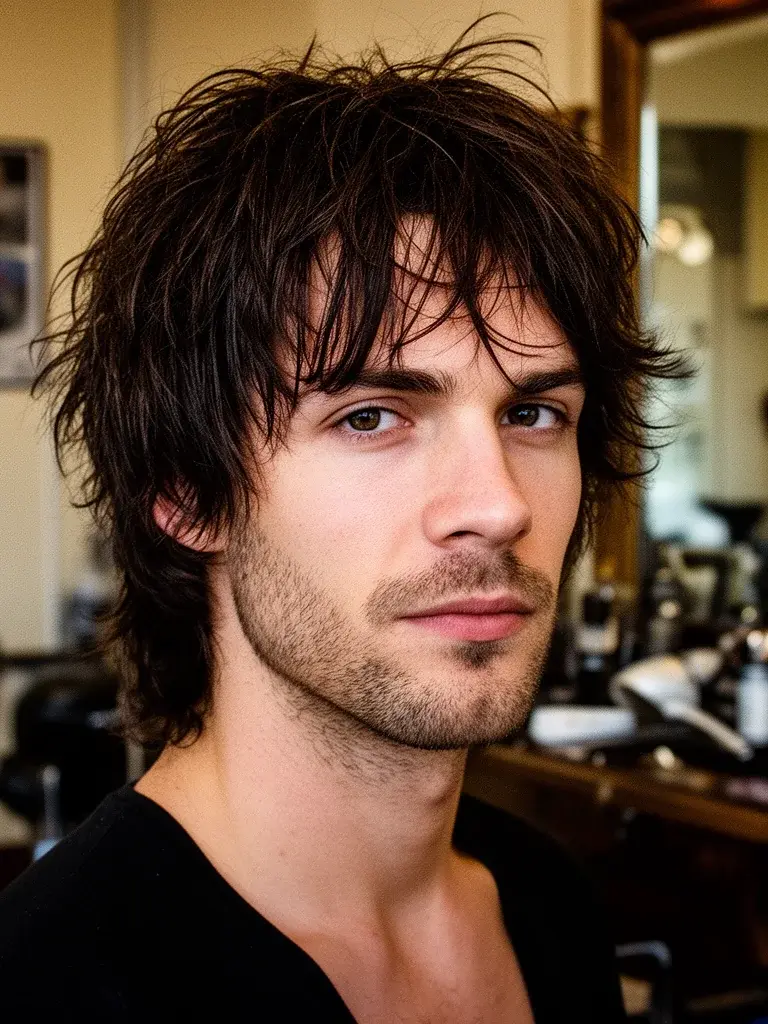

TL;DR
- Best for: Oval, square, or diamond faces who want a trendy, textured, low-effort style
- Avoid if: You work in a conservative environment or want a clean, polished look
- Ask your stylist: "Wolf cut — heavy layers, volume on top, wispy at the ends, shaggy all over"
- Maintenance: Trim every 6–8 weeks (grows out beautifully)
Who Does It Suit?
The wolf cut is for men who want their hair to look intentionally undone. It's the anti-corporate haircut.
Ideal for:
- Creative types, musicians, artists, students
- Men who want a trendy style without daily effort
- Wavy or curly hair that thrives with layers
- Anyone who likes the mullet vibe but wants more volume on top
- Men growing out a shorter cut who want a transitional style
Hair types:
- Wavy: The ideal texture — waves create natural movement between layers
- Curly: Excellent — layers define curls and prevent the triangle shape
- Straight: Works but needs product or styling to create the shaggy texture
- Thick: Perfect — layers remove bulk while maintaining volume
Avoid If...
- Conservative workplace → the wolf cut is deliberately messy and trendy
- Very fine hair → layers can make thin hair look even thinner
- You want a clean, polished look → this style is the opposite of polished
- You hate hair in your face → face-framing layers are a core feature
- Short hair currently → you need 4–6 inches minimum to start
What is a Wolf Cut?
A heavily layered cut with shorter layers on top for volume and longer layers at the bottom for length. The result is a shaggy, textured silhouette that combines elements of a mullet (shorter front, longer back) with a shag (layers throughout). Face-framing pieces and wispy ends are signature features.
The wolf cut went viral on TikTok and social media, but it's rooted in 70s and 80s rock hairstyles. Think Mick Jagger meets modern K-pop.
Wolf Cut vs Modern Mullet vs Shag
| Wolf Cut | Modern Mullet | Shag | |
|---|---|---|---|
| Layers | Heavy throughout | Minimal, mostly length contrast | Moderate, even |
| Volume | Top-heavy | Even or back-heavy | Even distribution |
| Face framing | Strong | Minimal | Moderate |
| Length contrast | Moderate (top vs bottom) | High (front vs back) | Low (uniform) |
Bottom line: Wolf cut = layered volume bomb. Mullet = front-back contrast. Shag = even, relaxed layers.
Measurements
- Top/Crown: 3–5 inches (shortest layers for volume)
- Sides: 4–6 inches (layered, not faded)
- Back: 5–8 inches (longest layers)
- Face-framing: Cheekbone to chin length
- Trim: Every 6–8 weeks
Face Shape Tweaks
The wolf cut's layers and face-framing pieces are highly adjustable.
- Oval: Standard wolf cut — any layer length works
- Square: Longer face-framing pieces soften angular jaw
- Diamond: Face-framing layers at cheekbone level balance width
- Heart: Fuller layers at jaw level balance narrow chin
- Round: Shorter face-framing pieces, more volume on top to elongate
- Oblong: Fuller sides, shorter top layers to add width
Hair Type Tweaks
- Wavy: Your natural texture is the wolf cut's best friend — minimal styling needed
- Curly: Ask for longer layers (curls shrink); the layers will define curl clusters
- Straight: Use sea salt spray or texturizing spray to create the shaggy movement
- Thick: Request thinning shears on the heaviest sections; keep the volume intentional
- Fine: Shorter layers on top for volume; avoid too many layers at the bottom
Growing Into a Wolf Cut
If you're starting from a shorter style, here's the path:
- From a textured crop (2–3 inches): 3–4 months of growth, then get the wolf cut layers added
- From a medium style (4–5 inches): Ready now — ask your stylist to add wolf cut layers
- From a bro flow (5–7 inches): Perfect starting point — just add heavy layers throughout
- During the awkward phase: Ask for "shaggy layers" to make the grow-out look intentional
What to Tell Your Stylist
"I want a wolf cut: heavy layers throughout, shortest at the crown for volume, longest at the back. Face-framing pieces around cheekbone length. I want it shaggy and textured, not blended smooth."
How to Style
Daily (1–2 minutes):
- Air dry or towel dry
- Scrunch with fingers for texture
- Optional: sea salt spray for extra grit
Textured (3 minutes):
- Apply texturizing cream to damp hair
- Scrunch and twist sections
- Blow dry on low heat with diffuser
- Shake out for volume
Maintenance Timeline
- Week 1–3: Fresh layers. Volume is defined, face-framing pieces sit perfectly.
- Week 4–6: Still great. Layers soften slightly, which actually looks good.
- Week 6–8: Time to book. Layers are blending together, losing definition.
- Week 8+: The wolf cut becomes a generic long style. Layers need refreshing.
Pro tip: The wolf cut is one of the most forgiving grow-outs in men's hair. The shaggy aesthetic means overgrowth looks intentional for weeks.
Common Mistakes
-
Not enough layers Fix: The wolf cut needs aggressive layering. If it looks like a standard long cut, your stylist was too conservative.
-
Blending layers too smoothly Fix: Wolf cut layers should be visible and choppy, not seamlessly blended.
-
Skipping face-framing pieces Fix: These are a signature feature. Without them, it's just a shag.
-
Using heavy product Fix: The wolf cut should move. Heavy pomade or gel kills the shaggy aesthetic.
-
Expecting it to look polished Fix: The wolf cut is deliberately messy. If you want polish, choose a different style.