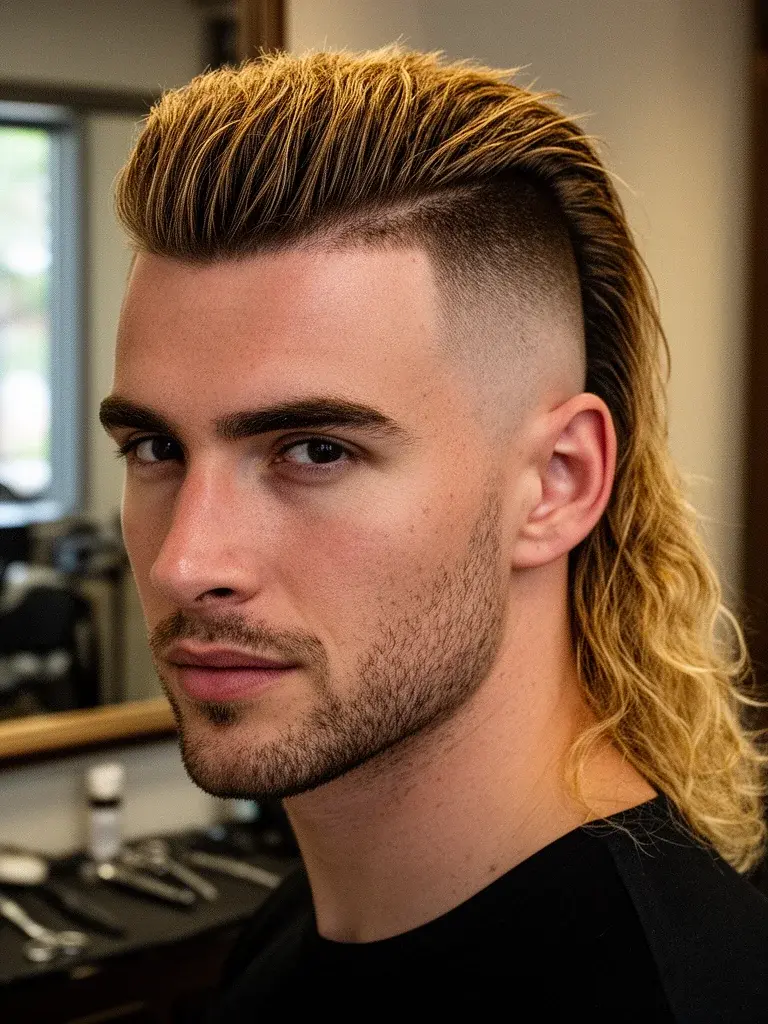

TL;DR
- Best for: Oval or square faces who want a relaxed, rock-inspired medium-length style
- Avoid if: You want a clean, corporate look or have very fine hair
- Ask your stylist: "Mid-length shag — choppy layers throughout, broken texture, I want it to look lived-in"
- Maintenance: Trim every 8–10 weeks (the most forgiving grow-out in men's hair)
Who Does It Suit?
The mid-length shag is for men who want their hair to look like they just rolled out of bed — in the best way possible.
Ideal for:
- Musicians, creatives, and anyone with a relaxed personal style
- Men who hate frequent barber visits (this cut thrives on neglect)
- Wavy or thick hair that naturally creates movement
- Anyone who wants medium length without the maintenance of a styled look
- Men transitioning from short to long hair
Hair types:
- Wavy: The shag's soulmate — natural waves create the perfect broken texture
- Straight: Works with product, but needs sea salt spray or texturizer to avoid looking flat
- Thick: Excellent — layers manage bulk while maintaining the full silhouette
Avoid If...
- Very fine hair → layers can make thin hair look wispy and sparse
- Corporate environment → the shag reads as deliberately casual
- You want a structured look → the shag is anti-structure by design
- Curly hair that shrinks significantly → may not achieve the "mid-length" look
- You hate hair touching your ears and neck → it's part of the deal
What is a Mid-Length Shag?
A layered cut where hair is 4–7 inches throughout, with choppy, uneven layers creating a broken, textured silhouette. Unlike the wolf cut (which has dramatic volume contrast between top and bottom), the shag distributes layers more evenly for a relaxed, uniform messiness. For a different take on medium-length rebellion, see the modern mullet.
The shag originated in the 1970s rock scene and has cycled in and out of fashion ever since. It's the hairstyle of Keith Richards, Rod Stewart, and every indie band frontman.
Mid-Length Shag vs Wolf Cut vs Bro Flow
| Mid-Length Shag | Wolf Cut | Bro Flow | |
|---|---|---|---|
| Layers | Even throughout | Heavy, top-focused | Minimal |
| Volume | Even distribution | Top-heavy | Natural fall |
| Texture | Broken, choppy | Shaggy, wispy | Smooth, flowing |
| Vibe | Rock, vintage | TikTok, K-pop | Surfer, casual |
Bottom line: Shag = even, rock-inspired layers. Wolf cut = dramatic layered volume. Bro flow = smooth and natural.
Measurements
- Top: 4–5 inches
- Sides: 4–6 inches (layered, not faded)
- Back: 5–7 inches
- Layers: Choppy, razor-cut or point-cut throughout
- Trim: Every 8–10 weeks
Face Shape Tweaks
The shag's layers and movement are adjustable for any face.
- Oval: Standard shag — even layers all around
- Square: Slightly longer face-framing layers to soften the jaw
- Diamond: Layers at cheekbone level to balance width
- Heart: Fuller layers at jaw level to balance narrow chin
- Round: Shorter layers on top for height, keep sides closer
- Oblong: Fuller sides, avoid too much length at the back
Hair Type Tweaks
- Wavy: Do nothing — your natural texture is the goal. Air dry and go.
- Straight: Sea salt spray is essential; consider a texturizing perm for permanent waves
- Thick: Ask for thinning shears on the densest sections; keep the shape, lose the bulk
- Fine: Fewer layers, focus on the top; too many layers thin out fine hair further
- Asian: Texturizing is key — straight, thick Asian hair needs razor cutting for movement
The Low-Maintenance Advantage
The mid-length shag is arguably the lowest-maintenance medium-length style:
- No blow drying required: Air dry is the default and preferred method
- Minimal product: Sea salt spray or nothing at all
- Grows out gracefully: The choppy layers mean growth looks intentional, not neglected
- No precise shape to maintain: Unlike a quiff or pompadour, there's no silhouette to preserve
- Longest trim interval: 8–10 weeks between cuts is normal and acceptable
What to Tell Your Stylist
"I want a mid-length shag: choppy layers throughout, razor cut or point cut for broken texture. Even layer distribution, not top-heavy. I want it to look lived-in and effortless."
How to Style
Daily (30 seconds):
- Air dry (seriously, that's it)
- Shake your head
- Optional: scrunch with fingers
Textured (2 minutes):
- Apply sea salt spray to damp hair
- Scrunch and twist random sections
- Air dry or diffuse on low heat
- Shake out for volume
Maintenance Timeline
- Week 1–4: Fresh layers. Texture is defined, shape is intentional.
- Week 4–8: Getting better. The shag actually improves as layers soften and blend.
- Week 8–10: Peak shag. This is when it looks most natural and lived-in.
- Week 10+: Time to book. Layers are losing definition, ends getting scraggly.
Pro tip: Many shag wearers say their cut looks best at week 6–8, not week 1. The grow-out is part of the aesthetic.
Common Mistakes
-
Layers too uniform Fix: The shag needs visible, choppy layers. If it looks blended, it's not a shag.
-
Using heavy product Fix: The shag should move freely. Heavy pomade or gel turns it into a helmet.
-
Getting it cut too frequently Fix: The shag needs time to settle. Cutting every 3–4 weeks prevents it from reaching its best form.
-
Expecting it to look neat Fix: The shag is deliberately undone. If you want neat, choose a different style.
-
Not asking for razor cutting Fix: Blunt scissors create a different texture. Razor or point cutting is what gives the shag its signature broken ends.