TL;DR
- Best for: Most face shapes, anyone wanting visible but not extreme contrast
- Avoid if: You want maximum subtlety (go low) or maximum drama (go high/skin)
- Ask your barber: "Mid fade starting at temple level, #1 to #3 blend"
- Maintenance: Trim every 2–3 weeks
Who Does It Suit?
The mid fade is the most requested fade for a reason — it delivers noticeable contrast without going overboard.
Ideal for:
- Men who want a visible fade without the boldness of a skin or high fade
- Round faces that benefit from the slimming effect of exposed sides
- Anyone pairing a fade with a textured crop, quiff, or pompadour
- Professionals in business-casual environments
- First upgrade from a low fade when you want more contrast
Hair types:
- Straight: Shows a clean, precise gradient
- Wavy: Natural texture creates a softer, blended transition
- Curly: Great contrast between curly top and faded sides
- Thick: Effective at removing bulk from the sides
Avoid If...
- You want a barely-there fade → low fade is more subtle
- You want maximum impact → skin fade or high fade delivers more
- Very conservative workplace → some offices prefer the subtlety of a low fade
- Oblong face → mid fade removes side width, making a long face look longer
What is a Mid Fade?
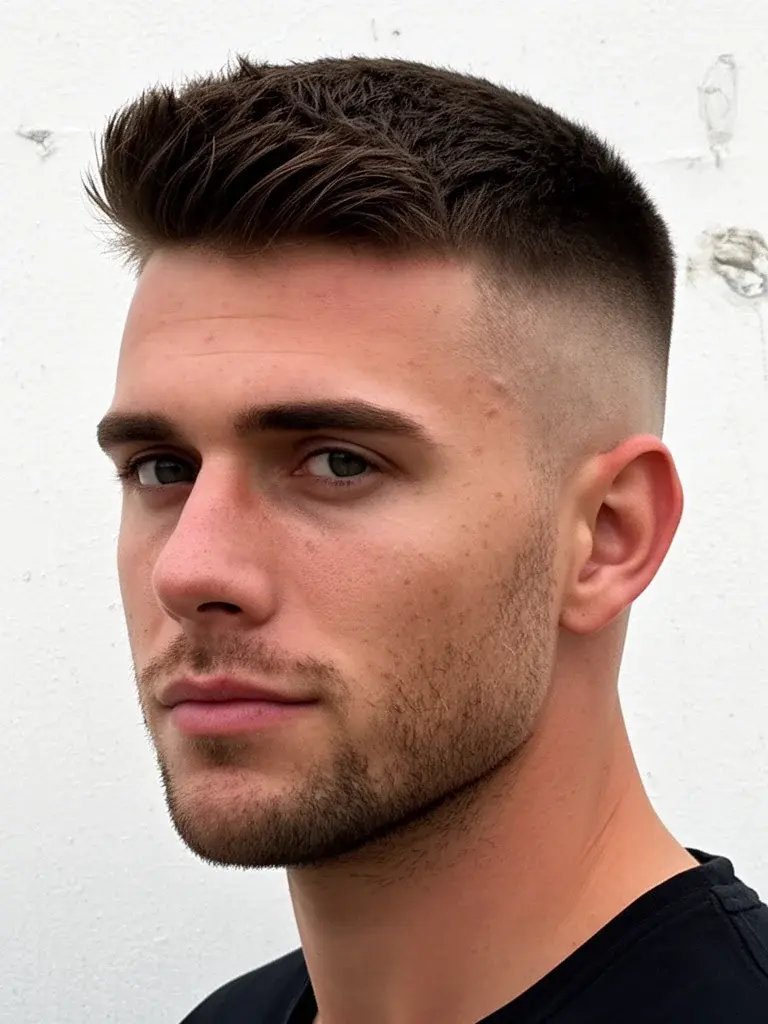
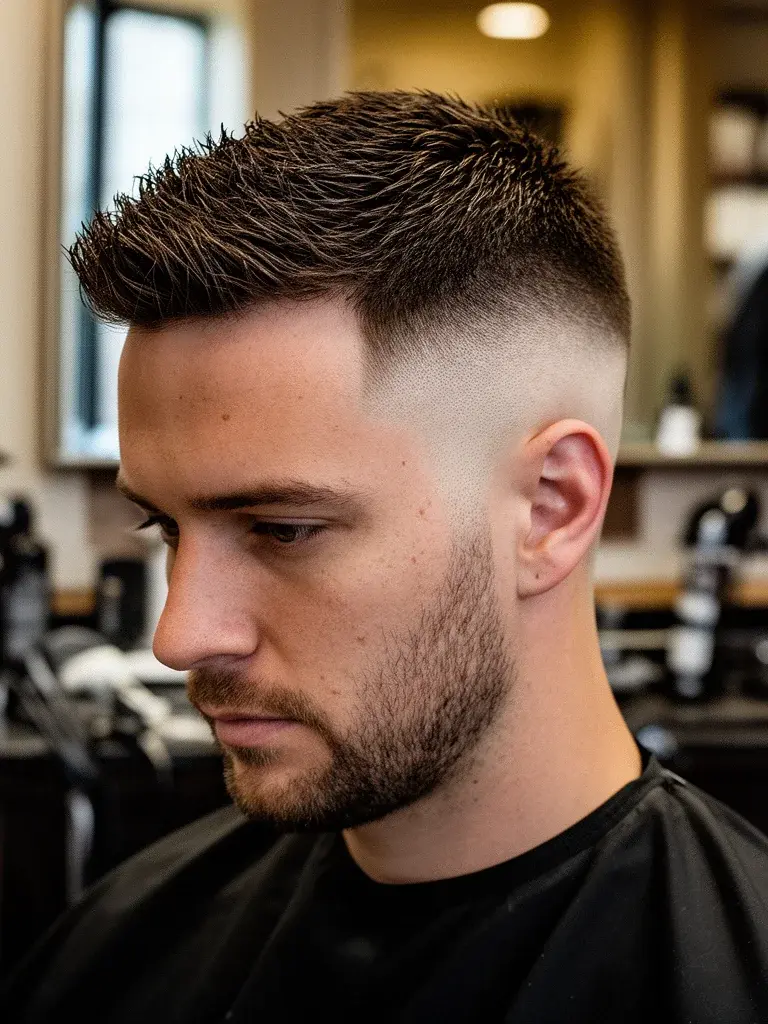
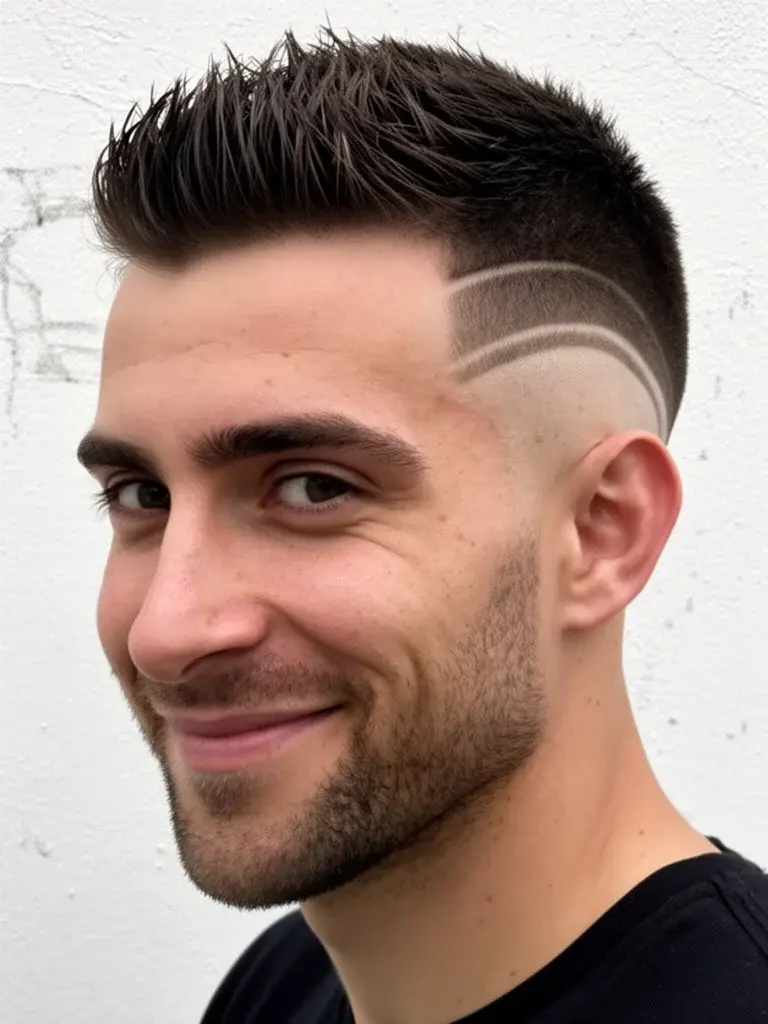
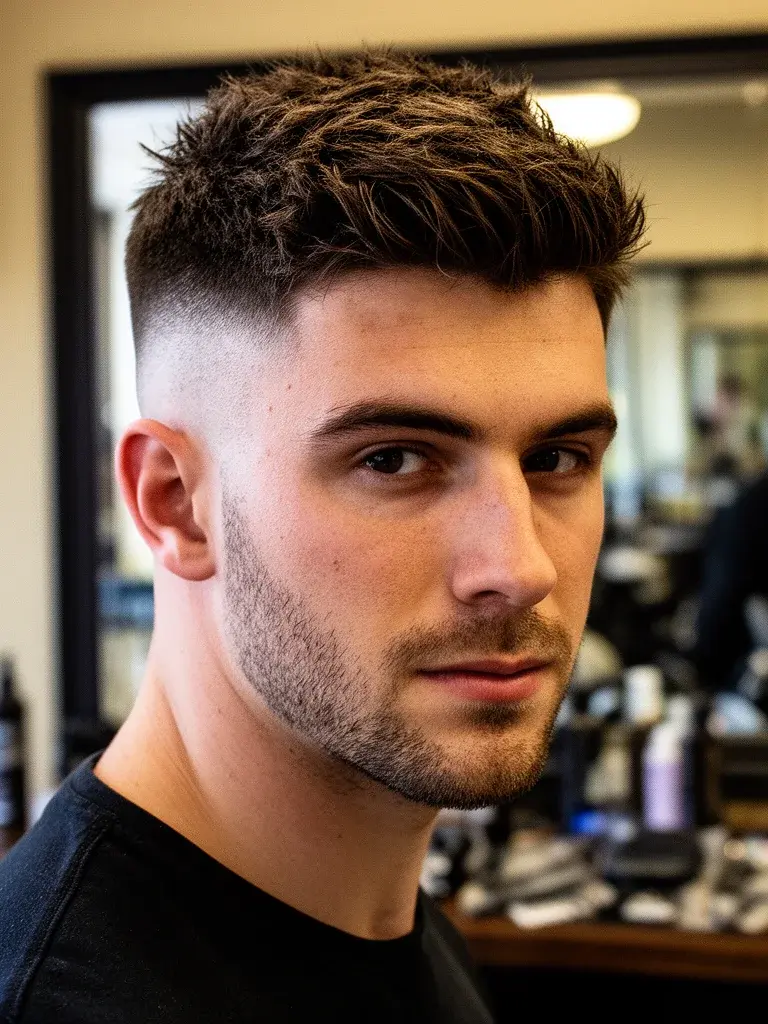
A fade that starts at approximately temple level — halfway between the ear and the top of the head. The hair transitions from short (#1 or #1.5) at the fade line to longer hair above. It's the middle ground between a low fade's subtlety and a high fade's boldness.
The mid fade is the default choice at most modern barbershops. When someone says "give me a fade" without specifying, they usually get a mid fade. For a complete breakdown of all fade and taper types, see our hub guide.
Mid Fade vs Low Fade vs High Fade
| Mid Fade | Low Fade | High Fade | |
|---|---|---|---|
| Fade starts | Temple level | Above ears | Above temples |
| Visible contrast | Moderate | Subtle | Bold |
| Side hair remaining | Some | Most | Minimal |
| Best pairing | Any top style | Natural/classic | Textured/bold |
Bottom line: Mid fade = the versatile default. Low fade = conservative. High fade = statement.
Measurements
- Fade start: #1–#1.5 at temple level
- Blend zone: Gradual transition over 1.5–2 inches
- Top: Varies (works with any length)
- Trim: Every 2–3 weeks
Face Shape Tweaks
- Oval: Standard mid fade — the balanced face handles any variation
- Round: Mid fade is excellent — removes side bulk, slims the face
- Square: Works well — the fade line complements angular features
- Heart: Good choice — fade balances wider forehead with narrower chin
- Diamond: Keep the fade line slightly lower to avoid emphasizing wide cheekbones
- Oblong: Consider a low fade instead — mid fade can elongate further
Hair Type Tweaks
- Straight: Ask for precise blending; straight hair reveals any inconsistency
- Wavy: Natural waves create a forgiving, organic transition
- Curly: Keep 1.5+ inches above the fade line so curls can form properly
- Thick: The mid fade is your best friend — removes bulk where you need it most
- Fine: Works well, but avoid going too short at the fade line to prevent a sparse look
Pairing the Mid Fade with Top Styles
The mid fade is the most versatile base. Here's how it pairs:
- Textured crop + mid fade: The most popular modern combination. Choppy top, clean sides.
- Quiff + mid fade: Volume on top with balanced contrast. Professional but stylish.
- Pompadour + mid fade: Dramatic top with moderate sides. Less extreme than a skin fade pairing.
- Side part + mid fade: Classic gentleman look with a modern edge.
- Curly top + mid fade: Let curls do the talking while the fade keeps things clean.
What to Tell Your Barber
"Mid fade — start at temple level with a #1, blend up to a #3. Keep the top at [your preferred length]. I want noticeable contrast but not extreme."
How to Style
The mid fade is a sides treatment — your top dictates the styling:
Short top (1–2 inches):
- Towel dry
- Light product if desired
- Done — the fade does the work
Medium top (3–4 inches):
- Towel dry
- Apply clay or cream
- Style forward, back, or to the side
Long top (5+ inches):
- Blow dry for direction
- Apply pomade or clay
- Shape with comb or fingers
Maintenance Timeline
- Week 1: Peak sharpness. Fade line is crisp, contrast is clear.
- Week 1–2: Still looks fresh. Slight growth but the gradient holds.
- Week 2–3: Time to book. The fade is blurring, contrast diminishing.
- Week 3+: Fade is gone. The mid placement means grow-out is more visible than a low fade.
Pro tip: The mid fade sits in a visible zone, so grow-out is more noticeable than a low fade. Stay on top of your appointments.
Common Mistakes
-
Confusing mid fade with mid skin fade Fix: Mid fade = placement. Skin fade = starting length. You can have a mid skin fade (both), but they're different concepts.
-
Fade line too high or too low Fix: Temple level is the landmark. Show your barber exactly where you want it.
-
Not blending enough Fix: A harsh line at the fade point looks like a mistake. Insist on smooth blending.
-
Ignoring the back Fix: The fade should wrap around consistently — front, sides, and back should match.
-
Waiting too long between trims Fix: The mid fade's visible placement means 3+ weeks and it's noticeably grown out