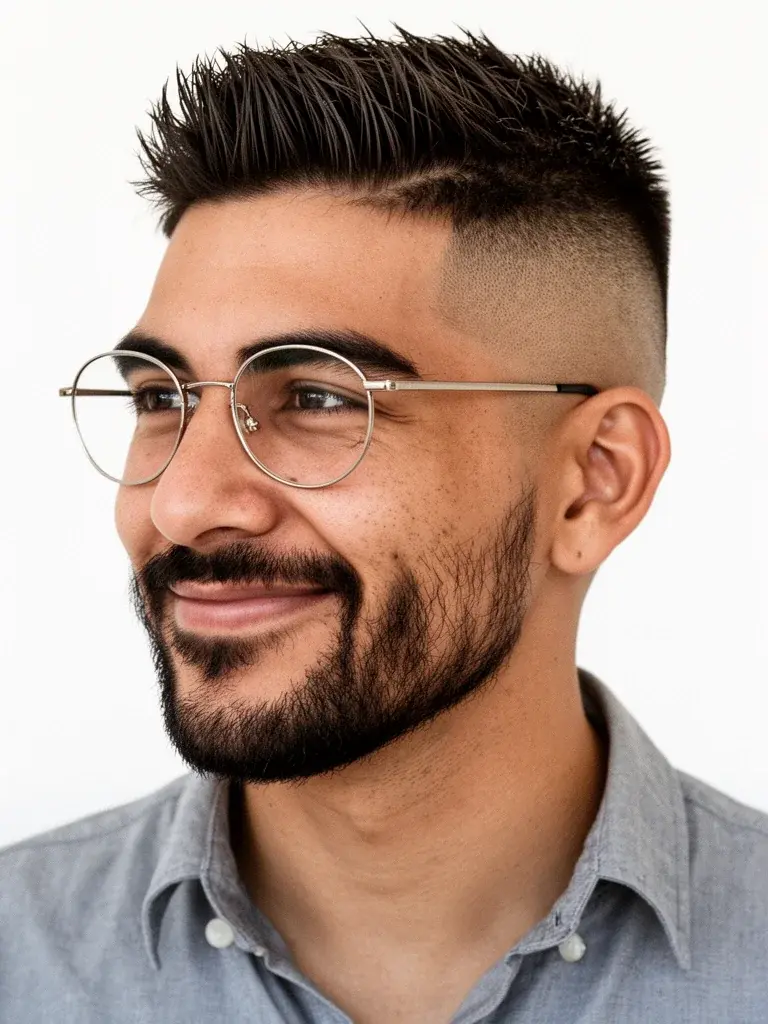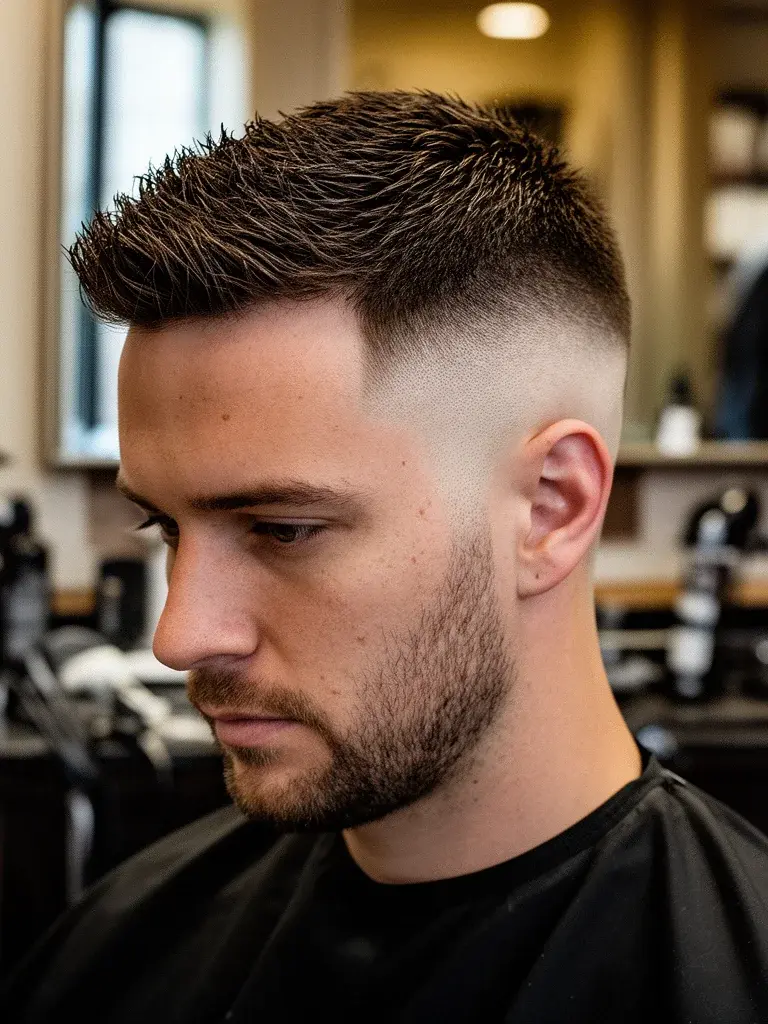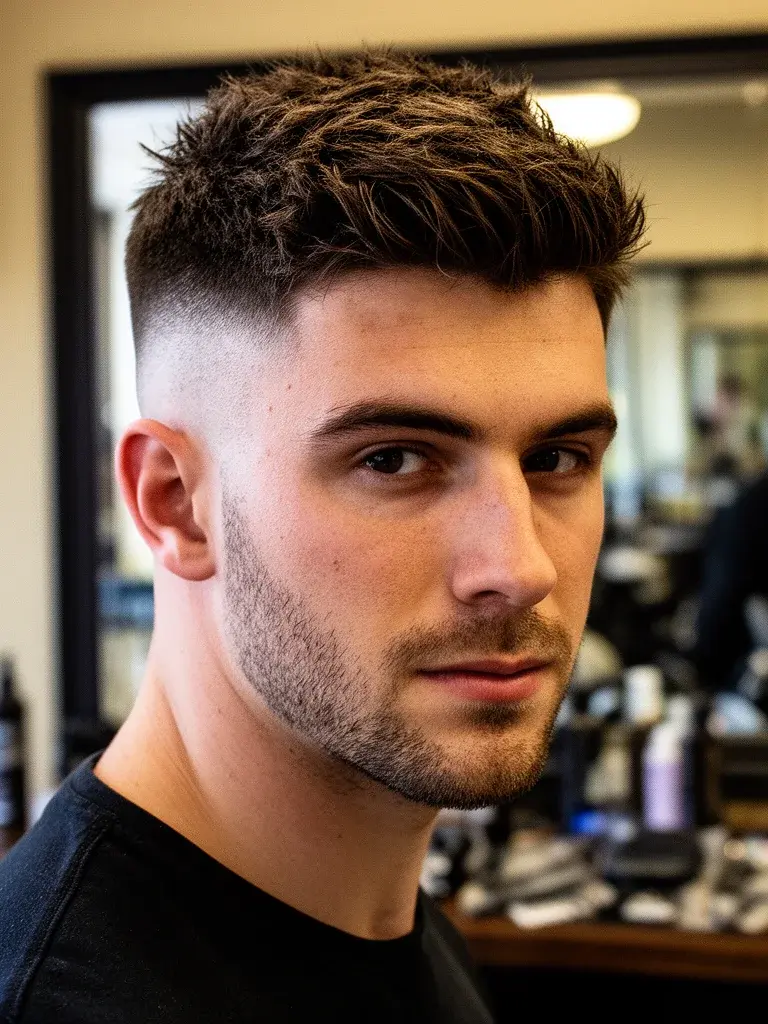

TL;DR
- Best for: Any face shape, any hair type — the most universally flattering fade
- Avoid if: You want bold contrast or a dramatic look
- Ask your barber: "Low fade starting at #1 just above the ears, blend to #2–3"
- Maintenance: Trim every 2–3 weeks
Who Does It Suit?
The low fade suits virtually everyone. It's the safest, most versatile fade option — which is exactly why it's the most popular.
Ideal for:
- Corporate professionals who need a clean but not trendy look
- First-time fade clients who want something subtle
- Any face shape — the low placement is universally flattering
- Men who want a clean finish without making a statement
- Pairing with any top style (quiff, crop, pompadour, natural)
Hair types:
- Straight: Clean, visible gradient from the fade line
- Wavy: Natural texture softens the transition beautifully
- Curly: Excellent — curls on top with clean sides is a classic combination
- Thick: Removes bulk at the bottom without dramatic contrast
- Fine: Low fade adds structure without exposing thin areas
Avoid If...
- You want maximum contrast → skin fade or high fade delivers more drama
- You want a bold, trendy look → the low fade is deliberately understated
- You prefer completely uniform length → try a classic taper instead
- You want the fade to be the focal point → mid or high fade is more visible
What is a Low Fade?
A fade that starts just above the ears and neckline — the lowest possible placement. The hair gradually transitions from short (typically #1) at the bottom to longer hair above. Because the fade sits low, most of the sides retain length, creating a subtle, natural-looking blend.
The low fade is the foundation of modern barbering. It cleans up the edges without dramatically changing your overall look. For a complete guide to fades and tapers, see our hub article.
Low Fade vs Mid Fade vs High Fade
| Low Fade | Mid Fade | High Fade | |
|---|---|---|---|
| Fade starts | Just above ears | Temple level | Above temples |
| Contrast | Subtle | Moderate | Bold |
| Maintenance | Every 2–3 weeks | Every 2 weeks | Every 1–2 weeks |
| Workplace | Any environment | Most environments | Creative/casual |
Bottom line: Low fade = subtle and professional. Mid fade = balanced and versatile. High fade = bold and attention-grabbing.
Measurements
- Fade start: #1 guard just above the ear
- Blend zone: #1 → #2 → #3 over 1–1.5 inches
- Top: Varies (pairs with any length)
- Trim: Every 2–3 weeks
Face Shape Tweaks
The low fade is forgiving, but small adjustments optimize it.
- Oval: Standard low fade — any variation works
- Round: Slightly higher fade line (just above mid-ear) to add length
- Square: Classic low fade emphasizes the strong jaw
- Diamond: Keep weight at temples, fade below the widest point
- Heart: Standard low fade, keep sides slightly fuller
- Oblong: Perfect choice — low fade adds width, avoids elongating
Hair Type Tweaks
- Straight: Ask for a precise blend; straight hair shows every line
- Wavy: The natural texture creates a softer, more forgiving transition
- Curly: Keep enough length above the fade for curls to form (1+ inch minimum)
- Thick: May need the fade to start slightly higher to manage bulk
- Fine: Low fade is ideal — keeps more hair on the sides for fullness
Why the Low Fade is the Safest Choice
If you're unsure about fades, start here. Here's why:
- It's reversible: If you don't like it, the low placement grows out in 2–3 weeks
- It's workplace-safe: No office has ever sent someone home for a low fade
- It pairs with everything: Quiff, crop, pompadour, natural — the low fade works with any top
- It ages well: The grow-out is gradual and natural-looking
- It's a foundation: You can always go higher next time if you want more contrast
What to Tell Your Barber
"Low fade — start at #1 just above my ears, blend up to a #2 or #3. Keep the top at [your preferred length]. I want it clean but not dramatic."
How to Style
The low fade is a sides treatment — styling depends on your top:
Short top (1–2 inches):
- Towel dry
- Optional: light product
- Done
Medium top (3–4 inches):
- Towel dry
- Apply product of choice
- Style top as desired (forward, back, to the side)
Long top (5+ inches):
- Blow dry for volume/direction
- Apply pomade or clay
- Shape with comb or fingers
Maintenance Timeline
- Week 1: Fresh and clean. Fade line is crisp, blend is smooth.
- Week 2: Still looks great. Slight growth but the low placement hides it well.
- Week 2–3: Time to book. The fade is softening but still presentable.
- Week 3–4: Fade is gone. You now have a standard short-sides haircut.
Pro tip: The low fade has the longest maintenance window of any fade type. Its subtle placement means grow-out is less noticeable than mid or high fades.
Common Mistakes
-
Asking for a low fade when you want a taper Fix: A low fade still has a gradient to short hair; a taper just gradually shortens. Know the difference.
-
Going too low Fix: If the fade starts at the ear lobe, it's barely visible. Just above the ear is the sweet spot.
-
Mismatching with the top Fix: A low fade with a very long top can look disconnected. Keep proportions balanced.
-
Expecting drama Fix: The low fade is deliberately subtle. If you want heads to turn, go mid or high.
-
Waiting too long between trims Fix: Even though it grows out well, 3+ weeks and the fade disappears entirely