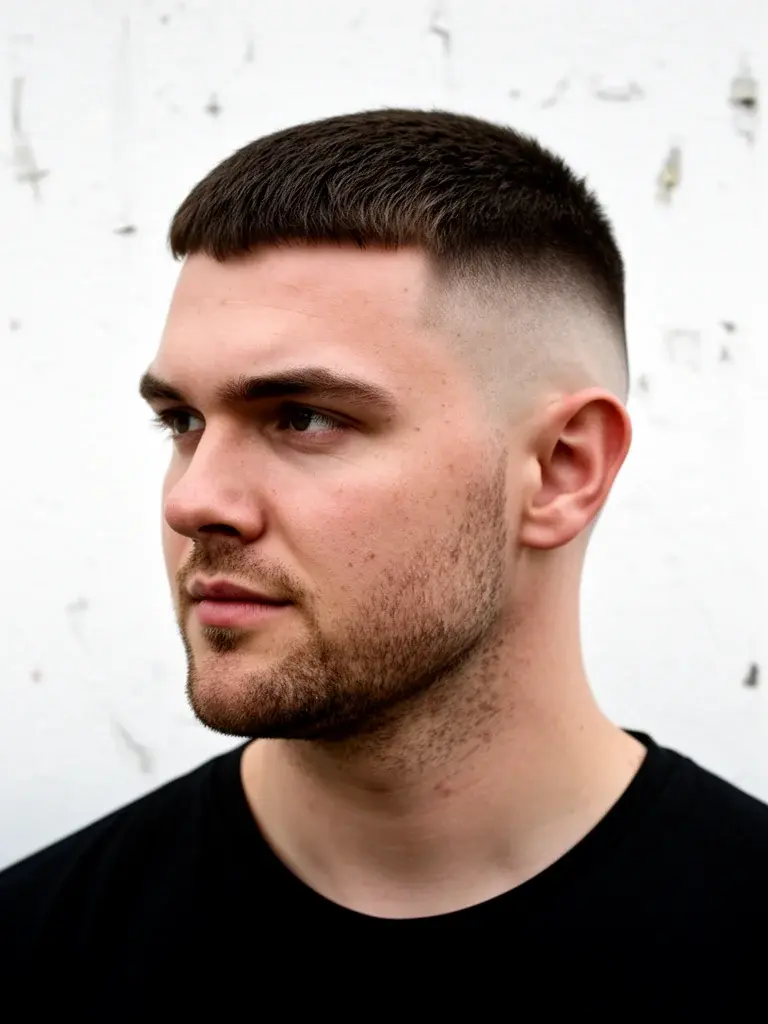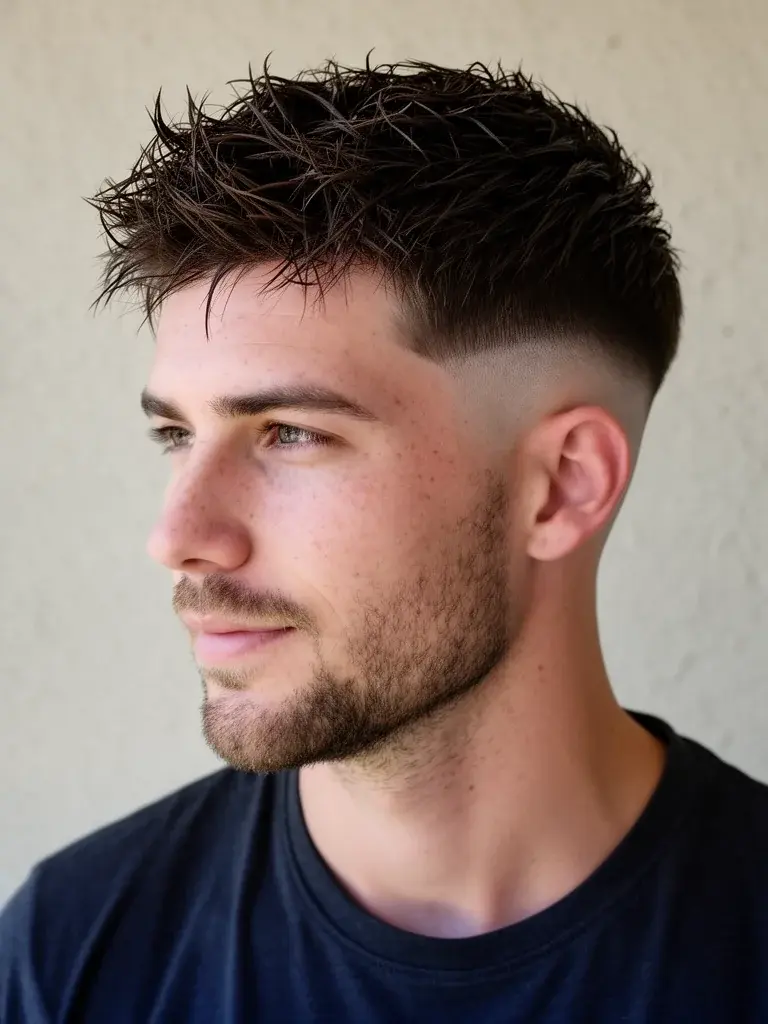
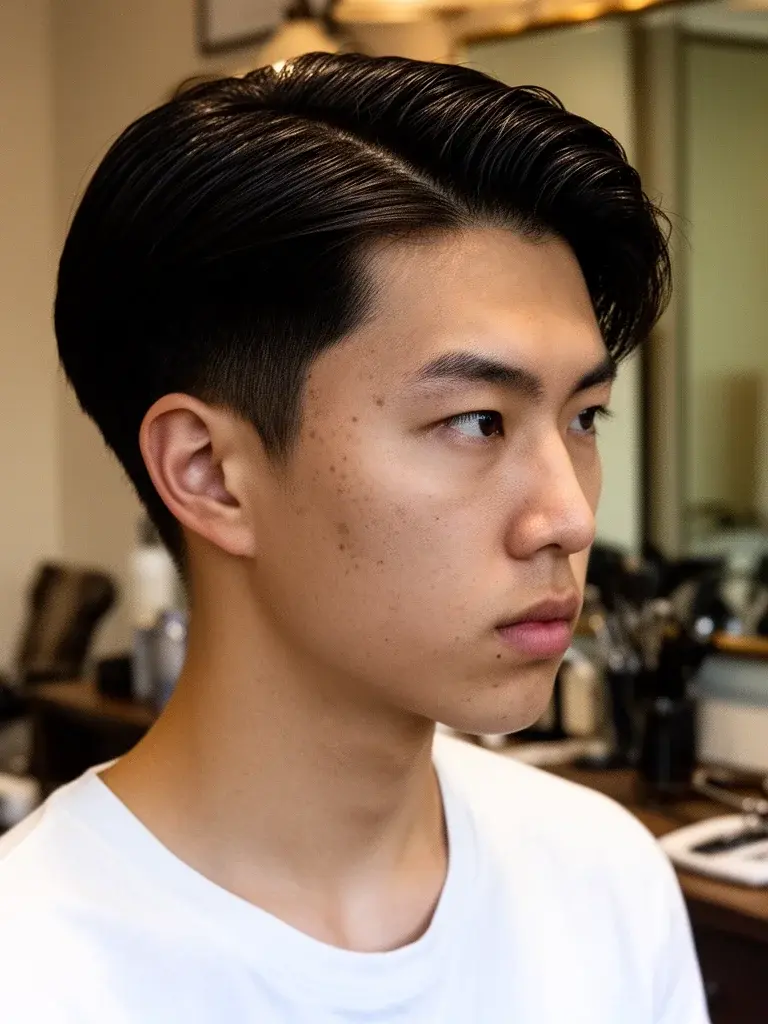
TL;DR
- Best for: Literally everyone—the most universally flattering men's haircut
- Avoid if: You want a trendy, statement-making look (this is classic, not edgy)
- Ask your barber: "Classic side part, [left/right], 2–4 inches on top, [fade/taper] on sides"
- Maintenance: Trim every 3–4 weeks
Who Does It Suit?
The side part is the Switzerland of haircuts—it works everywhere, offends no one, and flatters almost every face shape.
Ideal for:
- Every profession from CEO to creative
- All ages from 18 to 80
- Job interviews, weddings, funerals, Tuesdays
- Men who want reliability over experimentation
- Anyone unsure what haircut to get
Hair types:
- Straight: Shows the cleanest part line
- Wavy: Adds natural texture and volume
- Thick: Creates a full, substantial look
- Fine: Part line helps create illusion of fullness
Avoid If...
- You want to stand out → side part is classic, not conversation-starting
- You prefer zero daily styling → requires basic maintenance (comb + product)
- Looking for edgy or trendy → this style is timeless, not zeitgeisty
What is a Side Part?
A defined line (natural or cut in) separates hair into two sections. The larger section is swept across the forehead, the smaller section lies flat against the head. It's been the default "respectable haircut" for over a century.
Think Don Draper, Ryan Gosling, literally every US president. When in doubt, side part. For a bolder variation, try the slicked back — same polish, no part line.
Side Part Variations
| Classic Side Part | Hard Part | Modern Side Part | |
|---|---|---|---|
| Part line | Natural, combed in | Shaved/cut in | Soft, less defined |
| Sides | Tapered | Fade | Fade or taper |
| Formality | Very formal | Modern formal | Casual professional |
| Maintenance | Every 3–4 weeks | Every 2–3 weeks | Every 3–4 weeks |
Measurements
- Top: 2–4 inches
- Sides: #2–4 or gradual taper
- Part line: Usually placed at natural part or temple
- Trim: Every 3–4 weeks
Finding Your Part
Most people have a natural part—where your hair naturally falls when pushed back. But you can also choose:
Right side part: Classic, traditional choice Left side part: Equally classic, common choice Test method: Push wet hair back with both hands, see where it naturally splits
Face Shape Tweaks
The side part's secret weapon is adjustability.
- Oval: Standard part placement, any height on top
- Square: Softer edges, let it fall naturally to soften angles
- Round: Add height on the swept side, creates elongation
- Diamond: Keep sides a bit fuller to balance cheekbones
- Heart: Part lower, fuller sides balance narrow chin
- Oblong: Lower part, less height on top
Hair Type Tweaks
- Straight: Pomade for hold and light shine
- Wavy: Work with waves—don't flatten completely
- Thick: May need thinning on the swept side
- Fine: Use volumizing products, matte finishes
- Curly: Keep slightly longer to show curl pattern
Classic vs Modern Side Part
Classic (Mad Men era):
- Precise, defined part line
- High shine pomade
- Everything in place
- More formal
Modern (Contemporary):
- Softer, less defined part
- Matte or low-shine products
- Some texture and movement
- More casual
What to Tell Your Barber
For classic:
"Classic side part, part on [left/right], 3 inches on top, tapered sides, clean neckline."
For modern:
"Soft side part, part on [left/right], leave texture on top, fade the sides to a #2."
For hard part:
"Hard part shaved in on [left/right], 2–3 inches on top, mid fade."
How to Style
Daily (2 minutes):
- Apply product to damp hair
- Comb part line into place
- Sweep larger section across
- Smooth smaller section flat
- Done
For volume:
- Blow dry while lifting at roots
- Direct hair to the side while drying
- Apply product once dry
- Finish with comb
Product Guide
For Hold + Shine: Classic pomade, gel
For Hold + Natural: Cream, styling lotion
For Hold + Matte: Clay, paste, fiber
General rule: Formal events = more shine. Daily wear = more matte.
Maintenance Timeline
- Week 1: Perfect shape, clean lines
- Week 2: Still sharp, minimal growth visible
- Week 3: Softening, still presentable
- Week 4: Time to book—shape is getting loose
Common Mistakes
-
Part line too severe Fix: Let some hair cross the part for a softer look
-
Too much product Fix: Start with pea-sized amount, build up
-
Fighting natural part Fix: Work with where your hair naturally wants to go
-
Neglecting the "short side" Fix: That section needs to lie flat—don't ignore it
-
Same style for 20 years Fix: Modern updates (texture, matte finish) refresh the classic