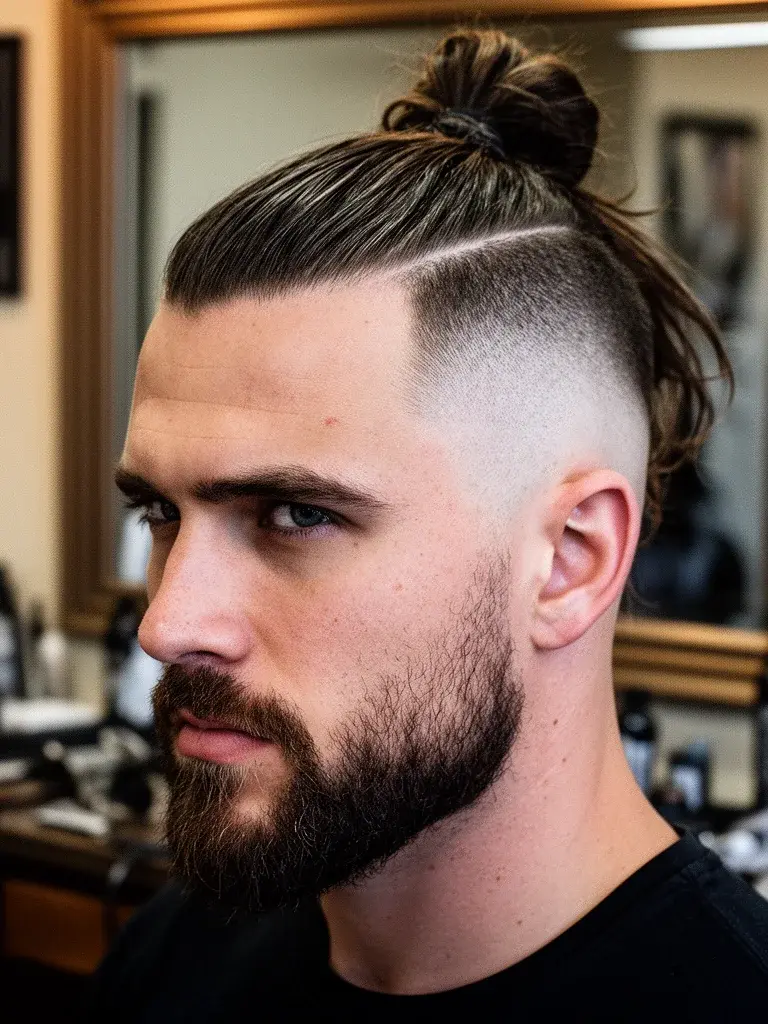
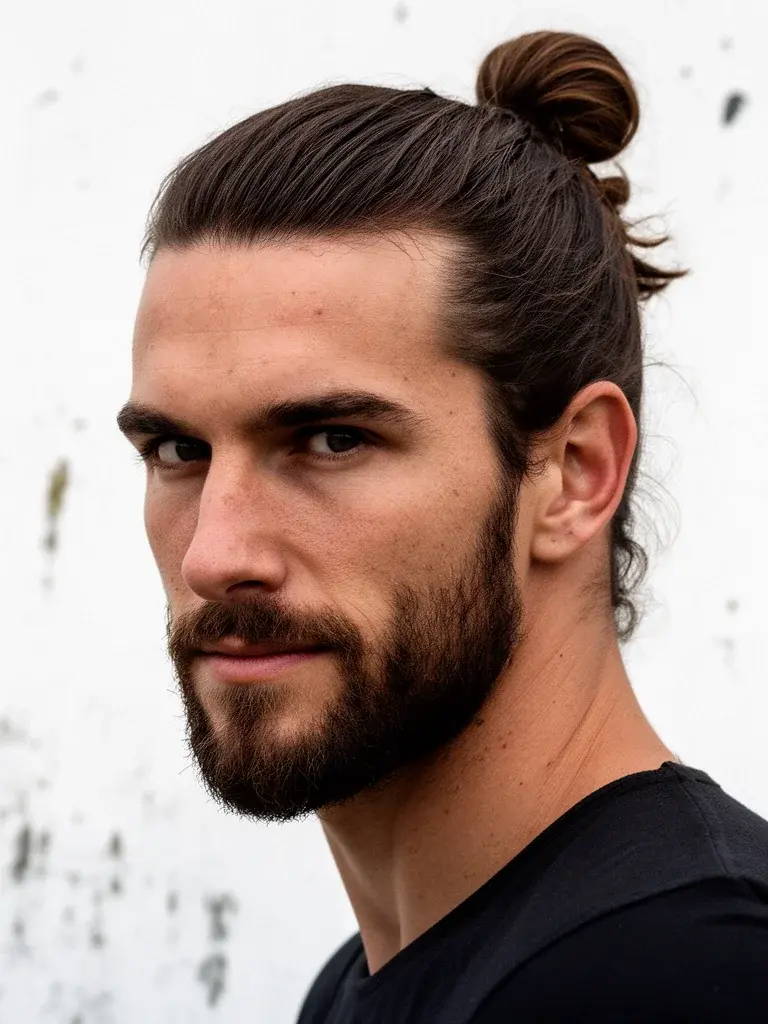
TL;DR
- Best for: Men with 8+ inches of hair who want a practical, stylish way to wear it up
- Avoid if: Hair is shorter than 6 inches, thinning on top, or you pull it too tight
- Ask your stylist: "I'm wearing a man bun — shape the layers so it gathers cleanly, trim the ends"
- Maintenance: Trim every 8–12 weeks
Who Does It Suit?
The man bun is both a style choice and a practical solution. It works for men who've grown their hair and want versatility.
Ideal for:
- Men with 8+ inches of hair who need it out of their face
- Active lifestyles — gym, sports, cooking, manual work
- Strong facial features that benefit from full face exposure
- Any hair texture — straight, wavy, curly all work in a bun
- Men who want to alternate between wearing hair down and up — see long layers for the best down style, or bro flow for a medium-length option
Hair types:
- Straight: Creates a sleek, polished bun
- Wavy: Adds natural volume and texture to the bun shape
- Curly: Creates a fuller, more voluminous bun
- Thick: Ideal — enough density for a substantial bun
Avoid If...
- Hair is shorter than 6 inches → you'll get a tiny nub, not a bun. Wait.
- Thinning on top → pulling hair back exposes thin areas and the scalp
- You pull it too tight → traction alopecia is real and causes permanent hair loss
- Round face → pulling all hair back exposes the full face width
- You only have one hairstyle → the man bun should be one option, not the only option
What is a Man Bun?
Long hair (8+ inches) gathered and twisted or folded into a bun, secured with a hair tie. The bun can sit at the crown (high bun), mid-head, or nape (low bun). It's both a hairstyle and a way to manage long hair practically.
The man bun became a mainstream trend in the 2010s but has roots in cultures worldwide — from samurai topknots to Sikh jooras to Viking styles. For a modern take on the shaved-sides-with-bun look, see the warrior cut.
Man Bun Placements
| Placement | Position | Vibe | Best For |
|---|---|---|---|
| High bun | Crown of head | Bold, visible | Strong features, making a statement |
| Mid bun | Back of head | Balanced, classic | Most face shapes, everyday wear |
| Low bun | Nape of neck | Relaxed, subtle | Professional settings, casual days |
| Half bun | Top half only | Trendy, versatile | Shorter hair, transitional length |
Measurements
- Minimum length: 6 inches (for a small bun)
- Ideal length: 8–12 inches (for a full, comfortable bun)
- Undercut option: Sides can be faded or kept long
- Trim: Every 8–12 weeks for healthy ends
Face Shape Tweaks
The man bun exposes your entire face — placement matters.
- Oval: Any bun placement works — balanced proportions handle full exposure
- Square: Mid or high bun showcases the strong jaw beautifully
- Diamond: Mid bun, leave some face-framing strands to soften cheekbones
- Heart: Low bun, leave strands at temples to balance the wider forehead
- Round: High bun adds vertical height; leave face-framing pieces for slimming
- Oblong: Low bun, avoid adding height; leave some hair at the sides
Hair Type Tweaks
- Straight: Use a light texturizing spray before gathering for grip; straight hair slips out easily
- Wavy: Natural texture provides grip — the bun holds well with minimal effort
- Curly: Creates the fullest bun; may need a larger hair tie to accommodate volume
- Thick: Excellent bun material; may need two wraps of the hair tie for security
- Fine: The bun may look small; consider a half-bun or add a texturizing product for volume
Protecting Your Hair Health
The man bun's biggest risk is traction alopecia — hair loss from repeated pulling. Protect yourself:
- Never pull it tight: The bun should be comfortable, not giving you a headache. If you feel tension at the hairline, it's too tight.
- Vary the placement: Don't wear the bun in the exact same spot every day. Rotate between high, mid, and low.
- Use fabric hair ties: Avoid rubber bands or thin elastics that snag and break hair. Use soft, fabric-covered ties.
- Take it down at home: Give your hair a break when you don't need it up. Sleeping in a bun causes damage.
- Watch for warning signs: If you notice hair thinning at the temples or hairline, loosen the bun immediately and wear hair down more often.
What to Tell Your Stylist
"I wear my hair in a man bun regularly. Shape the layers so it gathers cleanly without too many flyaways. Trim the ends and thin out any bulk that makes the bun too heavy."
How to Style
Basic Bun (30 seconds):
- Gather all hair at desired height
- Twist the length into a rope
- Wrap around the base
- Secure with a hair tie
- Tuck any loose ends
Messy Bun (20 seconds):
- Gather hair loosely
- Pull through hair tie halfway (creating a folded loop)
- Let loose strands fall naturally
- Done — imperfection is the point
Half Bun (20 seconds):
- Gather top section from temples up
- Tie into a small bun at the crown
- Let the bottom half hang free
Maintenance Timeline
- Week 1–4: Fresh trim. Ends are healthy, bun gathers cleanly.
- Month 2–3: Still good. Length increasing, bun getting fuller.
- Month 3: Time to book. Ends may be splitting, flyaways increasing.
- Month 3+: Overdue. Damaged ends make the bun look scraggly.
Pro tip: The man bun's maintenance is really about hair health, not shape. Healthy ends = clean bun. Damaged ends = messy, frizzy bun.
Common Mistakes
-
Pulling too tight Fix: If you have a headache, it's too tight. Loosen immediately. Traction alopecia is permanent.
-
Using rubber bands Fix: Fabric-covered hair ties only. Rubber bands rip and break hair.
-
Same placement every day Fix: Rotate between high, mid, and low to distribute tension across different areas.
-
Never wearing hair down Fix: The bun should be one option, not a permanent state. Give your hair rest days.
-
Ignoring split ends Fix: Long hair in a bun still needs regular trims. Split ends make the bun look frizzy and unkempt.